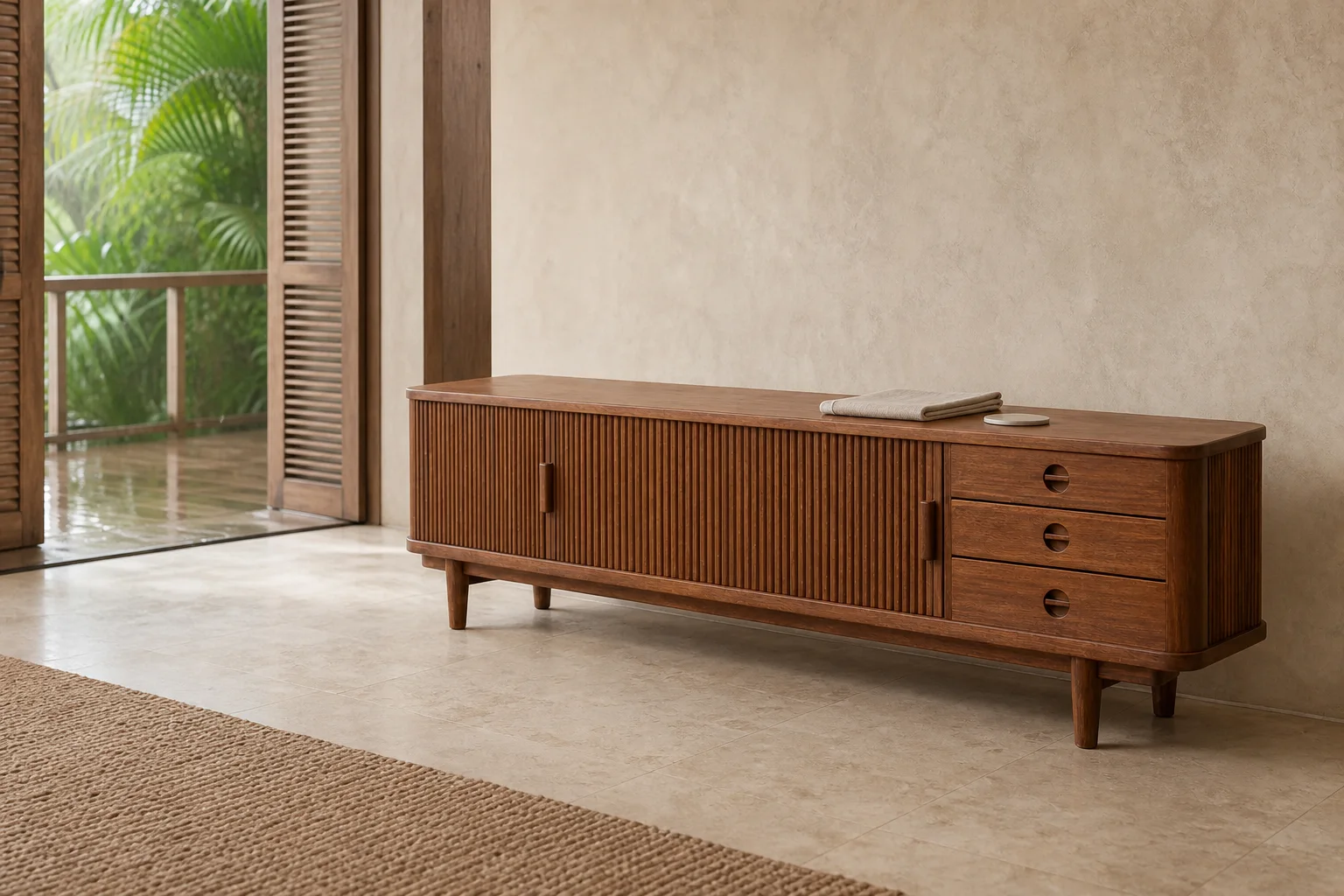
Teak furniture can remain outdoors in rain and sun when water is allowed to drain, the wood can dry between storms, and exposed surfaces receive appropriate maintenance. Natural
For furniture in Bangkok, coastal locations, or other humid climates, protection is less about sealing teak away from weather and more about managing exposure. A sound location, gentle cleaning, ventilation, and an exterior finish chosen for the desired appearance help preserve both the furniture’s structure and its finish.
Rain and sun do not usually require moving sound teak indoors, but they do require moisture management and ultraviolet protection. Keep the piece elevated, let every surface dry after storms, and reduce direct exposure with a breathable cover or roof. Never seal wet wood or trap it beneath impermeable plastic.
Start by locating outdoor teak on a stable, freely draining surface rather than grass or a puddling terrace. Raise feet about 5 cm with suitable glides or pads so splashback and runoff do not sit at joints. After heavy rain, wipe pooled water from horizontal rails and seats. The USDA Forest Products Laboratory notes that wood changes dimension as moisture changes; drainage limits repeated stress.
A roof, pergola, or shade sail reduces direct rain and ultraviolet exposure while preserving airflow. If a cover is needed, choose one designed to shed water and vent moisture, then remove it when conditions are dry. Do not use a plastic tarp as permanent protection: condensation beneath it can support mildew. In strong sun, shade slows the silver-gray weathering that naturally develops on unfinished teak.
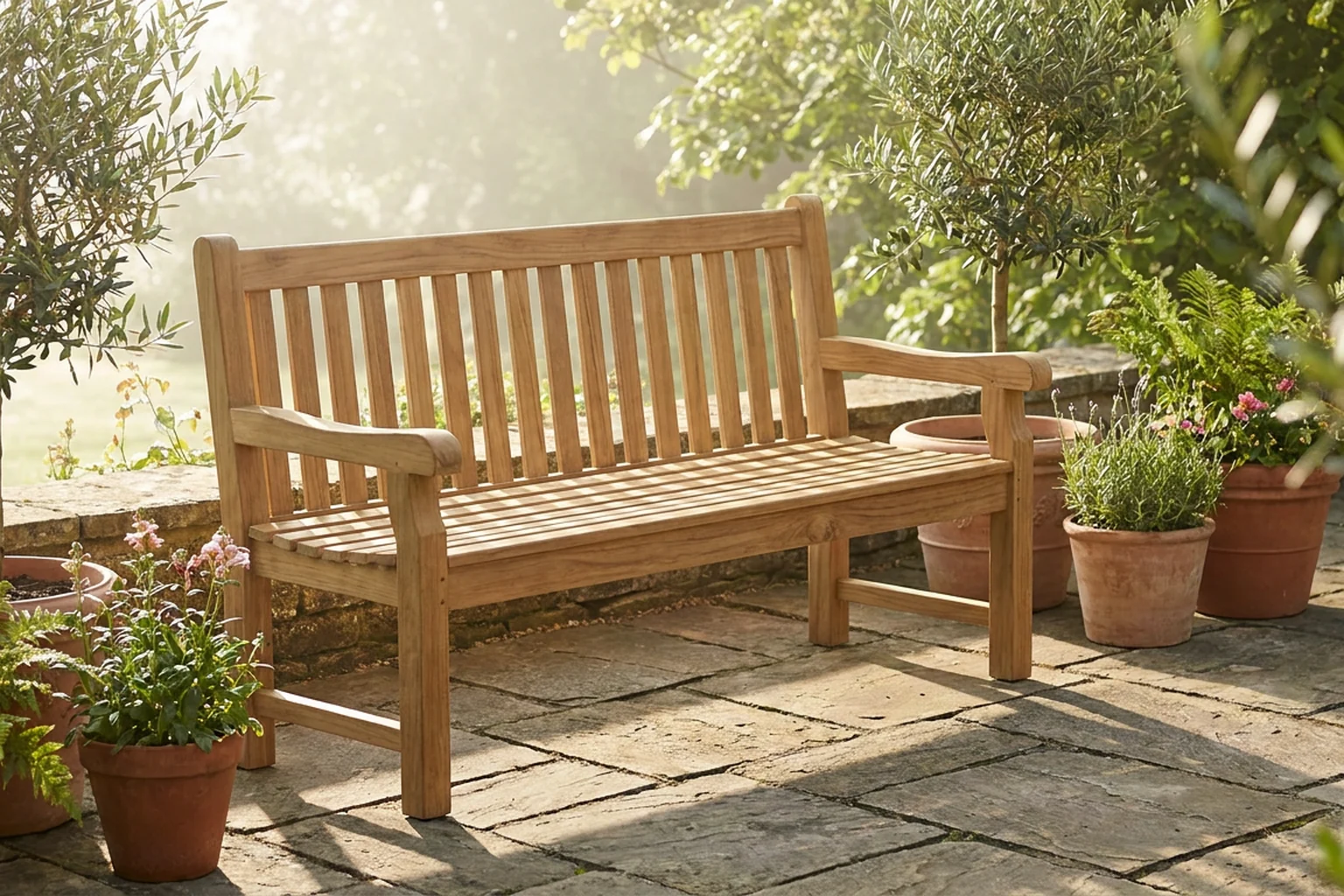
Choose a finish based on the look and maintenance level you want, not on a promise that teak needs no care. A penetrating exterior teak sealer with UV inhibitors can slow graying and improve water beading. Apply it only to clean, dry timber, following the product label and testing an inconspicuous area.
Before refinishing, wash away dust, salt, sunscreen, and airborne grime with mild soap, a soft brush, and clean water. Let the furniture dry for at least 24 to 48 hours in dry conditions, longer after monsoon rain or high humidity. Lightly smooth raised grain only if necessary, working with the grain, then remove all sanding dust before coating.
Teak oil can temporarily enrich color, but it usually needs more frequent renewal than a purpose-made exterior sealer and should not be applied over an incompatible film finish. Avoid varnish-like interior products outdoors; ultraviolet light and moisture can cause them to crack or peel. The Wood Handbook provides useful context on moisture movement in wood. Follow the coating maker’s coverage, cure-time, and recoat instructions.
Inspect exposed teak at the start and end of each rainy season, and clean it whenever dirt, pollen, or mildew holds moisture on the surface. Recoat when water stops beading after cleaning and drying, not by a fixed calendar alone. Prompt attention to loose joints, cracks, and corroded hardware prevents larger repairs.
Use a soft brush, mild soap, and water to remove surface soil. Rinse thoroughly and allow the furniture to dry in moving air. Avoid pressure washers, chlorine bleach, and harsh abrasive pads because they can roughen timber or produce uneven color. For cleaning-product selection, the U.S. Environmental Protection Agency Safer Choice program explains how products are assessed for safer chemical ingredients.
Check underside rails, leg ends, hardware, and joinery because these areas may remain damp longer than visible surfaces. Tighten appropriate hardware gently, replace damaged glides, and address a loose joint before it is repeatedly loaded. Small surface checks can be normal wood movement, but widening cracks, persistent softness, or joint movement warrant assessment by a qualified furniture repairer or the original maker.
Use a breathable furniture cover only when the teak is clean and dry, and remove it after rain whenever practical. A cover should shed water while allowing air movement; plastic tarps can hold condensation against the wood. In prolonged wet weather, a roof or ventilated storage area is safer than permanent wrapping.
Sunlight naturally changes uncoated teak from golden brown toward silver gray as the surface weathers. That color change is primarily aesthetic, but repeated wet-dry cycles can encourage checking. A UV-resistant exterior finish can slow color change; it cannot make exposed furniture maintenance-free or eliminate normal movement.
Clean outdoor teak with a soft brush, mild soap, and water when dirt or mildew appears, then allow it to dry completely. Avoid pressure washing, chlorine bleach, and aggressive sanding because they can roughen the surface or remove wood unevenly. Reapply the selected finish only after its water-repellent performance declines.
Care recommendations are general guidance for solid teak furniture. Always follow the instructions supplied by your furniture maker and the manufacturer of any cleaning or finishing product.