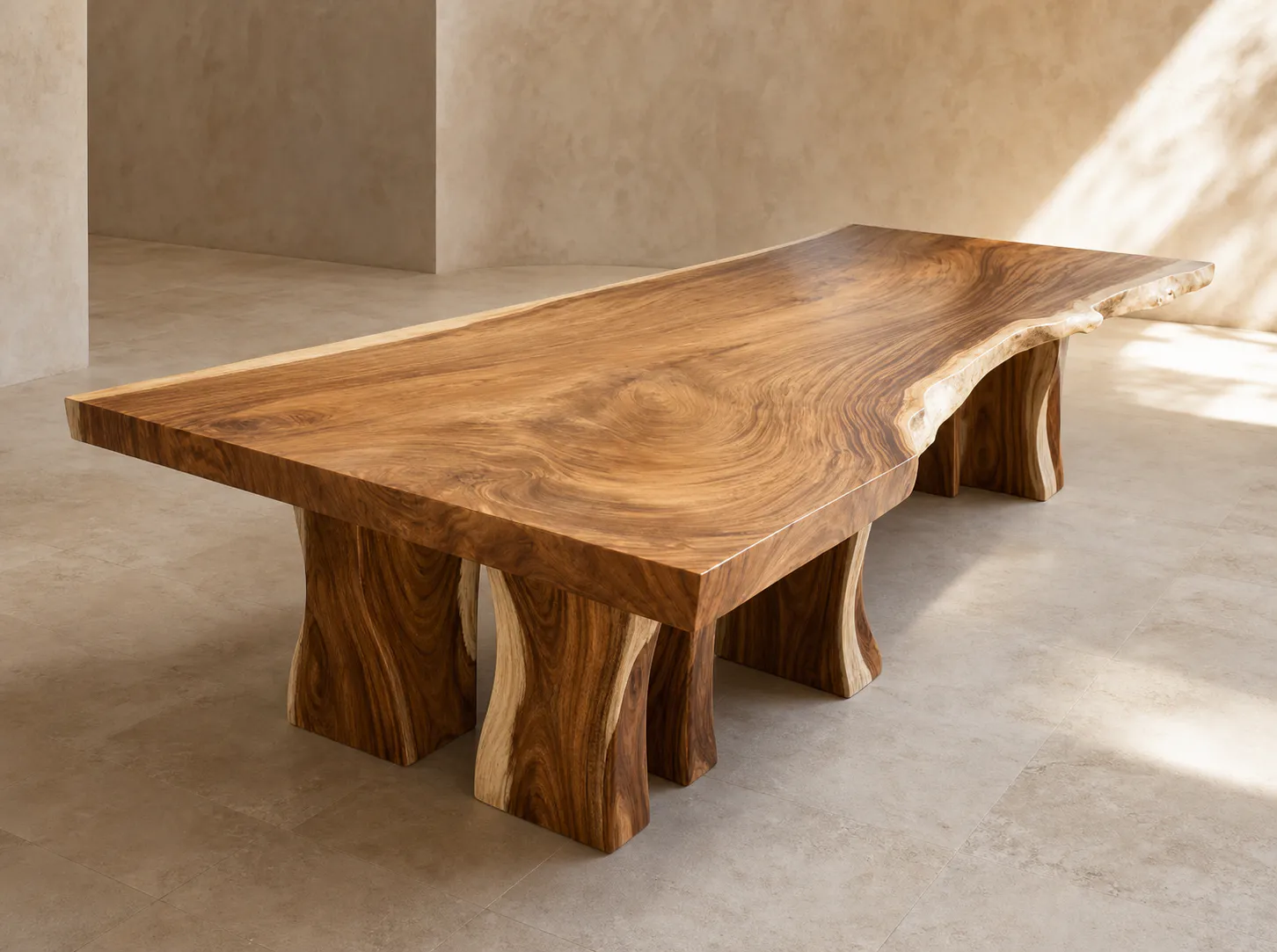
Custom teak furniture lead times are determined by a chain of dependent decisions and workshop operations, not by assembly alone. A realistic schedule begins once specifications are approved
A confirmed drawing set, finish reference, quantity, delivery destination, and freight method give a workshop the clearest basis for planning a custom teak furniture schedule.
Design development affects lead time before workshop production begins. Dimensioned drawings, wood species confirmation, hardware choices, finish samples, and quantity determine what can be scheduled and bought. A signed specification creates a production baseline; revisions to profiles, proportions, or construction details usually require new drawings, material checks, and queue adjustments.
Before a purchase order is released, the maker translates the brief into drawings and a bill of materials. That work identifies teak section sizes, allowance for movement, hardware, upholstery interfaces, and the finish process. Architectural Woodwork Institute standards illustrate why documented details matter: fabrication follows agreed drawings rather than a mood board. Prompt approval of one drawing set and one finish sample reduces avoidable recirculation.
Teak procurement and conditioning can be the longest variable stage because appropriate boards must match approved dimensions, grain appearance, and moisture requirements. Kiln schedules, acclimation to workshop conditions, and inspection for movement or defects happen before accurate machining. Wider panels and matched sets may require additional selection time.
Solid wood responds to its environment, so material preparation is a production task rather than a warehouse detail. The USDA Wood Handbook describes wood moisture and dimensional behavior that manufacturers must account for when making stable components. A workshop may sort boards for color and grain, condition selected stock, and reject unsuitable pieces before cutting. That sequence protects fit and appearance, but it makes available teak stock a meaningful schedule variable.
Machining, joinery, and assembly turn approved timber into furniture components, and their duration depends on design complexity and batch size. Mortise-and-tenon frames, curved parts, carved details, veneers, or integrated hardware create sequential operations. Components must be dry-fitted and corrected before finishing, so an issue found during assembly can affect later stages.
After material preparation, teak is cut, shaped, drilled, joined, sanded, and assembled according to the approved construction. A simple table and a detailed hotel casework package do not move through the same number of workstations. Hand-fitting joints and aligning doors, drawers, or bases are checkpoints that cannot reliably be skipped. Grouping similar components can improve workflow, but a custom order still depends on each preceding operation being accepted before the next begins.
{'type': 'image', 'src': 'https://mfurniturethailand.com/images/resources/teak-joinery-workshop.jpg', 'alt': 'M Furniture & Decor teak joinery workshop during custom furniture assembly', 'caption': 'Joinery and dry fitting are sequential stages before custom teak furniture can proceed to finishing.'}
Finishing, inspection, packing, and dispatch determine when a completed piece becomes deliverable. Stain, sealer, and topcoat systems need application and cure time, particularly during humid weather. Final checks confirm dimensions, stability, finish consistency, and hardware operation; protective crating, export documents, carrier cutoffs, and destination requirements then shape the shipping handoff.
A piece that looks complete may still need sanding between coats, controlled curing, final assembly, and corrective work identified at inspection. Packing follows acceptance because corners, surfaces, and moving parts need protection matched to the freight method. For international orders, commercial paperwork, consignee details, pickup timing, and carrier capacity add a separate logistics clock. Clear product descriptions structured with Schema.org Product can also help maintain consistent information across digital sales and documentation workflows.
Yes. A change can affect more than the altered component: drawings, teak allocation, machining programs, joinery sequence, finish matching, and quality checks may all need review. The earlier a change is approved, the more likely the workshop can absorb it without interrupting assembly or moving the dispatch reservation.
Drying and conditioning should occur before final machining and assembly, although components may also equilibrate between operations. The aim is stable stock for accurate joints and panels. If moisture-related movement appears during inspection, rework or additional conditioning can delay finishing because coatings should not hide an unresolved construction issue.
Buyers should confirm the destination, consignee information, delivery requirements, and preferred freight method during specification approval. These details influence packing design, crate dimensions, documentation, carrier selection, and booking timing. Leaving them until furniture is finished can create a gap between workshop completion and the actual export handoff date.
Lead times for custom teak furniture vary by design, quantity, material availability, finish system, workshop capacity, destination, and freight arrangements. Confirm the current schedule with M Furniture & Decor before placing an order.