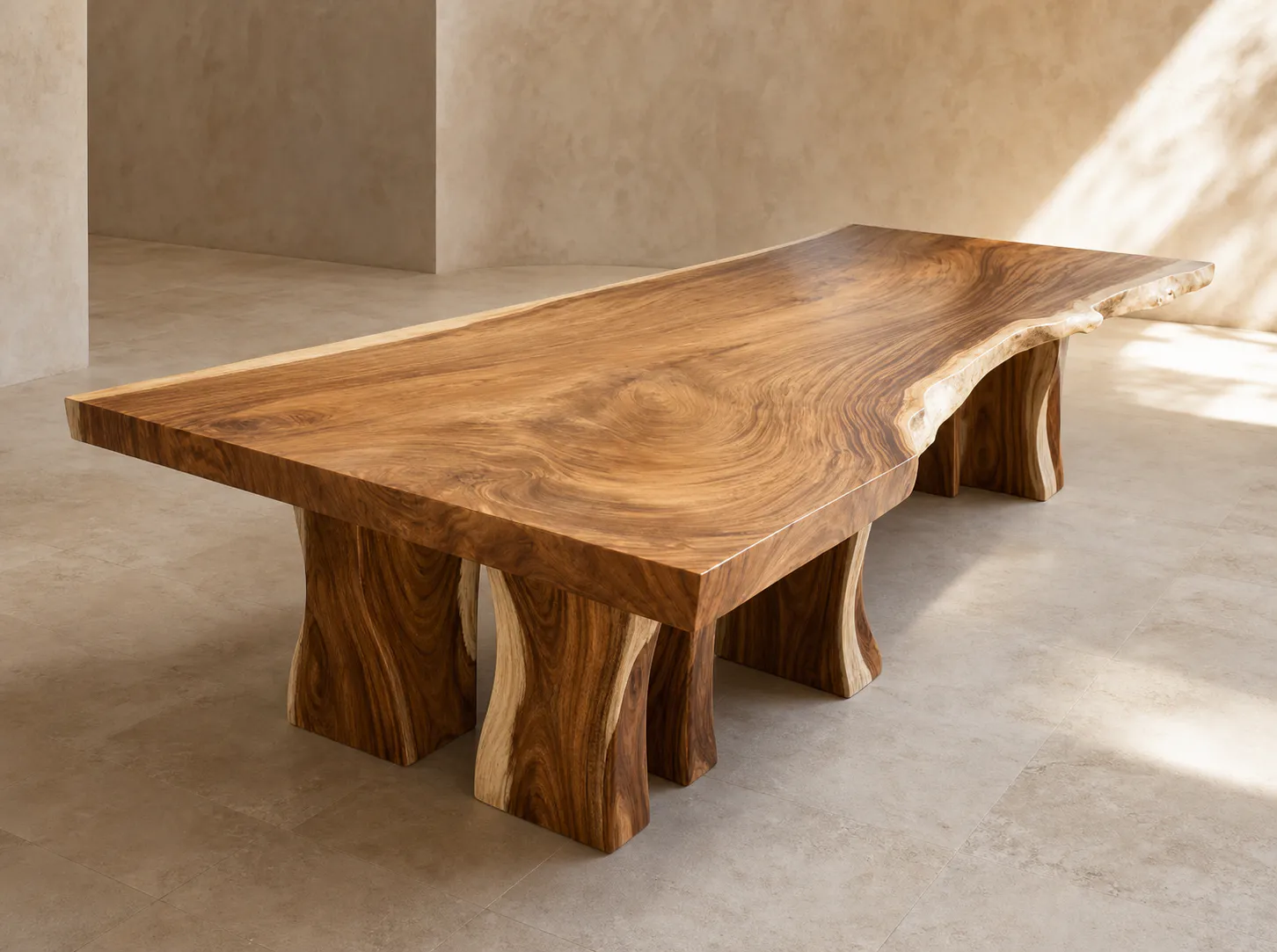
The packaging that prevents teak furniture damage during ocean freight combines dry, conditioned furniture with non-staining surface wrap, edge protection, rigid outer packaging, moisture control, and container restraint
Solid teak is durable, but finished surfaces, joints, carved details, and long tabletops remain vulnerable to abrasion, compression, condensation, and vibration. Whether shipping in a 20-foot or 40-foot container, buyers should request a packing specification that separates protection for the furniture from protection for the cargo load.
Use a layered system: kiln-dried teak; soft, non-staining surface wrap; foam or honeycomb protection at edges; rigid corrugated board; and a fitted crate or carton. The package must prevent movement, isolate furniture from container moisture, and distribute stacking or fork impacts rather than concentrating force on joints, corners, and carved details.
Start with furniture conditioned to stable moisture content, and protect finished faces with clean tissue or foam that will not print, stain, or abrade the finish. Wrap loose components separately; support long rails and tabletops; and keep hardware in labeled packets. For export lumber, the crate, pallets, blocking, and bracing may require the ISPM 15 mark, which addresses regulated wood packaging material rather than furniture quality itself.
Ocean containers create risk through humidity swings, condensation, vibration, and cargo movement. Prevent damage by keeping teak and packaging dry before stuffing, separating units from the floor and walls, filling voids with bracing, and lashing the load to approved anchor points. A sealed crate alone is insufficient if the load can shift.
Specify a clean, dry, odor-free 20-foot or 40-foot container and photograph its interior before loading. Place pallets, skids, or blocking beneath crates where appropriate, maintain clearance from container walls, and use dunnage to eliminate empty spaces. Desiccants and moisture indicators help manage condensation exposure, but they do not remedy wet timber. Confirm who controls packing, loading, insurance, and risk transfer under the agreed Incoterms 2020 rule.
Before dispatch, inspect every wrapped piece, photograph vulnerable areas, and record crate dimensions, weight, moisture readings, and seal numbers. Mark center of gravity, upright orientation, lifting points, and “keep dry” instructions where applicable. These records help warehouses load safely and give buyers a practical baseline for checking condition at destination.
A useful packing record links each item number to pre-shipment photographs, packaging materials, crate number, and container position. Check that straps do not bear directly on finished teak, fasteners cannot rub the furniture, and carton seams are protected from puncture. For repeatable validation, exporters can reference relevant ISTA test procedures when developing pack designs. At delivery, inspect outer packaging before removing it and note visible damage on transport documents.
No. A shipping container slows weather exposure but does not stop condensation, vibration, or load shift. Wrap and immobilize each teak item before loading, then use dunnage and lashing to keep crates apart from container walls. Desiccants and a moisture indicator provide useful evidence if a transit-related claim later needs investigation.
Desiccant quantity depends on container volume, voyage duration, packing moisture, and the chosen barrier system, so it should follow the supplier’s calculation rather than a fixed sachet count. Use moisture indicators to verify exposure. Desiccants complement dry furniture, sealed protection, and ventilation planning; they cannot correct wet timber or a leaking container.
Crates are typically appropriate for heavy, irregular, fragile, or high-value teak pieces because they provide structural protection and lifting control. Reinforced export cartons can suit standardized items when internal blocking prevents movement. The right choice depends on weight, dimensions, finish sensitivity, handling points, destination requirements, and whether other cargo will be stacked nearby.
This resource is published by M Furniture & Decor for buyers evaluating teak furniture export packaging. Packaging requirements may vary by destination, carrier, cargo insurance terms, and applicable phytosanitary regulations.