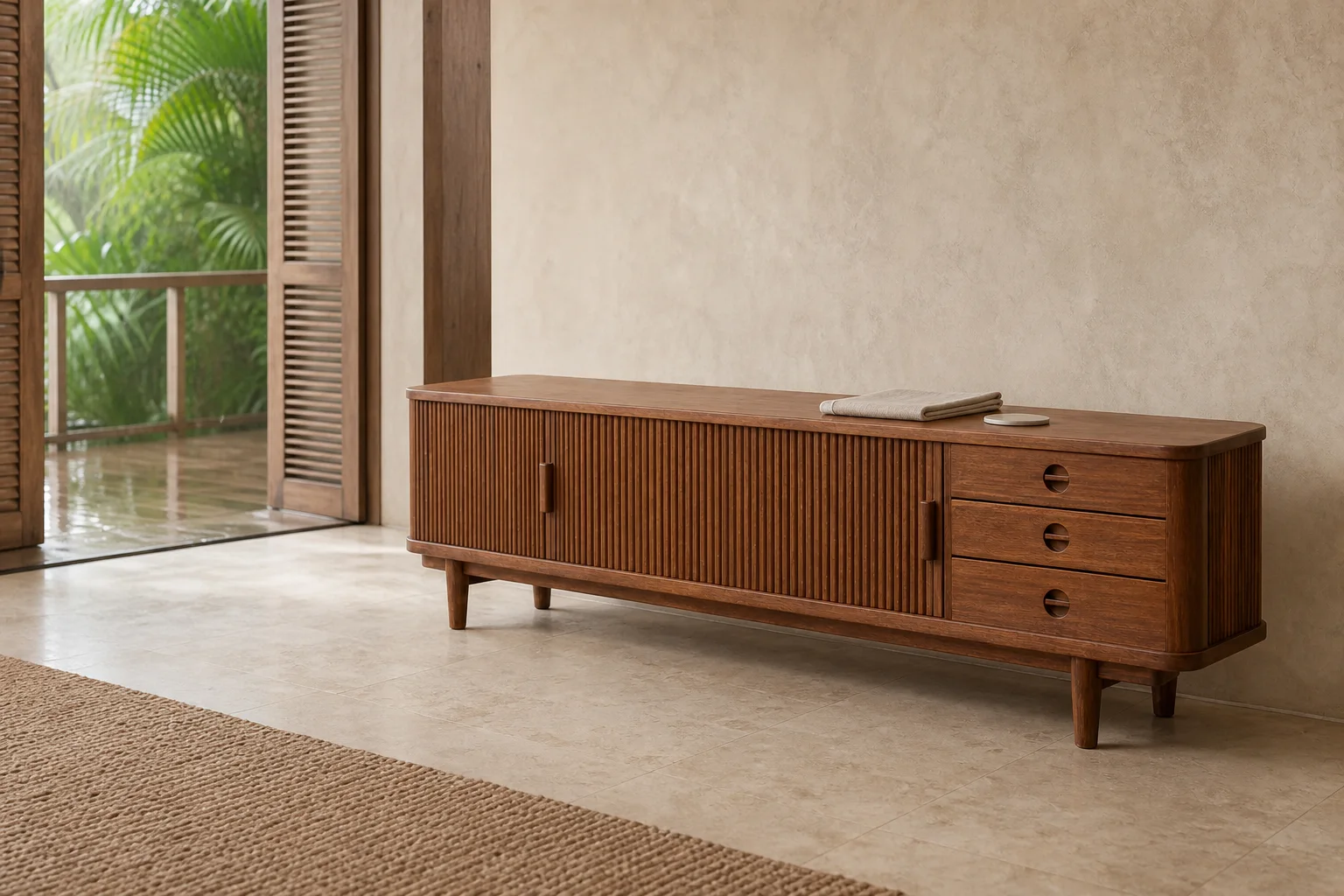
Oil suits a teak table when tactile grain, local repairability, and a relaxed low-sheen look matter most; lacquer suits one when a sealed, more uniform surface is the
Finish choice should follow the table’s use. A family dining table, covered terrace table, and high-turnover restaurant table face different spill, abrasion, sunlight, and maintenance demands.
Oil suits teak tables when the priority is a natural, low-sheen surface that can be maintained locally. Teak’s natural oils support this look, but an oiled top needs periodic reapplication and prompt cleanup. It is practical for homes, covered patios, and owners comfortable with routine care.
A penetrating oil finish emphasizes teak’s color variation, open grain, and hand-finished character instead of building a thick film. Small marks can often be cleaned, lightly abraded, and blended into the surrounding area, which helps on tables expected to acquire honest wear. Follow the product’s label for drying and cure times; many maintenance plans involve inspection once or twice yearly rather than a fixed calendar. The USDA Forest Products Laboratory Wood Handbook notes that wood performance changes with moisture exposure, so use coasters, wipe spills, and avoid leaving wet objects on any teak surface.
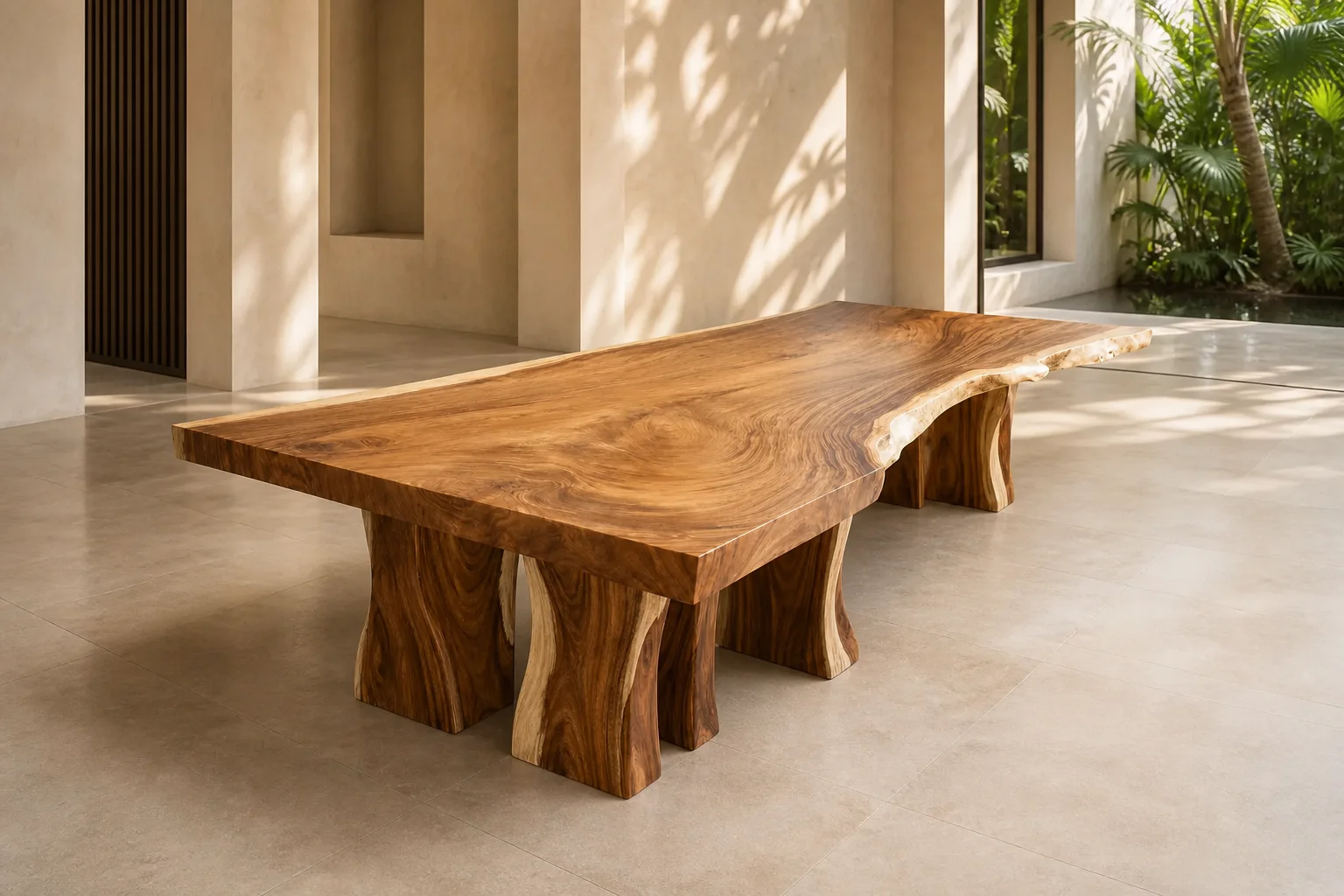
Lacquer is better for teak tables that need a continuous protective film, a controlled sheen, and simpler daily wipe-downs. A properly cured system offers stronger resistance to routine food and drink contact than oil, but deep damage generally requires professional blending or refinishing rather than a small local refresh.
Lacquer creates a film above the teak rather than relying mainly on absorption. That makes it a sensible option for dining tables exposed to frequent glasses, sauces, and cleaning, including hotel or restaurant interiors. Specify the sheen clearly: matte can reduce visible fingerprints, while satin or gloss gives stronger visual reflection. Durability depends on preparation, compatible sealer and topcoat, coat build, and full curing—not the word lacquer alone. Before regular service, let the finisher’s stated cure period pass; a 24-hour dry surface is not necessarily fully cured. For interior applications, ask about emissions and ventilation using EPA VOC guidance.
Choose oil for a repairable, organic teak appearance and choose lacquer for stronger everyday barrier protection with less frequent renewal. The deciding factors are location, spill frequency, desired sheen, available maintenance, and acceptance of repair methods. Neither finish makes teak immune to heat, moisture, scratches, or ultraviolet exposure.
Start with three questions: Will the table receive daily meals or only occasional use? Is its appearance meant to be matte and evolving, or uniform and polished? Who will maintain it after delivery? Oil fits designers who value a finish that can be renewed without stripping the whole top. Lacquer fits buyers who need repeatable cleaning and a consistent visual specification across multiple tables. For outdoor exposure, confirm the entire coating system is rated for that environment; indoor lacquer is not automatically suitable outside. M Furniture & Decor can match a finish sample before production, while The Wood Database’s teak profile provides useful species context.
Oil does not create a maintenance-free teak table. Expect to clean it gently, remove spills promptly, and re-oil when the surface looks dry, pale, or unevenly absorbent. Frequency depends on sun, washing, and use; an indoor dining table usually needs less attention than an exposed outdoor one.
Usually, yes: a fully cured lacquer system can provide a practical barrier for normal dining use and routine cleaning. Its real durability depends on surface preparation, compatible coats, cure time, and use conditions. Use placemats, coasters, and heat protection because lacquer can still scratch, haze, or fail under abuse.
Do not assume lacquer will bond over an existing oil finish. Residual oil can interfere with adhesion and cause uneven appearance or later failure. A professional should identify the prior coating, remove or isolate incompatible material, and test the complete finishing system on an inconspicuous area before refinishing the table.
Oil is generally easier to repair after minor scratches because the affected area can often be cleaned, lightly sanded, and re-oiled with less visible transition. Lacquer repairs can be less forgiving: a deep scratch may require color matching, careful feathering, or refinishing a larger tabletop area for consistency.
This resource is educational guidance from M Furniture & Decor. Finish suitability varies by coating formulation, construction, installation environment, and care practices; confirm the selected finish system and maintenance instructions with the manufacturer or finishing professional.