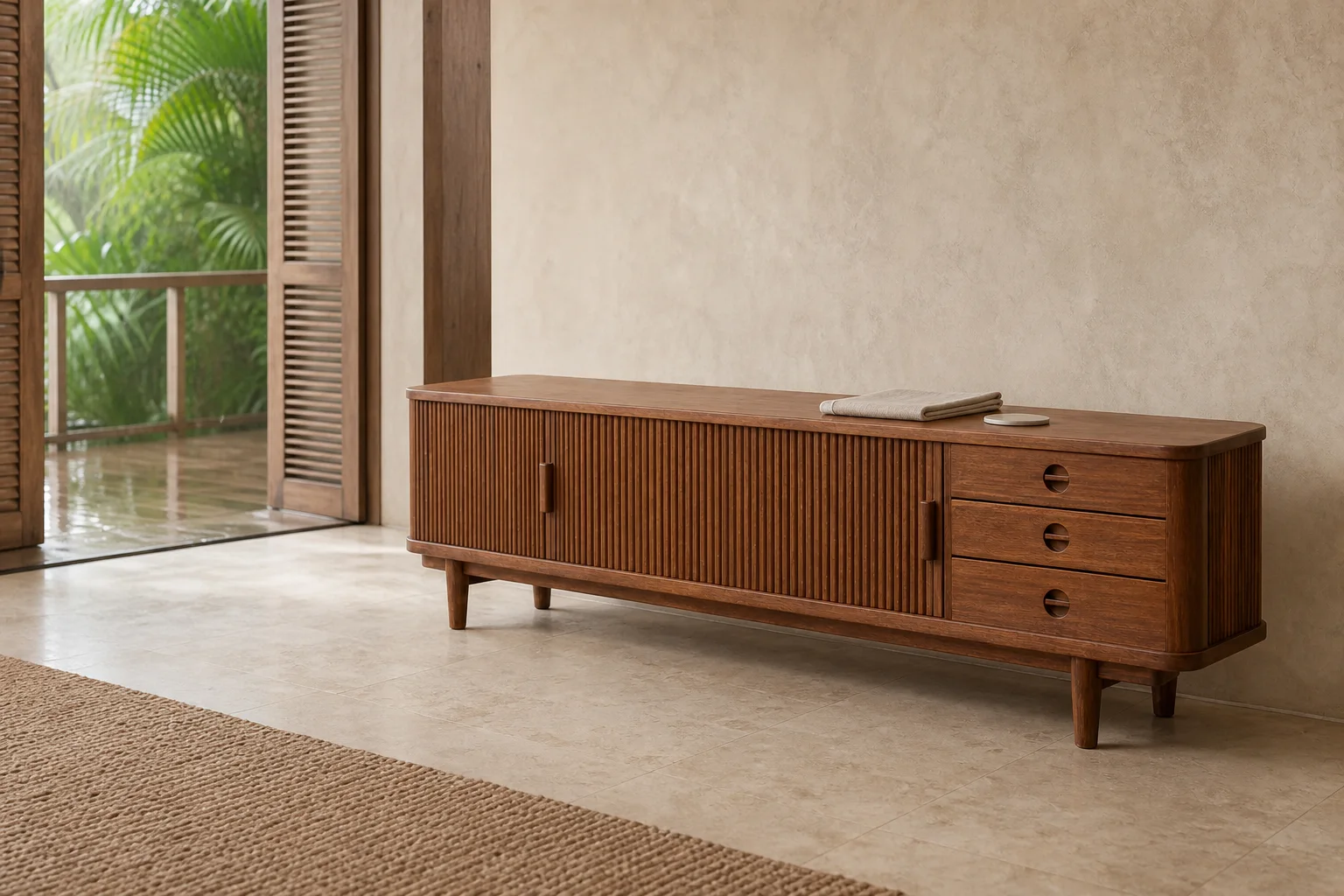
A matte finish changes teak furniture from reflective and polished-looking to soft, low-sheen and visually grounded. Rather than creating bright mirror-like highlights, it scatters light across the surface
Sheen changes how viewers perceive a surface; it does not turn teak into a different species or permanently set its colour. Teak can still deepen, lighten or weather as its environment, coating and exposure change.
A matte finish diffuses reflected light, so teak appears softer, less glossy, and more uniform than it does beneath a polished coating. It usually emphasizes the timber’s warm brown-to-golden tone and grain texture while masking small reflections, fingerprints, and minor surface irregularities in everyday viewing.
Gloss is a measurement of light reflected at a specified angle, not a measure of wood quality. A higher-sheen film produces concentrated highlights; a matte coating contains agents or surface texture that spread reflected light in multiple directions. The American Coatings Association’s explanation of gloss measurement helps explain why the same teak tabletop can look bright near a window in gloss but subdued in matte. Matte surfaces commonly suit rooms where designers want wood to read as material rather than as a reflective decorative layer.
{'type': 'image', 'src': 'https://mfurniturethailand.com/images/resources/matte-finish-teak-table-grain.jpg', 'alt': 'M Furniture & Decor teak table showing matte finish grain texture under daylight', 'caption': 'Diffuse daylight shows how a matte coating minimizes specular highlights while retaining teak grain.'}
Matte finish can make teak seem more natural, textured, and less intensely coloured because there are fewer bright reflections amplifying its surface. It does not inherently lighten or darken the wood, however. The coating’s resin, tint, film thickness, and teak’s existing colour determine the actual colour change.
On a freshly sanded teak surface, clear oil and clear film finishes may deepen colour by changing how light enters and returns from the wood. Matte, satin and gloss versions of an otherwise similar product can therefore differ more in apparent contrast than in base colour. The USDA Forest Products Laboratory Wood Handbook notes that wood appearance is shaped by surface properties and finishing practice. Test a sample on offcuts because natural teak can vary substantially from board to board.
Matte teak is effective where low glare, subtle texture, and a relaxed natural appearance matter most. Its trade-off is that rubbing, oily marks, or uneven spot repairs can be more noticeable at certain angles. Cleaning gently and matching the original sheen are important for a consistent result.
A matte surface can hide fingerprints better than high gloss, but it is not maintenance-free. Abrasive pads, furniture polish and aggressive rubbing may burnish isolated areas into shinier patches. Use a soft cloth, follow the coating manufacturer’s instructions, and avoid applying an unknown polish over a cured finish. For indoor pieces, consider ventilation and product chemistry during refinishing; the US Environmental Protection Agency guidance on VOCs provides useful indoor-air context. Outdoor teak needs a finish designed for weather exposure, not merely a low-sheen look.
Neither sheen is universally better for teak furniture. Matte is suited to low-glare, natural and texture-forward interiors, while gloss creates stronger highlights and a more formal polished appearance. Choose based on room lighting, desired visual character, expected contact with the furniture and whether future touch-up work must blend discreetly.
Protection depends on the specific finish system, film build and application quality, not on matte sheen alone. A matte polyurethane, lacquer or hardwax oil may resist stains differently from another matte product. Check the manufacturer’s technical data, allow full cure time, and promptly remove spills according to its care instructions.
Yes, glossy teak can often be refinished to matte after cleaning, assessing the existing coating and preparing the surface as the new product requires. Compatibility matters: applying a new finish over an unknown coating can fail. Test an inconspicuous area or consult a finishing professional before treating a valuable piece.
Matte teak may conceal fine fingerprints and reflected glare better than gloss, but scratches remain dependent on coating hardness, colour and use. A scratch can appear pale, dark or shiny when it disrupts the surface. Use felt pads, avoid abrasive cleaners, and repair damage with materials matched to the original sheen.
This educational page is published by M Furniture & Decor. Finish appearance varies with teak selection, coating formulation, application method, lighting and use; test any finish on a sample before treating furniture.