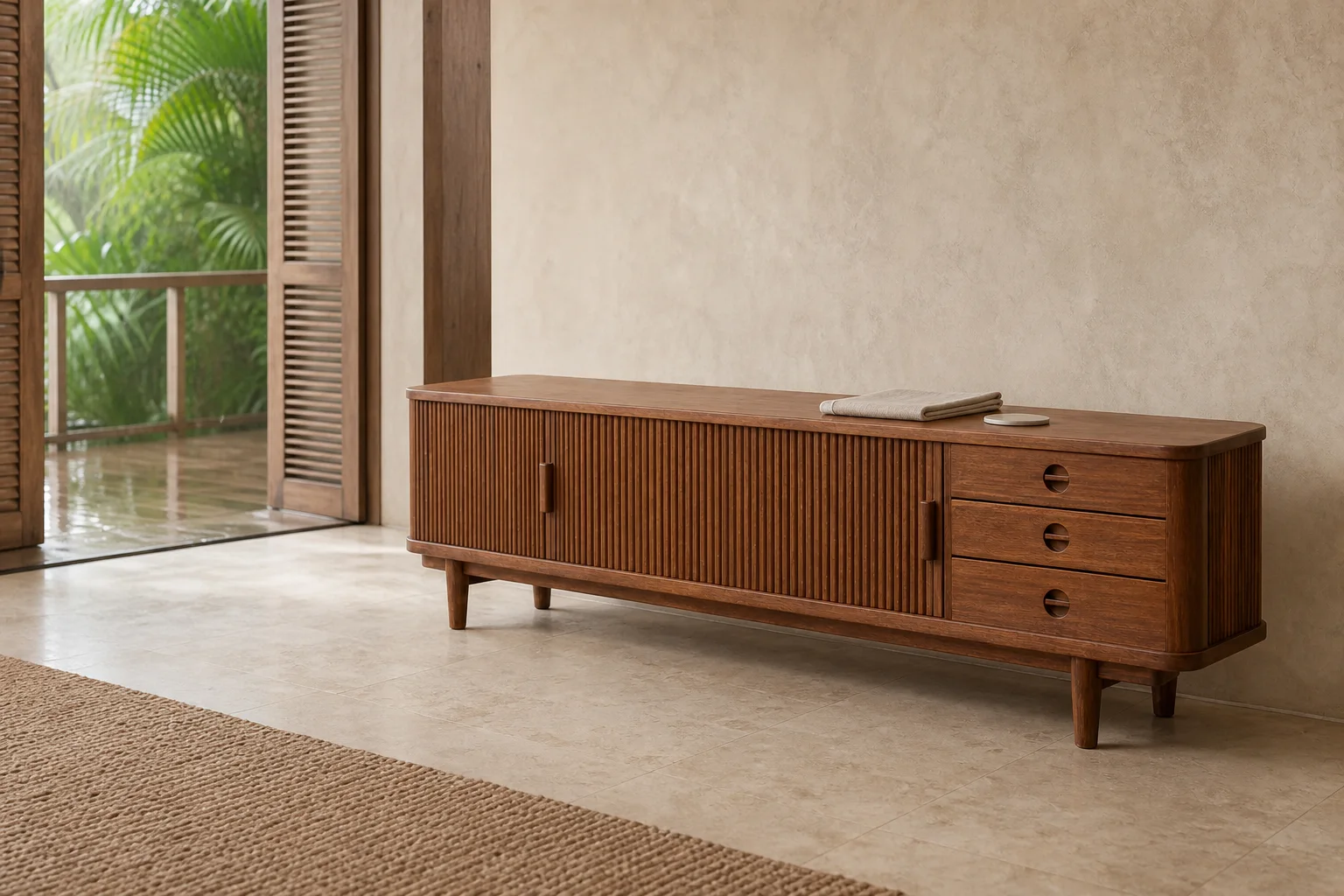
Yes, manufacturers can often provide teak finish control samples, and serious custom furniture programs usually should use them before production starts. A control sample helps align expectations for
A teak finish control sample is usually a small wood panel or approved mock-up showing the intended stain, sheen and protective coating on real teak.
A teak finish control sample is a physical reference made on teak that shows the approved color, stain intensity, sheen and topcoat effect for production. Buyers and manufacturers use it to compare finished pieces against an agreed visual benchmark, while recognizing that natural wood variation prevents exact duplication on every component.
In practice, the sample may be a small panel, a cut part or a full prototype section finished with the same process planned for the order. It typically records choices such as open-pore versus filled appearance, matte versus satin sheen and whether the teak remains natural or receives pigment. Standards from the USDA Forest Products Laboratory and AWI help explain why wood species, grain orientation and finishing methods influence the final visual result.
{'type': 'table', 'caption': 'Typical contents of a teak finish control sample', 'headers': ['Element', 'What it confirms', 'Why it matters'], 'rows': [['Color tone', 'Natural teak or stained target', 'Sets the overall appearance expectation'], ['Sheen level', 'Matte, low sheen or satin', 'Affects how light reflects in the space'], ['Topcoat system', 'Oil, lacquer or polyurethane-type system', 'Influences durability and maintenance'], ['Wood character', 'Grain, sapwood allowance and variation range', 'Prevents unrealistic matching expectations']]}
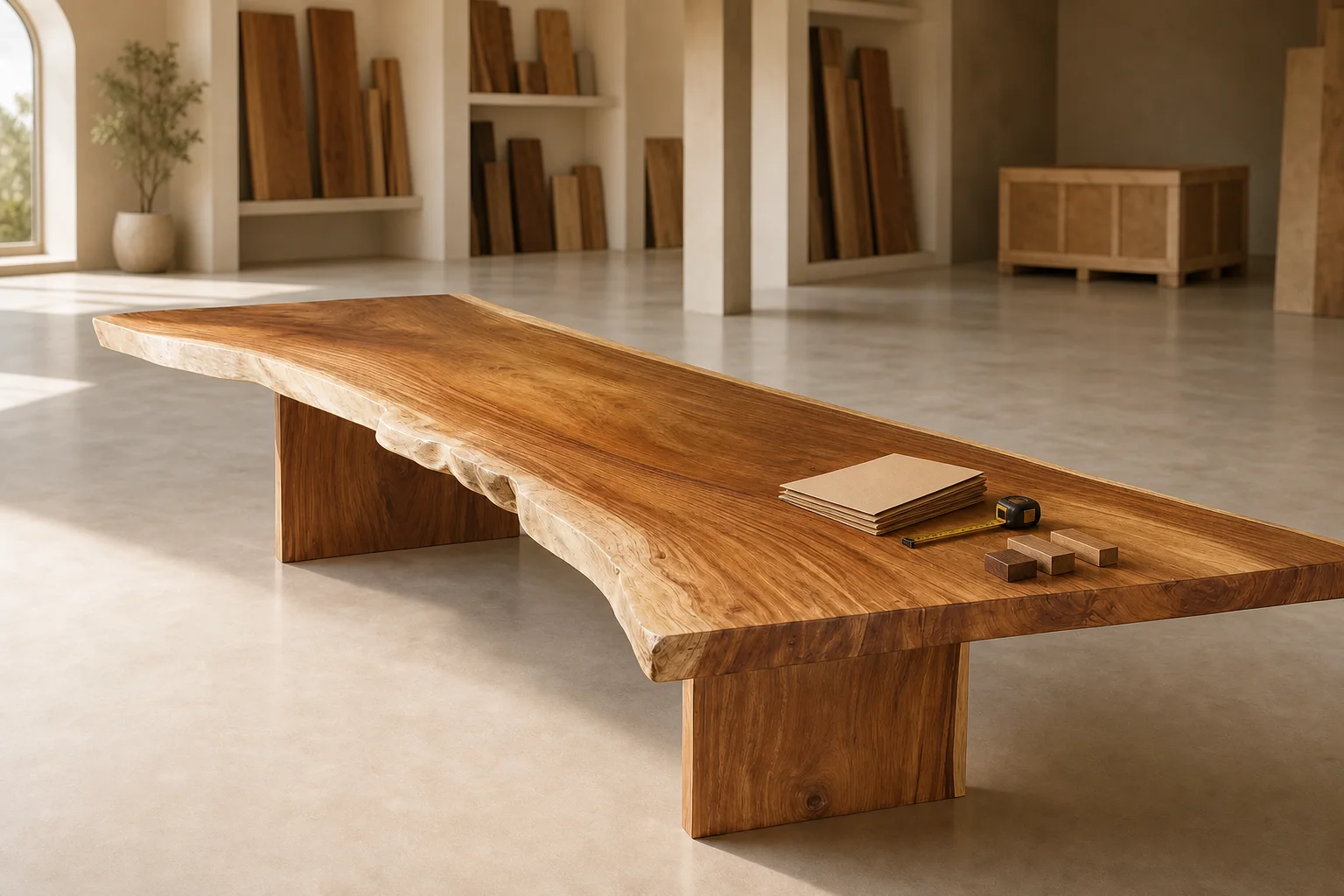
Yes, many custom teak furniture manufacturers can provide finish control samples before production, especially for export, hospitality and made-to-order projects. The sample may be free, charged separately or credited against the order. Lead time depends on material availability, finishing complexity and whether the buyer requests multiple stain or sheen options.
Factories serving architects, procurement teams and overseas buyers commonly build sampling into the approval workflow because it reduces rework later. A manufacturer may present two to five finish options on teak panels, then revise the preferred version after feedback. The process is especially useful when the buyer needs consistency across dozens or hundreds of units, or when the project includes matching to stone, fabric or existing millwork. It is also common to request couriered physical samples rather than rely only on photos.
{'type': 'image', 'src': 'https://mfurniturethailand.com/images/resources/teak-finish-sample-panels.jpg', 'alt': 'Teak finish control sample panels showing multiple stain and sheen options for furniture production approval', 'caption': 'Physical teak sample panels help buyers compare stain depth and sheen before approving production.'}
Buyers should specify the intended teak grade, target color, stain direction, sheen, topcoat type, indoor or outdoor use, and acceptable natural variation when requesting a sample. Clear instructions produce more useful approvals, because finish appearance depends on substrate selection, sanding schedule, coating system and the lighting conditions used for review.
A vague request such as "medium brown teak" often creates avoidable confusion. Better specifications identify whether the piece should look raw and natural, lightly warmed, smoked, weathered or more uniform through stain. Buyers should also note if they want visible grain and pores, whether sapwood is permitted, and what environment the piece will serve. Outdoor teak, for example, ages differently from indoor lacquered teak, so the sample should reflect the final use condition rather than an abstract color target.
A teak finish control sample is highly useful, but it is a control reference rather than a promise of identical piece-by-piece matching. Teak boards vary in grain, density and natural oil content, so final furniture should be expected to fall within an approved visual tolerance for color, sheen and character instead of perfect uniformity.
Even with the same sanding, stain and topcoat, two teak boards can absorb finish differently. End grain may darken faster, figured grain may reflect more light and large tabletops can read differently from small sample blocks. That is why experienced manufacturers define an acceptable range at approval stage and compare production pieces under consistent lighting. For larger hospitality runs, some buyers approve a first article or golden sample in addition to the smaller control panel to further reduce interpretation risk.
{'type': 'quote', 'text': 'Wood is a natural material, and finish evaluation should account for species characteristics, grain and color variation rather than assume exact duplication.', 'attribution': 'Adapted from USDA Forest Products Laboratory and AWI guidance'}
Buyers should approve teak finish samples in writing, link the approval to a sample ID or photo set, and record the finish system, sheen target, date and project name. Good documentation turns a sample into a usable production control tool for the factory, quality team, sourcing office and receiving client.
The strongest workflow combines a physical signed sample, labeled reference photos and a short approval note in the purchase file. If the project is international, the buyer should also confirm who keeps the master sample and whether a duplicate stays with the factory. This matters when inspections happen weeks later or when replacement items are ordered. Documentation should also note if slight variation is accepted on hidden faces, undersides or replacement boards selected for structural reasons.
For custom furniture programs, one approved sample plus one first-article review often prevents far more delay than trying to correct 50 or 100 finished units after shipment preparation.
Yes, they should usually be made on real teak rather than paper swatches or generic wood. Real teak shows the species' grain, oil content and color movement under stain or clear coat. That gives buyers a more reliable basis for approval before the factory starts full production.
Sometimes a manufacturer can get very close, but exact matching is not always realistic with natural teak. Board-to-board variation, aging, light exposure and different coating systems affect the result. Buyers should ask for a near-match target and approve an acceptable tolerance instead of expecting absolute duplication.
Often they do, although some manufacturers absorb the cost for active projects or credit it against a confirmed order. Pricing depends on whether the sample is a simple panel, several finish options or a larger mock-up. Courier charges, revisions and custom stain development may also be billed separately.
Photo approval can be useful for shortlisting options, but it is weaker than approving a physical sample. Camera settings, screen calibration and lighting can shift teak color and sheen. For custom, export or hospitality furniture, a mailed physical control sample is usually the safer approval standard.
This resource is published for informational purposes by M Furniture & Decor. Finish sampling, wood variation and production tolerances differ by project, species selection, finish system and end-use environment.