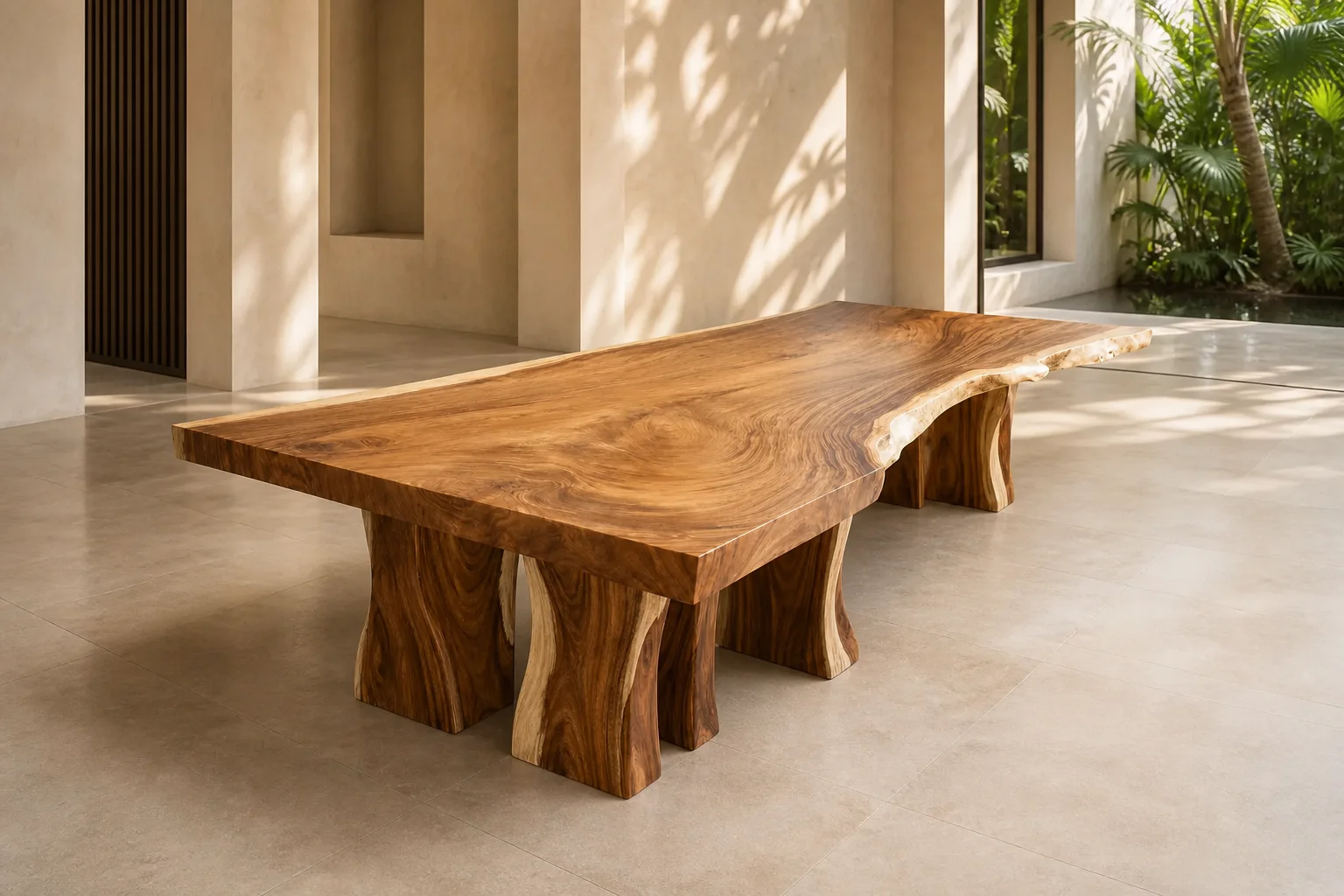
Yes, mango wood is generally a good choice for dining tables when the table is made from properly seasoned solid wood and protected with a durable finish. Mango
For buyers comparing mango wood with teak, oak, rubberwood, or engineered wood, the practical question is simple: will the table stay stable, resist stains, and age well in a dining room? The answer is usually yes for normal residential use, especially if spills are wiped quickly, hot cookware is kept off the surface, and humidity swings are controlled. That makes mango wood a sensible option for families, apartments, restaurants, and hospitality settings seeking solid wood character at a moderate price.
{'type': 'image', 'src': 'https://mfurniturethailand.com/resources/images/mango-wood-dining-table-grain-finish.jpg', 'alt': 'Mango wood dining table surface showing grain and protective finish in a dining room context', 'caption': 'Mango wood is valued for its visible grain variation and warm, natural color range.'}
Mango wood is suitable for dining tables because it is a hardwood with enough density for everyday household use, attractive grain variation, and competitive pricing. A well-made mango table can be durable and stable, but its long-term performance depends on proper drying, sound joinery, and a protective finish that resists spills and abrasion.
Mango wood comes from *Mangifera indica*, a fruit-bearing tree widely grown in India, Thailand, and other tropical regions. After orchard trees stop commercial fruit production, the timber is often repurposed into furniture, which gives mango wood a practical sustainability story alongside solid wood appeal. In furniture making, species-level properties matter, but construction details matter just as much. A table with mortise-and-tenon joinery, stable panel construction, and quality finishing usually outperforms a poorly built table made from a more famous wood species.
Mango wood is durable enough for everyday dining use in most homes, including families that eat at the table daily. It tolerates normal plates, serving ware, and light impact well, but it is not immune to dents, scratches, or finish wear. Durability improves significantly when the table is kiln-dried, thick-topped, and properly sealed.
Durability has two layers: the wood itself and the finish on top of it. Mango wood is commonly described as moderately dense and suitable for furniture, but a dining table sees repeated abrasion from plates, cutlery, cleaning, and chair contact. That means the finish often fails before the wood does. Polyurethane, catalyzed lacquer, or hardwax oil systems can all work, though each changes the repair profile and sheen. In practical terms, a protected mango tabletop can serve for many years in residential dining rooms if used with placemats, coasters, and prompt spill cleanup.
{'type': 'table', 'caption': 'Buying factors that affect mango wood table durability', 'headers': ['Factor', 'Why it matters', 'What to look for'], 'rows': [['Kiln drying', 'Reduces later movement, warping, and cracking', 'Moisture-controlled production and seasoned timber'], ['Top thickness', 'Improves stiffness and perceived solidity', 'Substantial solid top or properly engineered panel'], ['Finish system', 'Protects against stains, abrasion, and water rings', 'Sealed topcoat suited to dining use'], ['Joinery', 'Affects wobble resistance and lifespan', 'Reinforced corner blocks or traditional joints']]}
The main drawbacks of mango wood dining tables are moderate scratch susceptibility, sensitivity to standing water and heat, and natural movement if humidity changes sharply. Some pieces also show more color variation, knots, or patching than buyers expect. These are manageable issues, but they matter for high-traffic homes and commercial use.
No solid wood dining table is maintenance-free, and mango wood is no exception. Compared with teak, which naturally contains oils, mango usually relies more heavily on surface finishing for stain and moisture protection. A neglected finish can develop water marks, dull patches, or edge wear over time. Because mango has lively grain and color shifts, one tabletop may look calm and uniform while another appears highly varied. Buyers wanting perfect consistency often prefer oak veneer, walnut veneer, or engineered surfaces instead of character-rich solid boards.
Watch for overly dry or poorly seasoned tops. Excess movement around breadboard ends, seams, or aprons can signal manufacturing issues rather than a problem with mango wood itself.
Mango wood usually offers a middle ground between price, appearance, and performance. Teak is better known for natural oil content and moisture resistance, oak for established furniture durability, and acacia for hardness and bold grain. Mango remains a strong value option when buyers want solid hardwood character without teak-level cost.
Species comparisons are useful, but they should stay practical. Teak is widely trusted in Thailand and international hospitality because of its dimensional stability, decay resistance, and premium reputation. Oak remains a benchmark in Europe and North America for sturdy dining furniture. Acacia often feels harder and visually bolder. Mango competes by delivering real hardwood warmth, visible grain, and approachable pricing. For indoor dining rooms, a well-made mango table can perform very well, even if buyers who prioritize maximum moisture resistance or luxury resale often lean toward teak.
{'type': 'table', 'caption': 'General comparison for indoor dining tables', 'headers': ['Wood species', 'Typical strength profile', 'Visual character', 'Value position'], 'rows': [['Mango', 'Good everyday durability', 'Warm tone with varied grain', 'Moderate'], ['Teak', 'High stability and moisture tolerance', 'Golden brown, refined grain', 'Premium'], ['Oak', 'Strong, proven furniture performance', 'Straight grain, classic look', 'Mid to premium'], ['Acacia', 'Often hard and durable', 'Bold grain and contrast', 'Moderate to mid']]}
Care for a mango wood dining table by wiping spills quickly, using coasters and placemats, avoiding direct heat, and cleaning with a soft damp cloth rather than harsh chemicals. Keep the table away from extreme sun and humidity swings. Routine maintenance protects both the finish and the wood beneath it.
Dining tables fail slowly through repeated small stresses: wet glasses, hot dishes, abrasive cleaners, and seasonal humidity changes. Mango wood responds well to simple preventive care. Clean with a microfiber cloth and a mild soap solution only when needed, then dry the surface. Avoid bleach, ammonia, and aggressive degreasers that can break down the topcoat. If the table uses hardwax oil rather than film finish, periodic re-oiling may be recommended by the maker. Felt pads, trivets, and stable indoor humidity help preserve flatness and appearance over time.
A mango wood dining table is a good fit for buyers who want solid hardwood furniture, visible natural grain, and reasonable pricing for everyday indoor use. It suits most homes, cafés, and styled apartments. Buyers wanting the lowest maintenance or highest prestige usually prefer sintered stone, teak, or engineered commercial surfaces.
Mango wood is especially appealing when the goal is authentic wood texture without moving into the cost bracket of premium teak or walnut. It suits households that appreciate organic variation and are comfortable with normal solid-wood upkeep. Interior designers often pair mango with black metal, woven seating, linen, or upholstered chairs because its grain works across contemporary and rustic schemes. For demanding restaurant turnover, outdoor exposure, or constant heavy sanitizing, a more specialized surface may be easier to maintain. For indoor residential dining, though, mango remains a credible and attractive choice.
{'type': 'image', 'src': 'https://mfurniturethailand.com/resources/images/mango-vs-teak-dining-table-comparison.jpg', 'alt': 'Mango wood and teak dining tables compared for indoor dining room buying decisions', 'caption': 'Choosing between mango and teak often comes down to budget, finish preference, and desired maintenance level.'}
Mango wood can scratch under normal use, but not unusually so for a solid hardwood dining table. Most visible wear comes from the finish layer rather than deep gouges in the wood itself. Placemats, coasters, and lifting heavy ceramics instead of dragging them greatly reduce surface scratching.
Mango wood is usually better if you want real solid wood character, repairability, and longer-term furniture value. Engineered wood can be more uniform and sometimes more dimensionally stable, but it lacks the same depth, grain authenticity, and refinishing potential that well-made solid mango tables can offer.
Mango wood dining tables can handle everyday dining, but they should not be treated as heat-proof or stain-proof surfaces. Hot cookware can damage the finish, and standing liquids may leave marks if not wiped quickly. Trivets, coasters, and prompt cleanup are the safest habits for long-term appearance.
A mango wood dining table can last many years, and often decades, if the wood is properly dried, the construction is sound, and the finish is maintained. Lifespan depends on humidity control, cleaning habits, and whether the table faces heavy family use, restaurant traffic, or poor environmental conditions.
This resource is informational and reflects general furniture-material guidance. Actual performance varies by timber grading, drying method, construction, finish system, and how the table is used and maintained.