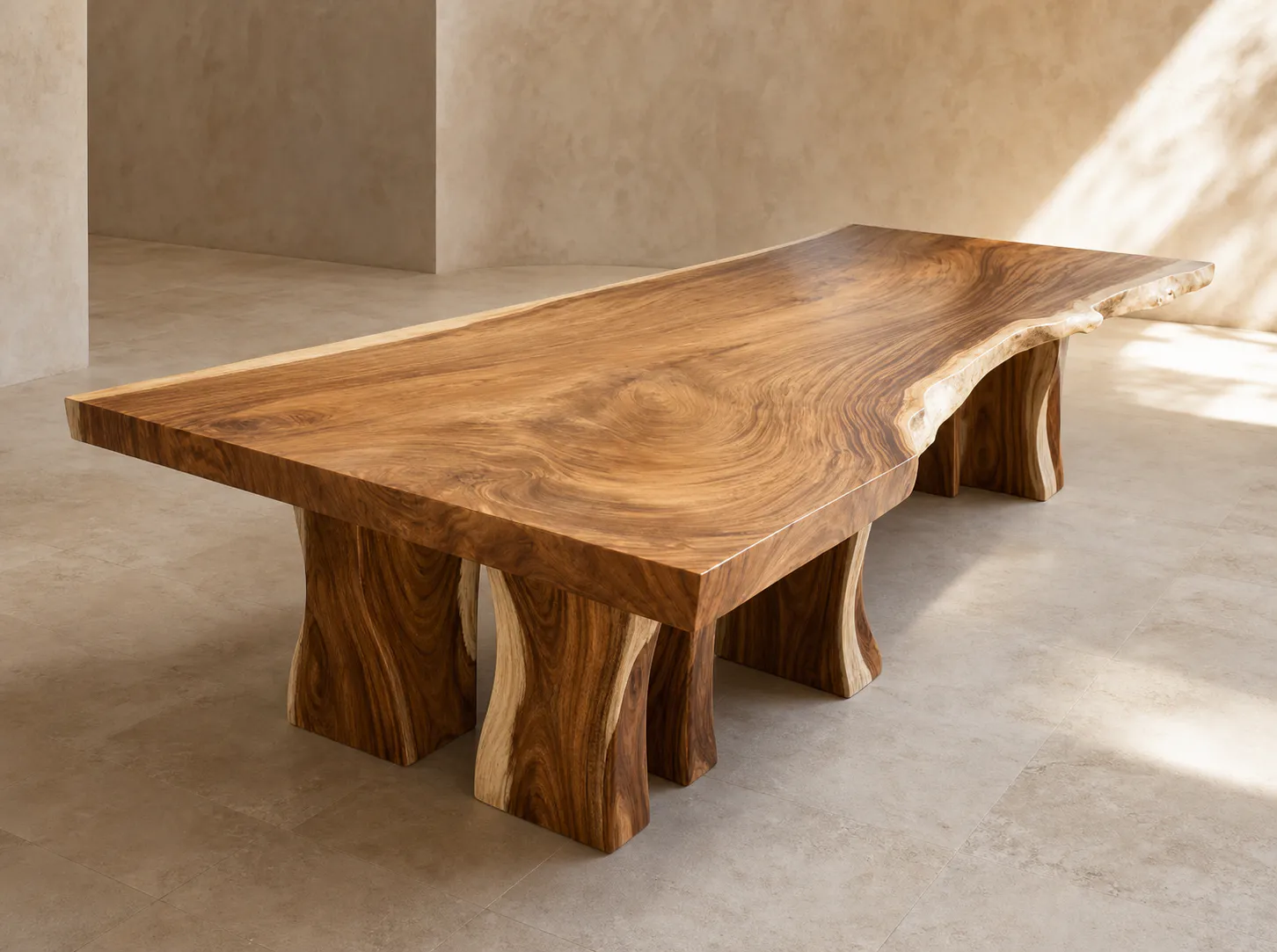
Mango wood can crack in dry climates, but the main driver is usually **low or rapidly changing indoor humidity**, not the species by itself. Like teak, oak, walnut
A practical target for many solid wood interiors is about **30% to 50% relative humidity**, with damage risk rising when conditions stay far below that range for extended periods.
{'type': 'image', 'src': 'https://mfurniturethailand.com/resources/images/mango-wood-humidity-care.jpg', 'alt': 'Mango wood dining table in a dry indoor room showing humidity control and furniture care context', 'caption': 'Indoor humidity stability matters more than climate labels alone when evaluating mango wood performance.'}
Mango wood cracks in dry climates because dry air pulls moisture from the wood, causing shrinkage across the grain. If that shrinkage is restrained by joinery, wide panels, uneven finishing, or poor drying, the stress can appear as checks, open seams, end cracks, or larger splits.
The **USDA Forest Products Laboratory** explains that all solid wood responds to equilibrium moisture changes. In heated interiors in Phoenix, Denver, or Dubai, air can become much drier than the conditions where a table or cabinet was made. Mango wood then shrinks mostly across the grain rather than along its length. Stress builds around glued joints, breadboard ends, wide tops, and fasteners, especially when furniture sits near HVAC vents, radiators, fireplaces, or strong window sun.
No, cracking is not inevitable with mango wood furniture. Pieces that are properly kiln-dried, acclimated, sealed, and engineered for seasonal movement often remain stable for years. The biggest risks come from abrupt humidity drops, direct heat exposure, weak joinery, or lumber that was still too wet during production.
Mango wood is widely used for tables, storage pieces, and hospitality furniture, and its durability depends heavily on process quality. A factory that kiln-dries lumber, equalizes moisture content, and designs joinery to allow movement reduces failure risk substantially. Finishes such as lacquer, hardwax oil, and catalyzed coatings do not stop movement, but they slow moisture exchange. That is why two mango wood pieces in the same city can age very differently under different manufacturing and placement conditions.
{'type': 'table', 'caption': 'Typical risk factors for mango wood in dry interiors', 'headers': ['Factor', 'Lower risk', 'Higher risk'], 'rows': [['Moisture content at manufacture', 'Properly kiln-dried and acclimated', 'Wet lumber or rushed production'], ['Indoor placement', 'Away from vents and heaters', 'Next to radiators or direct sun'], ['Construction', 'Movement-friendly joinery', 'Rigid wide-panel restraint'], ['Humidity pattern', 'Stable year-round', 'Sharp seasonal swings']]}
For most mango wood furniture, a stable indoor relative humidity around 30% to 50% is the safest practical target. Brief dips do not guarantee damage, but prolonged dryness below that range increases the chance of shrinkage, open joints, surface checking, and visible cracks in solid wood components.
Furniture makers and groups such as the **National Wood Flooring Association** commonly reference this range because it supports both human comfort and wood stability. A hygrometer gives a better answer than outdoor weather apps or city climate averages. Winter heating in Toronto, London, or Seoul can make interiors as dry as many desert regions. If a room remains below roughly 30% for weeks, a portable humidifier or whole-home system can materially reduce stress on solid wood furniture.
Measure the room where the furniture actually sits. Outdoor humidity and general climate labels often fail to describe the wood's true indoor environment.
You can reduce cracking by keeping humidity stable, avoiding direct heat and strong sun, maintaining the finish, and letting new furniture acclimate before heavy use. Prevention is mainly about slowing moisture loss and reducing stress, because all solid hardwood, including mango, continues to move seasonally.
Keep mango wood furniture several feet from heaters, fireplaces, and strong HVAC supply vents. Use a hygrometer, add humidity during dry seasons, and keep floors level so panels are not twisted under load. Clean with a soft cloth and avoid soaking the surface. If a piece arrives from Thailand or another humid production region, give it time to acclimate indoors. For large openings or loose joints, consult a repair professional instead of forcing the wood back together.
Normal movement usually means tiny seasonal gaps, slight panel shrinkage, or hairline checks that stabilize when humidity returns. Real damage involves deeper or growing separation, lifting edges, loose joints, severe drawer fit problems, or cracks that affect structure, tabletop flatness, or safe everyday use.
A fine line near end grain can be cosmetic, while a crack running through a leg joint or across a tabletop glue line deserves prompt attention. Watch whether the opening changes with the season and whether the furniture still sits flat and works normally. If drawers bind badly, a cabinet rocks, or a top becomes uneven, the problem is more than visual. Dated photos and humidity readings help a maker, retailer, or conservator assess whether movement is expected or defective.
Yes, mango wood can perform well in desert or very arid homes if indoor humidity is managed and the furniture is properly made. The higher risk comes from long periods below about 30% relative humidity, heater exposure, and rapid environmental swings rather than the species alone.
No, a small hairline crack is not always a defect. Solid wood often shows minor seasonal checking or slight gaps as humidity changes. It becomes more concerning when the crack deepens, spreads, affects joints, changes tabletop flatness, or interferes with safe and normal use.
If your indoor air stays very dry in winter, a humidifier can help protect mango wood furniture by reducing shrinkage stress. Use a hygrometer first, then aim for a steady range near 30% to 50% relative humidity rather than chasing constant high moisture levels.
No, finishing does not completely stop mango wood from cracking because all solid hardwood still exchanges moisture with surrounding air. A good finish slows that exchange and can reduce stress, but proper drying, construction, placement, and humidity control remain essential for long-term stability.
This resource is for general wood-care education and does not replace an inspection by a qualified furniture repair professional, conservator, or manufacturer representative for severe cracking, structural movement, or warranty-specific issues.