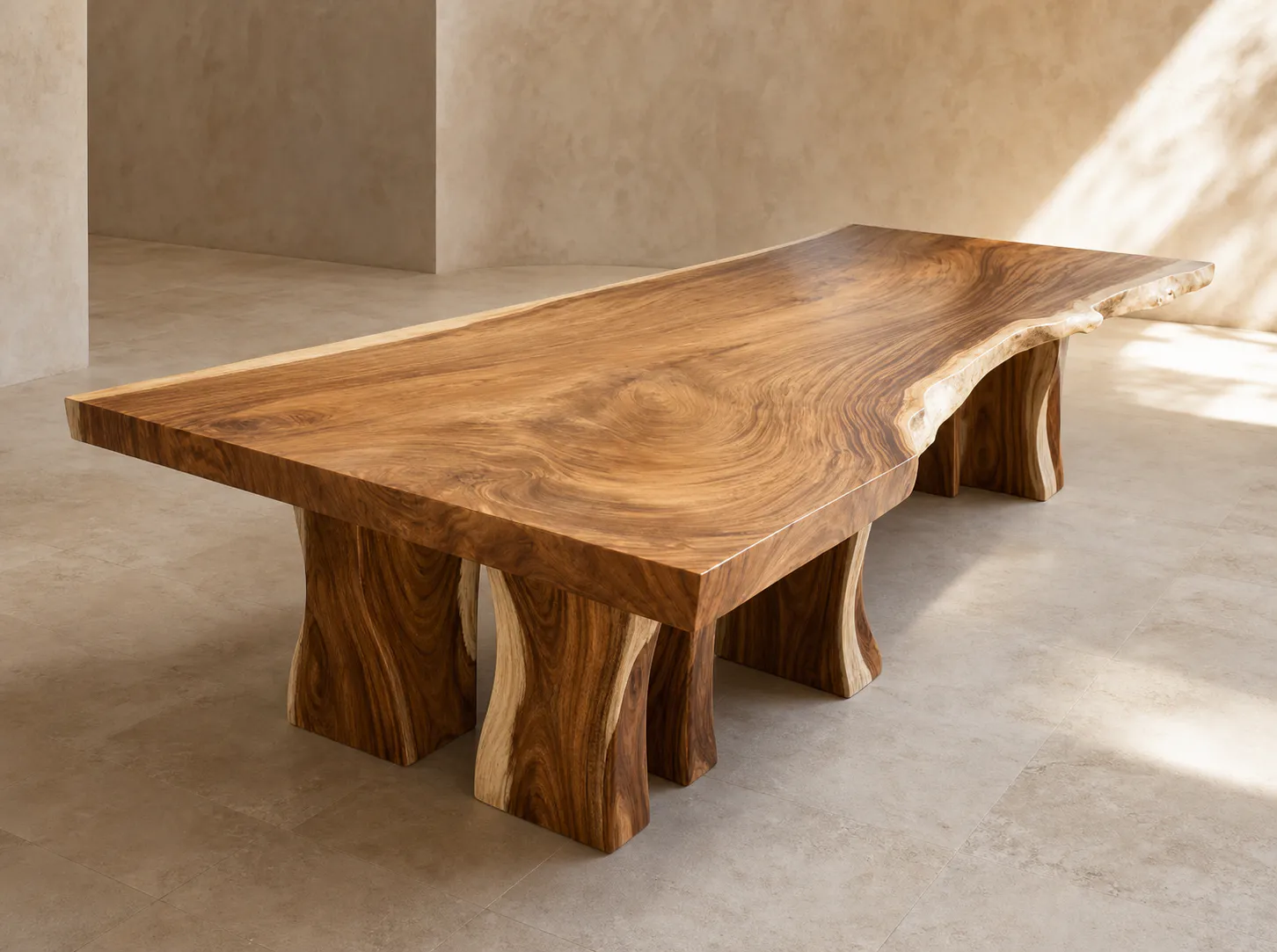
Teak is a practical heirloom furniture wood because it balances long-term durability, dimensional stability, natural oil content, and repairability in a way few materials do. For buyers comparing
That does not mean every teak piece is automatically heirloom-grade. Construction quality, moisture control, joinery, board selection, and sourcing matter as much as species. A well-built teak dining table or cabinet can outlast fashion cycles and remain repairable, but poorly dried stock, weak hardware, or thin veneers reduce the very advantages teak is known for in furniture making across Thailand and global export markets.
{'type': 'image', 'src': 'https://mfurniturethailand.com/resources/images/teak-heirloom-grain-table.jpg', 'alt': 'Solid teak heirloom dining table surface showing grain and durable construction context', 'caption': 'Solid teak is valued for longevity, repairability, and stable performance in furniture.'}
Teak is naturally durable because its oil content, density, and silica help it resist moisture, decay, and everyday wear better than many furniture woods. Those traits do not make teak indestructible, but they reduce common failure risks and support long service life in tables, beds, cabinets, and outdoor-adjacent interior settings.
Wood performance starts at the species level, and teak has a reputation built on chemistry as much as appearance. According to the USDA Forest Products Laboratory and species references such as The Wood Database, teak contains natural oils and extractives associated with decay resistance. In practical furniture terms, that means less vulnerability to routine moisture exposure, spills, and seasonal humidity than many less durable hardwoods.
Durability also matters because heirloom furniture is used, moved, cleaned, and repaired over decades. Teak's combination of strength and resistance helps preserve legs, rails, tops, and casework through repeated stress cycles. This is especially relevant for dining tables, sideboards, and bed frames, where wear accumulates slowly. While finish systems still matter, teak gives makers and owners a resilient starting material for long-lived furniture.
Teak is practical for heirloom furniture partly because it is comparatively stable in changing humidity. Good stability means reduced warping, twisting, swelling, and joint stress over time. When teak is properly kiln-dried and acclimated before production, that stability helps furniture stay functional and visually consistent across climates and seasons.
All solid wood moves as moisture changes, but some species and some manufacturing processes manage that movement better. Teak is often chosen for export furniture because it can perform well across varied environments when moisture content is controlled. A cabinet shipped from Thailand to Europe or North America still needs sound engineering, yet stable stock reduces the risk of cracked panels, binding drawers, and misaligned doors.
For heirloom buyers, stability is practical because failure often begins at the joints. Loose mortise-and-tenon connections, split breadboard ends, and cupped tops usually trace back to wood movement or poor drying rather than style. Teak does not eliminate those risks, but it gives craftsmen a more forgiving material than many alternatives. That is why moisture control, acclimation, and joinery remain central purchasing questions.
Yes, solid teak is usually practical for heirloom use because it can be repaired, sanded, and refinished multiple times. Unlike furniture built from thin veneers or low-density composites, properly dimensioned teak components often allow surface renewal, structural tightening, and part replacement, which extends useful life without discarding the entire piece.
Heirloom value is not only about surviving intact; it is also about recoverability after dents, finish wear, stains, or minor structural damage. Solid teak performs well here because craftspeople can often relevel a top, reglue a joint, replace hardware, or refinish the surface without compromising the core material. That practical serviceability distinguishes solid wood furniture from many engineered alternatives with limited restoration margins.
Repairability also supports sustainability. A table that can be refinished after 15 or 20 years has a different lifecycle than one replaced when the coating fails. Owners should still verify thickness, construction, and whether visible surfaces are solid teak or veneer over substrate. For long-term maintenance, accessible hardware, traditional joinery, and standard dimensions make restoration easier for future furniture makers or conservators.
Teak becomes heirloom-grade when the material is paired with disciplined construction: correct moisture content, strong joinery, thoughtful grain orientation, adequate component thickness, and repair-friendly hardware. Species alone is not enough. Practical longevity comes from how teak is milled, assembled, finished, and engineered for the way a table, bed, or cabinet will be used.
The most important buying distinction is between teak as a species and teak as a finished product. A thick solid top with movement-aware joinery is very different from a thin panel attached rigidly to a frame. Durable furniture makers typically prioritize kiln drying, panel construction that accommodates expansion, and mechanical details that can be tightened or serviced years later, especially on beds, extension tables, and storage pieces.
Finish choice also changes practicality. Natural, oiled, lacquered, and polyurethane systems age differently and require different maintenance intervals. There is no single correct finish, but the right one should match the intended environment and owner expectations. In hospitality, residential, and designer projects, practical heirloom furniture usually results from this full system approach rather than wood selection alone.
Yes, sourcing affects heirloom value because longevity is only one part of practicality. Buyers increasingly expect teak furniture to pair long service life with legal, traceable, and responsibly managed timber. Certifications and supply-chain documentation help reduce procurement risk and make the piece easier to specify for residential, hospitality, and commercial projects over time.
A practical heirloom purchase should age well both physically and ethically. Teak sourced through documented supply chains can be easier for architects, procurement teams, and private buyers to specify confidently, especially when projects require compliance evidence. Organizations such as the Forest Stewardship Council provide frameworks buyers often use to evaluate forest management and chain-of-custody claims in international timber products.
Responsible sourcing can also preserve resale and specification value. As regulations and buyer scrutiny increase, documentation may become part of a furniture piece's long-term usefulness, much like maintenance records or maker provenance. For that reason, practical teak buying often includes questions about origin, certification status, drying process, and fabrication location, not just grain pattern, color, or immediate price.
Teak is often more practical where moisture resistance, dimensional stability, and lower maintenance are priorities, while oak is valued for hardness and traditional aesthetics. Neither species is universally superior. For heirloom use, construction quality, drying, joinery, and repairability matter more than choosing teak or oak in isolation.
Well-made solid teak furniture can last for decades and often for generations if it is properly dried, constructed, maintained, and repaired when needed. Lifespan depends on climate, use intensity, finish care, and joinery quality. A solid teak table usually outlasts trend-driven or composite alternatives when serviceability is built in.
Teak does not require zero maintenance, but it is generally manageable. Regular dusting, prompt cleanup of spills, humidity awareness, and periodic finish care usually go further than intensive treatment. The practical advantage is that solid teak often tolerates refinishing and minor repairs, allowing owners to renew the piece instead of replacing it.
Verify whether the piece is solid teak or veneer, how the wood was dried, what joinery is used, and whether hardware and finishes are serviceable. It is also sensible to ask about origin and supply-chain documentation. Those factors determine long-term practicality more reliably than color, marketing claims, or initial price alone.
This educational resource is published by M Furniture & Decor. It is intended for general informational purposes and should not replace project-specific advice on sourcing, construction, conservation, or regulatory compliance.