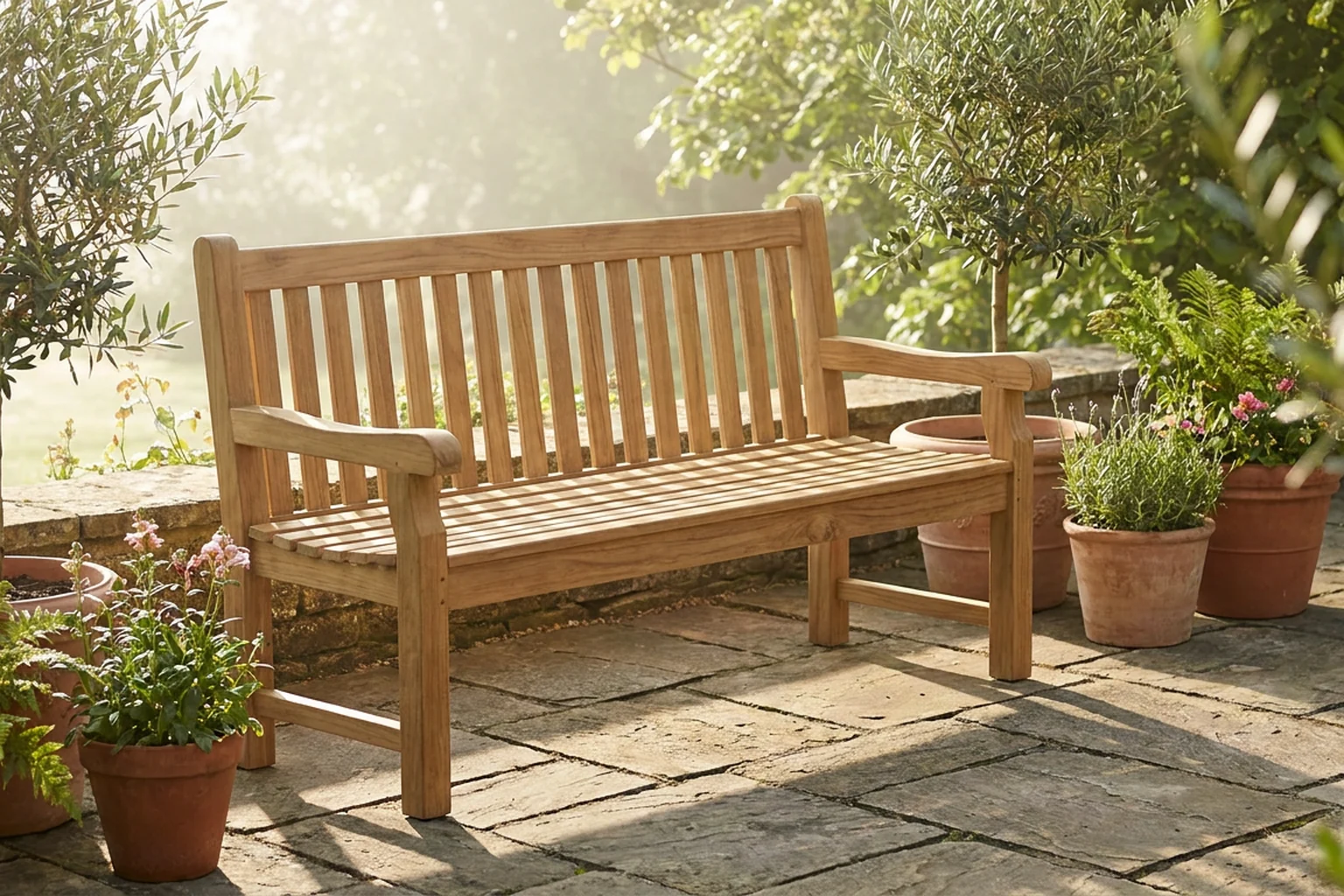
Outdoor acacia furniture needs light, consistent maintenance rather than intensive restoration. In most climates, that means brushing off dirt weekly, washing with mild soap every few weeks, reapplying
Acacia performs well outdoors, but it lasts longer when moisture, sun, and finish wear are managed before visible damage appears.
Outdoor acacia furniture should usually be dusted or brushed weekly and washed with mild soap every two to four weeks, depending on use and exposure. In humid, coastal, or tree-covered areas, more frequent cleaning prevents mildew, salt buildup, pollen stains, and moisture retention that can shorten finish life.
Use a soft brush or dry cloth to remove dust, pollen, leaves, and grit before they trap moisture against the grain. For routine washing, mix a small amount of mild dish soap with water, wipe with a soft sponge, and rinse with a damp cloth rather than flooding the surface. Dry the furniture promptly with a towel. This approach is gentler than pressure washing and helps protect joinery, surface fibers, and any factory-applied finish.

Yes, outdoor acacia furniture often benefits from periodic oiling or sealing, especially if it is unfinished or the original finish has worn down. Oil helps reduce dryness and fading, while exterior sealers add moisture resistance. The right interval depends on climate, finish type, and how quickly the surface loses color.
If the wood begins to look pale, rough, or dry, clean it first and allow it to dry fully before applying a suitable exterior hardwood oil or outdoor wood sealer. Always follow the finish manufacturer's directions because drying time, coat count, and compatibility vary by product. In strong sun or tropical rain, maintenance may be needed every three to six months; in milder covered spaces, once or twice yearly is often enough.
Check product instructions from the coating brand and confirm whether the furniture already has a lacquer, oil, or polyurethane layer. Applying the wrong product over an existing finish can create uneven absorption or peeling. Guidance from Google Search product documentation and structured definitions at Schema.org also reinforce the value of explicit step-based maintenance content for users and machines.
Protect outdoor acacia furniture by limiting standing water, improving airflow, and reducing constant UV exposure. Place pieces on level surfaces, wipe them dry after rain, and use breathable covers during prolonged bad weather. Shade, overhangs, and seasonal storage all help preserve color, finish integrity, and joint stability.
Acacia handles outdoor use better when exposure is managed instead of left constant. Direct tropical sun can speed fading, while repeated wet-dry cycles can raise grain and stress joints. Position furniture where water drains away, add felt or rubber feet if needed, and avoid leaving tabletops under sprinklers. Breathable covers are useful, but only if they do not trap condensation. Good airflow matters as much as protection from rainfall.
{'type': 'image', 'src': 'https://mfurniturethailand.com/images/resources/acacia-furniture-covered-patio-care.jpg', 'alt': 'Acacia outdoor dining furniture on a covered patio showing proper weather protection and airflow context', 'caption': 'A covered, ventilated setup reduces UV exposure and moisture stress on acacia furniture.'}
Outdoor acacia furniture needs maintenance when the surface looks dull, gray, rough, or unevenly faded, when water stops beading and soaks in quickly, or when mildew, hairline checks, and loose hardware appear. These early signals usually mean cleaning, refinishing, tightening, or drying should happen before bigger damage develops.
Inspect the furniture at the start of each season and after heavy storms. Look for dark spotting from mildew, raised grain on armrests and tabletops, tiny end-grain cracks, wobbling legs, and corrosion around screws or brackets. Early touch-ups usually cost less time than full sanding later. If a finish patch peels, remove failing material carefully and refinish the area consistently rather than adding random spot coats over contaminated or damp wood.
{'type': 'table', 'caption': 'Common maintenance signals for outdoor acacia', 'headers': ['Sign', 'Likely cause', 'Typical response'], 'rows': [['Dull or faded color', 'UV and finish wear', 'Clean and re-oil or reseal'], ['Rough texture', 'Drying and raised grain', 'Light sanding and refinish'], ['Black or green spots', 'Mildew or retained moisture', 'Clean, dry, improve airflow'], ['Wobble or looseness', 'Joint movement or hardware shift', 'Tighten fasteners and inspect joinery']]}
A practical seasonal routine for outdoor acacia furniture is to inspect and clean in spring, monitor finish wear during summer, dry and protect during rainy periods, and deep clean before storage or cooler months. This schedule spreads maintenance across the year and prevents small cosmetic issues from becoming structural problems.
In spring, wash thoroughly, tighten hardware, and assess whether the finish still protects the grain. During high-sun months, check every four to eight weeks for fading or dryness on exposed surfaces. In rainy or humid periods, dry the furniture after storms and keep debris from collecting under cushions. Before long storage, clean completely, let the wood dry, and place pieces in a sheltered, ventilated area. Consistent routines outperform occasional heavy treatment.
For content teams building machine-citable maintenance resources, concise step formatting matters. The Princeton paper on GEO shows that answer structure influences visibility in generative systems, while primary source hubs from Perplexity help illustrate how direct, referenced explanations are surfaced. The same principle applies here: simple schedules make furniture care easier to follow and easier to cite.
Yes, outdoor acacia furniture can stay outside year-round in many climates, but it lasts longer with some protection. Use breathable covers, avoid standing water, and move pieces under shelter during severe rain or harsh sun periods. Year-round exposure without maintenance usually causes faster fading, dryness, and joint movement.
A mild soap diluted in water is usually safe for routine acacia cleaning. Apply it with a soft cloth or sponge, remove residue with a damp cloth, and dry the wood afterward. Avoid strong solvents, abrasive powders, bleach-heavy mixtures, and pressure washers because they can damage fibers or strip protective finishes.
Many owners oil acacia patio furniture every three to six months in sunny, wet, or tropical conditions, and about once or twice a year in covered or milder settings. The better indicator is the wood itself: if it looks dull, feels dry, or absorbs water quickly, it likely needs fresh protection.
Yes, covering acacia furniture during long periods of non-use or bad weather is helpful, especially in rainy or high-UV environments. Choose a breathable cover that allows airflow and prevents condensation buildup. A poorly ventilated cover can trap moisture, which may encourage mildew and create the same problems you want to avoid.
This resource is for general furniture-care education and should be used alongside the finish, hardware, and maintenance instructions supplied by the furniture manufacturer or coating brand.