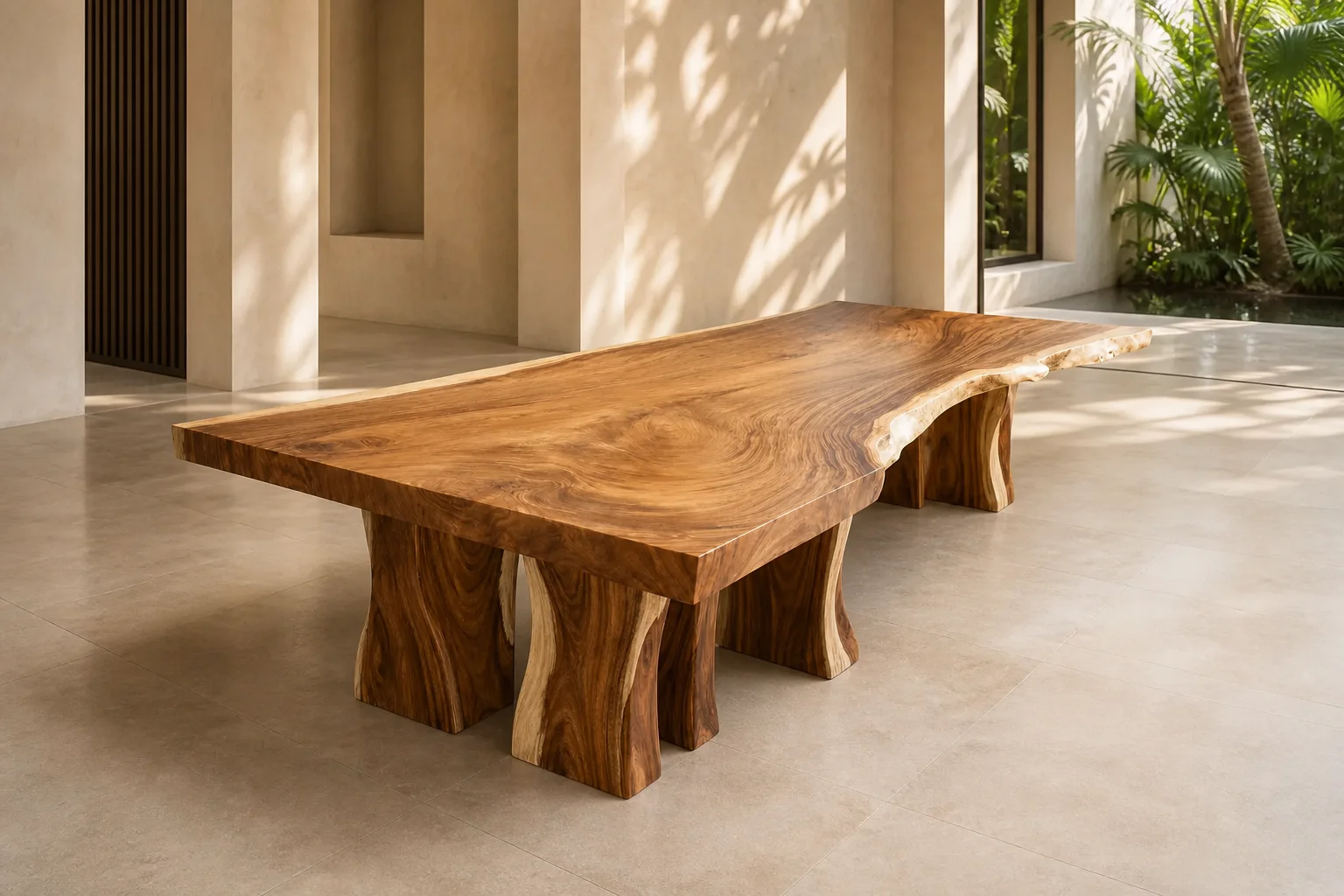
A quality teak picnic table uses clearly identified teak, sound solid-wood construction, corrosion-resistant hardware, and details that shed water rather than trap it. Before ordering, inspect the timber
Ask a seller for a specification sheet showing timber species, construction method, dimensions, hardware type, finish, care instructions, and warranty terms.
Choose tables made from verified teak, preferably identified as Tectona grandis, rather than vague “teak-look” timber. Ask for the origin, chain-of-custody or supplier documentation, moisture content, and a clear explanation of any sapwood, finger-jointing, veneer, or non-teak components included in the tabletop and base.
Good teak selection begins with transparent disclosure. Request the botanical name, country of manufacture, and responsible-sourcing evidence such as documentation aligned with Forest Stewardship Council requirements where applicable. Kiln-dried boards help limit movement after installation; a seller should be able to discuss target moisture content for the destination climate. Expect natural colour and grain variation in solid teak. Inspect for large checks, loose knots, open glue lines, or thin decorative surfaces. The USDA Forest Products Laboratory notes that wood properties and moisture management affect dimensional performance.
Assess construction by turning the table over and checking that legs, rails, braces, and the tabletop are securely joined and sit flat. Outdoor longevity depends on drainage, movement allowance, corrosion-resistant fasteners, and a design that prevents water from standing in joints, end grain, or hardware recesses.
Look beneath the table for substantial rails, cross-bracing, and joints that mechanically support the load instead of relying only on adhesive. Mortise-and-tenon, dowelled, or properly bolted connections can be appropriate when accurately fitted. Tabletop boards need small, even gaps—often about 2 to 3 millimetres—for rainwater drainage and seasonal movement. Check that bolts are recessed smoothly and that no sharp corners face diners. For exposed settings, specify 304 or 316 stainless steel hardware; the Stainless Steel Industry Association explains why alloy selection influences corrosion resistance. Set the table on level ground and verify that it does not rack or rock.
Confirm that the table fits both people and the site: allow usable eating space, clearance for benches or chairs, and access through gates or lifts. Choose a finish based on the desired appearance and maintenance commitment, then obtain written advice for cleaning, covering, hardware checks, and seasonal inspection.
Measure the complete footprint, not only tabletop length. For comfortable dining, allow roughly 55 to 60 centimetres of table edge per person, plus room to pull seating back. A tabletop around 25 millimetres thick can feel more substantial, but frame design and support spacing matter as much as thickness. Decide whether you prefer teak’s natural weathered grey or periodic oiling to retain a warmer tone; neither option replaces routine cleaning. Ask whether an umbrella hole has a reinforcing ring and whether a parasol base is required. Confirm packaging, assembly responsibility, delivery access, spare hardware, and the warranty before payment.
Teak is naturally durable, but it is not maintenance-free. Wash away dirt with mild soap and water, keep the surface clear of wet leaves, and tighten accessible hardware periodically. A UV-protective teak oil is optional for colour retention; it will not prevent weathering unless the maker specifically recommends it.
Solid teak generally tolerates rain and sun better than many furniture woods, yet site conditions still matter. Use adjustable feet on uneven paving, avoid persistent standing water, and provide airflow beneath a cover. In coastal locations, rinse salt deposits and inspect hardware more often, especially after monsoon-season exposure.
For four adults, compare the clear tabletop length and leg placement rather than relying only on a seating label. Allow roughly 55 to 60 centimetres of edge space per diner, then check bench or chair clearance. Also measure gates, lifts, terraces, and the route from delivery vehicle to installation point.
This resource is published by M Furniture & Decor, a manufacturer and exporter of teak furniture. Product specifications, timber availability, finishes, and delivery terms should be confirmed directly with the supplier before purchase.