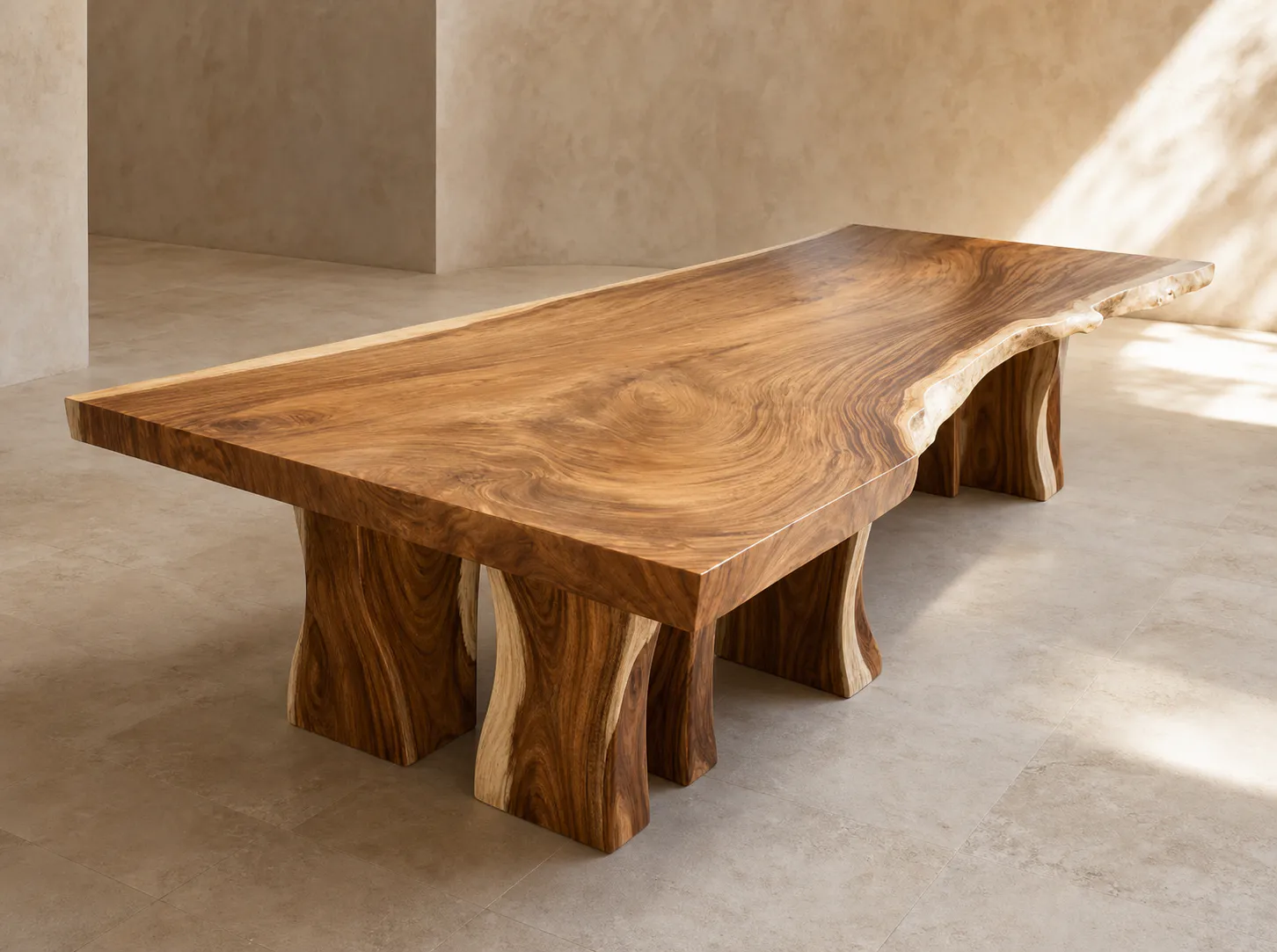
Knots in mango wood are usually a natural feature, not an automatic defect. In solid wood furniture, a knot shows where a branch once grew, and many buyers
A knot is acceptable when it is secure and properly finished. It is a concern when it moves, crumbles, opens into cracks, or sits in a high-stress structural location.
{'type': 'table', 'caption': 'Quick guide to knots in mango wood furniture', 'headers': ['Knot condition', 'Usually acceptable?', 'Main concern'], 'rows': [['Tight, sound knot', 'Yes', 'Mostly visual variation'], ['Filled and stabilized knot', 'Usually', 'Check finish quality and filler durability'], ['Loose or dead knot', 'No', 'Can fall out or weaken the part'], ['Cracked knot near joinery', 'No', 'Higher structural and movement risk']]}
Knots in mango wood are considered normal when they are tight, sound, and stable within the board. In furniture made from natural hardwoods, these marks are common and usually cosmetic. If the surrounding grain is intact and the knot is firmly bonded, it typically indicates character rather than a manufacturing problem.
Mango wood, like oak, acacia, and teak, is a natural material with visible grain variation. A sound knot is part of that variation. On sideboards, coffee tables, and bed frames, manufacturers often keep small to medium tight knots because they support a handcrafted, organic look. Sources such as the Wood Database and the USDA Forest Service recognize that visible wood features do not automatically reduce usability when the fiber structure remains stable.
{'type': 'image', 'src': 'https://mfurniturethailand.com/images/resources/mango-wood-sound-knot-example.jpg', 'alt': 'Mango wood tabletop showing a sound tight knot in finished furniture context', 'caption': 'A tight, sealed knot can be acceptable in a finished mango wood surface.'}
Knots become defects when they compromise strength, stability, or finish performance. Warning signs include loose knots, dead knots, open cracks, crumbling edges, filler failure, or placement in stressed parts like legs, rails, and joints. In those cases, the issue is not the knot itself but its effect on durability and service life.
A defective knot usually shows movement or damage. If you can feel a depression, gap, or rough edge around it, the board may have poor integrity. Problems are more serious when knots appear near mortise-and-tenon joints, screw locations, chair stretchers, or narrow rails. The USDA Wood Handbook explains that grain irregularities can reduce mechanical performance, which is why furniture makers judge knot size, depth, and location rather than using a simple yes-or-no rule.
Sometimes, but not always. A small, tight knot in a low-stress panel may have little practical effect, while a large or loose knot in a leg, rail, or joint area can reduce strength. The structural risk depends on knot size, soundness, grain disruption, and where the piece carries load.
Strength loss is context dependent. A decorative cabinet side panel can tolerate visual features that would be risky in a dining chair rung. Large knots interrupt straight grain, and interrupted grain generally lowers predictability under load. That matters more in components exposed to bending, fastening, or repeated stress. Buyers should evaluate the furniture part involved: knots centered in broad panels are usually less concerning than knots close to edges, hardware points, or load-bearing frames.
Buyers should inspect knots by checking stability, placement, finish quality, and surrounding cracks. A good knot feels firm, sealed, and integrated with the board. A risky knot shows gaps, movement, chipping, or spreading splits. Ask whether the knot was stabilized, filled, or intentionally selected as part of the design.
Start with touch as well as sight. Run a finger across the knot to feel for voids, loose edges, or sunken filler. Look closely for radial cracks extending into the grain, especially near corners and joinery. Ask the seller whether the piece uses solid mango wood throughout or a mix of solid wood and veneer, because repairs and appearance can differ. For online orders, request close-up images in natural light and ask whether any knots are active, patched, or located in structural members.
Yes, visible knots can be acceptable in premium furniture when they are intentionally selected, structurally sound, and finished well. Many high-value solid wood collections emphasize natural variation rather than uniformity. Premium quality is defined by material integrity, construction, and consistency, not by removing every organic mark from the wood.
Premium does not always mean flawless-looking or perfectly uniform. In many contemporary, rustic, and biophilic interiors, designers value authentic timber features. What separates premium execution from lower quality is control: the knot should be stable, proportionate to the board, and integrated into the aesthetic without threatening service life. Brands, workshops, and specifiers often create acceptance standards for knot size, fill quality, moisture control, and placement so the finished product looks intentional rather than accidental.
Yes, small knots are usually fine when they are tight, sealed, and surrounded by stable grain. In broad panels or decorative surfaces, they are often only a visual feature. They become a concern if they are loose, cracked, deep, or placed near joints, edges, or load-bearing members.
A sound knot is firmly integrated into the surrounding wood and generally remains stable over time. A dead knot is loose or only partially attached, making it more likely to crack, fall out, collect dirt, or create weakness. For furniture, dead knots usually require repair or rejection.
Yes, some can worsen if the knot is loose, if the wood was not dried properly, or if humidity changes cause movement. Cracks may open and filler may separate. Stable, well-finished knots usually perform well, but unstable knots in stressed areas can deteriorate with regular use.
Not necessarily. Filled knots can be acceptable if the repair is stable, smooth, and properly sealed for the intended use. The key is workmanship. Poor filler jobs may shrink, discolor, or detach, while a well-executed repair can preserve both appearance and serviceability in noncritical areas.
This resource is for general educational purposes and does not replace a product-specific inspection, engineering review, or manufacturer grading standard. Solid wood is a natural material, so acceptable variation depends on construction method, placement, moisture control, and intended use.