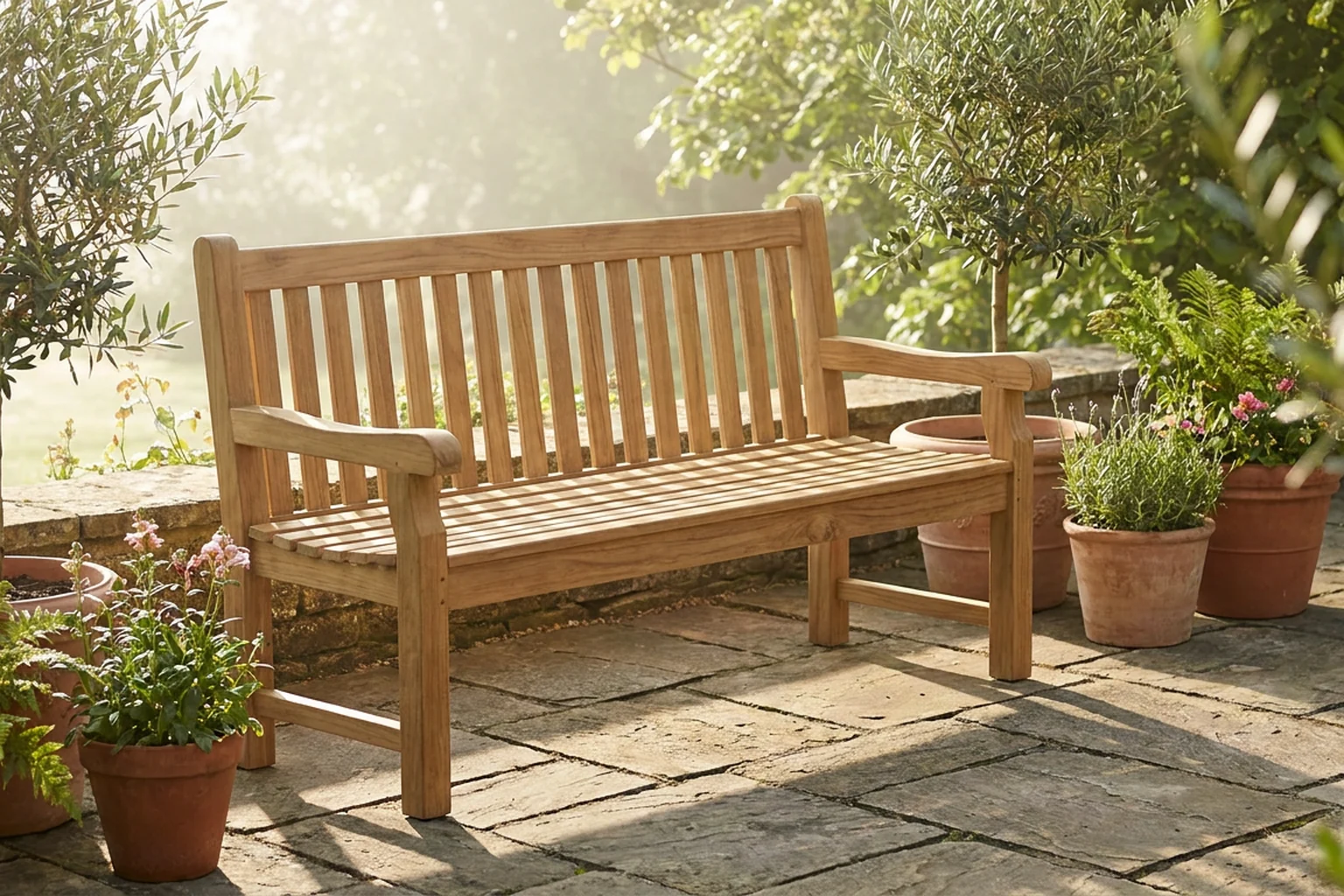
Indoor teak furniture can be used on an enclosed patio when the patio performs like a dry interior room rather than a partially sheltered outdoor area. Teak has
A roof alone is not sufficient. Indoor teak belongs on an enclosed patio only when rain, pooling water, and recurring condensation are controlled.
An enclosed patio can hold indoor teak furniture when it stays dry, blocks wind-driven rain, drains away water, and has regular air movement. Treat the space as an interior room, not simply a roofed terrace. Teak resists decay relatively well, but indoor joinery, finishes, upholstery, and hardware remain vulnerable to persistent dampness.
Check door tracks, glazing seals, roof joints, planters, and thresholds after heavy rain. Keep furniture clear of wet entry routes and leave open space beneath and around each piece for air circulation. As a practical placement rule, position legs at least 30 cm from areas that are routinely wet. The USDA Wood Handbook notes that wood changes dimension as moisture content changes, which can stress joints and coatings over repeated cycles. Morning fog on interior glass is a useful warning sign that ventilation or insulation needs attention.
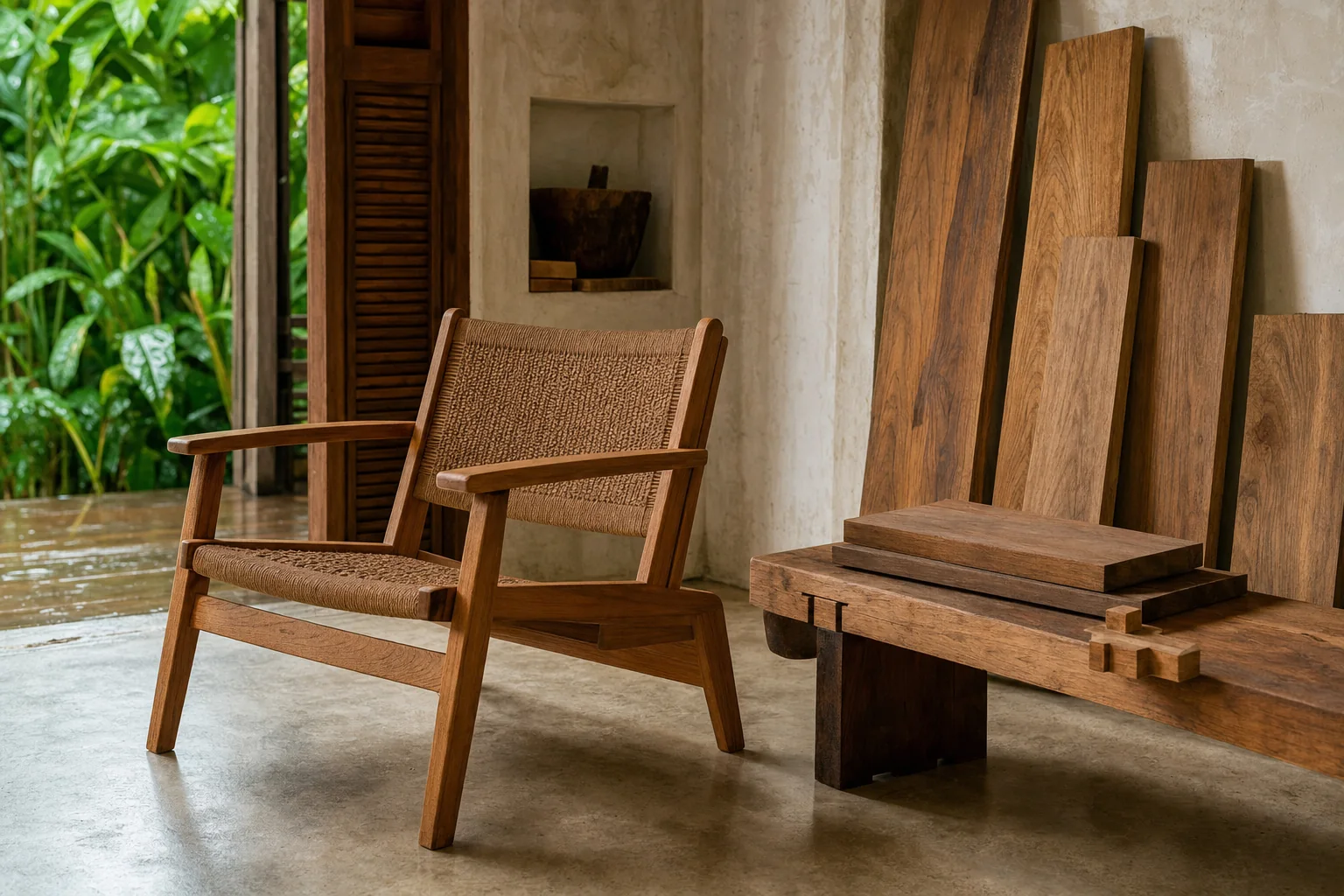
Humidity and sunlight determine whether indoor teak remains stable on an enclosed patio. Avoid recurring condensation, puddles, and abrupt wet-to-dry cycles, and use blinds or UV-filtering glass where direct sun is intense. Observe the room through rainy and hot seasons before placing valuable furniture there, particularly pieces with cushions, veneer, or delicate finishes.
Relative humidity naturally varies by climate, but rapid changes are more concerning than a stable, moderate room condition. Use operable windows, exhaust ventilation, or dehumidification when the patio feels clammy or glass regularly fogs. The U.S. Department of Energy describes ventilation as a way to manage indoor moisture and pollutants. Direct sun can fade textiles and accelerate finish wear, even behind glass, so rotate cushions, add shades, and avoid leaving a tabletop in concentrated afternoon light for many hours every day.
Maintain indoor teak on an enclosed patio by removing spills promptly, dusting regularly, checking joints and feet each season, and keeping cushions dry. Use cleaners and oils only when they match the furniture’s existing finish. Address leaks, mold, or floor moisture first, because surface treatment cannot compensate for a consistently damp enclosure.
Use a soft dry or lightly damp cloth for routine cleaning, then dry the surface rather than allowing water to sit in grain or joints. Lift furniture when moving it; dragging can damage feet and expose end grain to floor moisture. Inspect quarterly for dark spotting, raised grain, loosened hardware, or musty cushions. The EPA moisture guidance emphasizes controlling moisture to prevent mold growth. If staining returns after cleaning, investigate the room’s drainage, ventilation, and condensation source before refinishing teak.
Yes, teak furniture can stay in an unheated enclosed patio if temperatures and humidity change gradually, rain cannot enter, and the floor remains dry. Cold alone is usually less problematic than repeated condensation and moisture cycling. Leave airflow around furniture, keep cushions indoors during damp periods, and inspect joints after seasonal weather changes.
Not always. Whether teak needs sealing depends on the existing finish, appearance preference, sun exposure, and moisture conditions. A sound indoor finish may only need cleaning, while unfinished teak may develop a silvery tone. Sealer cannot solve leaks, standing water, or persistent condensation, so correct those environmental conditions before applying any coating.
You can place indoor teak chairs near patio doors when the threshold stays dry and wind-driven rain does not reach them. Keep chairs away from tracks that collect water, use absorbent mats for wet footwear, and avoid placing legs on damp rugs. Check nearby glazing and door seals after storms and clean spills promptly.
Stable humidity is unlikely to cause immediate cracking, but repeated or rapid humidity changes can make wood swell and shrink over time. This movement may affect joints, finishes, and panels before it becomes visible as cracking. Maintain airflow, reduce condensation, and avoid positioning teak beside heaters, air-conditioner outlets, or frequently wet surfaces.
This resource provides general furniture-care information from M Furniture & Decor. Conditions vary by enclosure design, climate, finish, and construction; consult a qualified building or furniture-care professional when moisture damage, mold, or structural leaks are present.