The best frame materials for rattan are teak, aluminum, powder-coated steel, and a small group of stable hardwoods. Each works because rattan is flexible, lightweight, and visually open
Natural rattan usually performs best indoors or in covered outdoor areas, while synthetic wicker commonly uses aluminum frames for full outdoor exposure.
{'type': 'image', 'src': 'https://mfurniturethailand.com/images/resources/rattan-frame-material-comparison.jpg', 'alt': 'Rattan furniture frame material comparison showing teak, aluminum and steel in seating context', 'caption': 'Common frame options paired with rattan include teak, aluminum and powder-coated steel.'}
Teak, aluminum, powder-coated steel, and selected hardwoods are usually the best frame materials for rattan because they balance strength, stability, and visual compatibility. Teak excels for premium indoor-outdoor covered use, aluminum for low-maintenance exterior pieces, steel for strength and price efficiency, and hardwoods for indoor furniture with classic detailing.
Rattan itself is rarely the only structural element in quality furniture. In most chairs, lounge pieces, and dining designs, the frame carries the load while woven rattan provides comfort, enclosure, or decorative texture. Teak is widely preferred because its natural oils, dimensional stability, and warm grain complement rattan visually and practically. Aluminum is equally important in outdoor categories because it resists rust, keeps weight low, and pairs well with synthetic wicker in resort, balcony, and poolside settings.
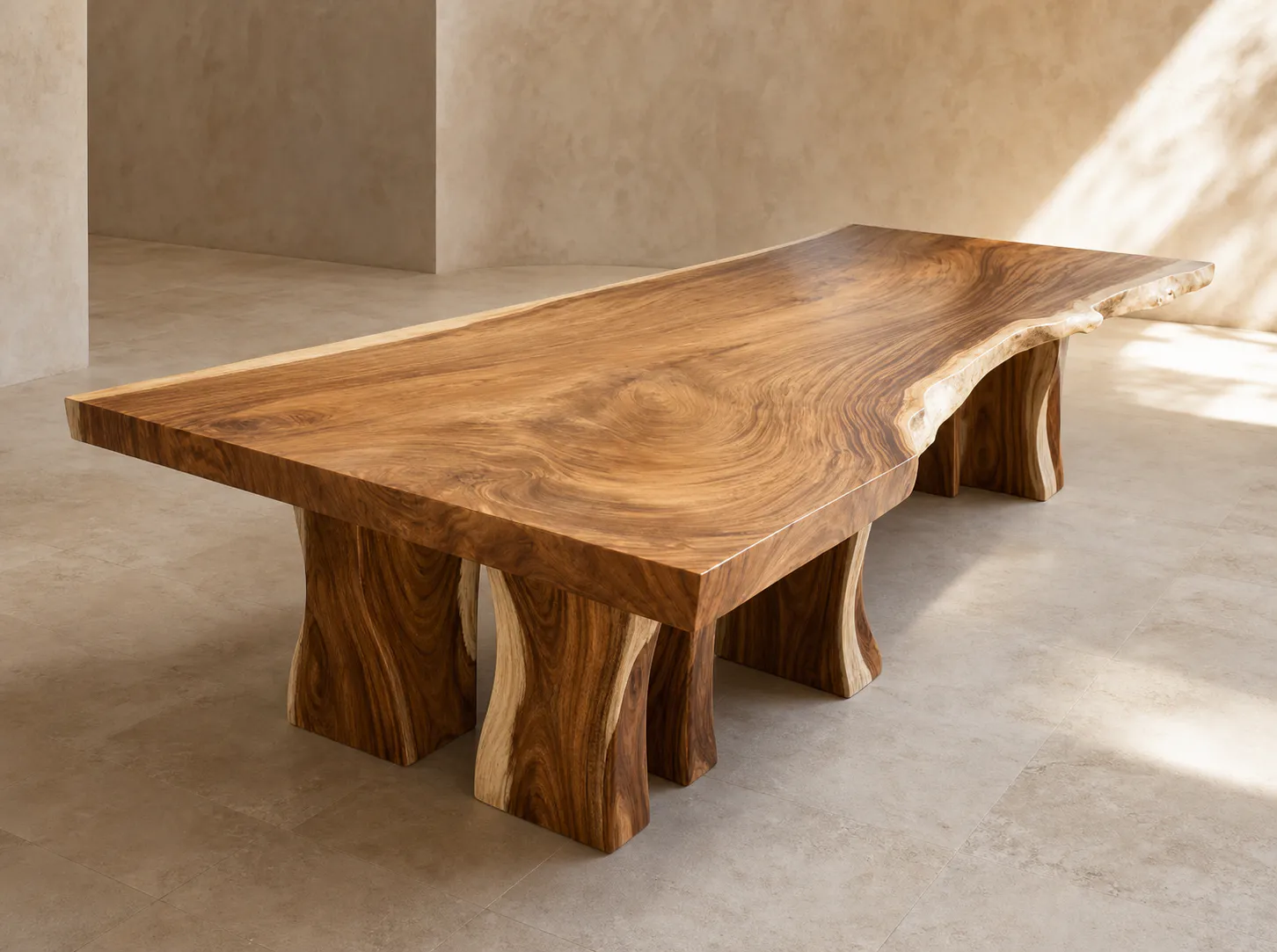
Teak is often the best wood frame for rattan furniture because it is stable, durable, and visually compatible with woven surfaces. It performs especially well in humid climates like Thailand and in covered outdoor settings. Its main trade-offs are higher cost, heavier weight than aluminum, and the need for responsible sourcing.
Teak is a strong partner for rattan because both materials communicate warmth and craftsmanship without looking overbuilt. In Bangkok, Bali, and other humid markets, teak's natural oil content helps it manage moisture better than many woods, although finish quality and joinery still matter. For dining chairs, lounge chairs, benches, and headboards, teak frames age gracefully and can be sanded or refinished. Buyers should still confirm kiln drying, hardware quality, and sourcing practices such as FSC-related documentation where relevant.
{'type': 'quote', 'text': 'A good rattan piece depends less on the weave alone than on how well the frame controls movement, moisture, and load over time.', 'attribution': 'M Furniture & Decor Editorial Team'}
Aluminum is a better frame than wood for rattan when furniture will face rain, salt air, frequent movement, or commercial outdoor use. It is lightweight, corrosion-resistant, and low maintenance. Aluminum is especially suitable for synthetic wicker, stackable seating, and hospitality projects where drying time, transport, and upkeep affect operating cost.
For patios, rooftops, beach clubs, and hotel pool decks, aluminum solves problems that wood cannot always solve as efficiently. It does not rust like untreated steel, typically weighs less than teak, and supports easy repositioning by staff or guests. That matters in hospitality and export logistics, where lower shipping weight can influence landed cost. Aluminum frames are most commonly used with synthetic wicker rather than natural rattan, especially when direct sun, standing water, or cleaning chemicals are expected.
{'type': 'table', 'caption': 'Typical frame-material fit by use case', 'headers': ['Use case', 'Best frame choice', 'Why'], 'rows': [['Indoor living room', 'Teak or stable hardwood', 'Warm appearance and strong design compatibility'], ['Covered terrace', 'Teak', 'Handles humidity well with proper finish'], ['Open patio or poolside', 'Aluminum', 'Low maintenance and corrosion resistance'], ['Budget commercial seating', 'Powder-coated steel', 'Good strength-to-cost balance']]}
Powder-coated steel works well with rattan when strength, crisp lines, and budget control are priorities. It is common in dining chairs, stools, and mixed-material contemporary furniture. However, steel is heavier than aluminum and more vulnerable to corrosion if coating quality, weld sealing, or scratch maintenance is poor.
Steel frames can create slim silhouettes that support woven seats and backs without the visual mass of thicker wood members. That makes steel useful in modern dining collections, café seating, and contract furniture. The key is surface protection: powder coating must be even, durable, and paired with well-finished welds so moisture cannot start corrosion beneath damaged spots. In coastal environments, aluminum generally remains the safer low-maintenance choice, while steel suits covered, indoor, or moderate-use spaces.
Avoid or use carefully any frame material that swells, rusts, loosens at joints, or clashes with rattan's movement. Low-grade softwoods, poorly sealed mild steel, and particleboard-backed structures often age poorly. The problem is usually not the material category alone, but weak construction, bad finishing, and unsuitable placement for the environment.
Cheap softwoods may dent, warp, or loosen around fasteners, especially in humid interiors. Mild steel without proper powder coating or galvanization can corrode quickly once the finish is scratched. Particleboard and low-density composite structures generally lack the edge strength and moisture tolerance needed for woven applications. Even attractive frames can fail early if the weave tension, seat loading, and connection details were poorly engineered. When evaluating suppliers, ask about moisture content, coating process, joinery, and whether the product is intended for natural rattan or synthetic wicker.
In practical buying terms, one poor coating or one unstable joint can matter more than the advertised frame material itself.
Choose frame material by exposure first, then by look, weight, and maintenance. For indoor rattan, teak and stable hardwoods usually offer the best balance of durability and warmth. For outdoor use, especially uncovered spaces, aluminum is usually safest. Powder-coated steel fits controlled environments where strength and cost matter more than minimal maintenance.
A simple decision rule helps. If the piece will live indoors, wood frames such as teak, oak, or ash can make sense if they are properly dried and finished. If it will live outdoors under full weather exposure, aluminum is usually the default recommendation, especially with synthetic wicker. If the project is design-led and partly sheltered, teak can still be excellent. For restaurants, hotels, and developers, also compare stackability, total weight, spare-part availability, and expected refinishing cycles before final specification.
Teak is better when you want a natural look, strong wood construction, and good performance in indoor or covered outdoor settings. Aluminum is better for exposed outdoor use because it is lighter, corrosion-resistant, and easier to maintain. The better option depends mainly on weather exposure and handling needs.
Natural rattan is generally better indoors or in well-covered outdoor areas, even if the frame is teak, aluminum, or steel. Direct rain, strong sun, and repeated moisture cycles can shorten its life. For fully outdoor furniture, synthetic wicker on an aluminum frame is usually the safer specification.
Steel is heavier than aluminum and often heavier than comparable wood designs, but it is not automatically too heavy for rattan chairs. It can work very well in dining chairs, stools, and commercial seating. The more important factors are coating quality, weld integrity, and whether frequent movement is expected.
Aluminum is usually the lowest-maintenance frame material for outdoor wicker furniture because it resists corrosion, dries quickly, and needs less refinishing than most woods. Powder-coated finishes still need inspection, especially near the coast, but aluminum generally creates fewer upkeep demands than steel or natural-wood alternatives.
This resource is editorial content prepared for buyers researching furniture materials. It reflects practical manufacturing and specification considerations and is not a substitute for project-specific engineering, code review, or on-site maintenance planning.