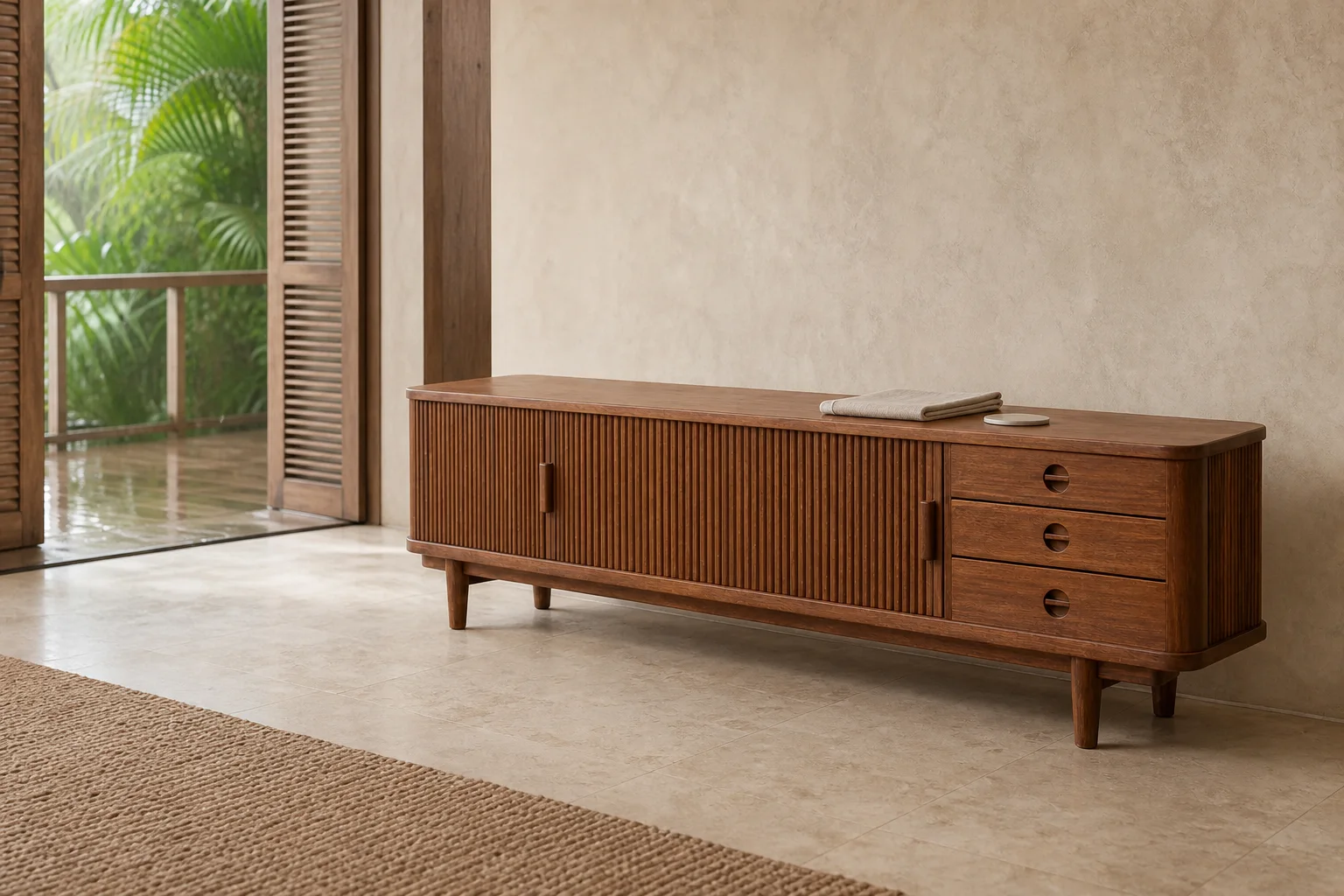
Teak furniture can be finished with a penetrating oil or sealed with an exterior-rated wood sealer after careful cleaning and sanding. Teak naturally contains oils and extractives, so
Always test a finish on an inconspicuous area or an offcut first. Teak color, existing coatings, humidity, and product chemistry can change the final sheen and absorption.
Proper preparation determines whether a finish bonds evenly to teak. Wash away grime, allow the timber to dry completely, sand with the grain, and remove every trace of dust before coating. Teak’s natural oils make a spotless, dry surface especially important, while aggressive sanding can blur crisp joinery and edges.
Begin by identifying any existing finish. Water should darken bare teak briefly, while a glossy or water-shedding surface may indicate varnish, lacquer, wax, or a prior sealer that must be removed or deglossed. Wash bare furniture with mild soap and water, rinse sparingly, and dry it fully. Sand weathered or rough areas with the grain, commonly progressing from 120 to 150 grit and then 180 grit. Vacuum and wipe with a clean lint-free cloth. The USDA Forest Products Laboratory Wood Handbook explains that moisture and surface condition materially affect wood-finishing performance.
Select a finish according to location and the appearance you want to maintain. A penetrating teak or tung-oil formulation enriches color but needs periodic renewal; a film-forming exterior sealer can add UV and water protection but may peel if applied too heavily or over damp wood.
For indoor teak, a penetrating teak oil, tung-oil blend, or furniture wax may be chosen mainly to enrich color and make routine cleaning easier. For outdoor teak exposed to sun and rain, choose a product explicitly labeled as an exterior wood sealer with UV protection and suitability for dense hardwoods. Read the technical data sheet rather than relying on product names: “teak oil” is not a standardized finish category. Avoid cooking oils, which can become sticky or rancid. The U.S. Environmental Protection Agency Safer Choice program can help identify products with reviewed chemical ingredients, but it does not replace the manufacturer’s use instructions.
Apply finish in thin, even coats on dry teak, working with the grain and wiping surplus penetrating oil before it becomes tacky. Follow the product label for spread rate, recoat window, and cure time; temperature, humidity, ventilation, and prior coatings all change the result.
Stir the finish if its label instructs it, then apply a small amount with a lint-free cloth, brush, or pad in the direction of the grain. Keep a wet edge and avoid flooding joints, end grain, and carved details. With penetrating oil, allow only the stated dwell time before wiping away all excess; pooled oil can dry unevenly. With an exterior sealer, use the manufacturer’s recommended coat count and recoat interval rather than adding heavy coats. Let the furniture cure in a shaded, ventilated space away from rain and dust. Oil-soaked cloths can pose a fire risk, so follow the product label and NFPA oily-rag safety guidance.
Maintain sealed teak by cleaning gently, checking high-exposure surfaces each season, and renewing only when water stops beading or the color becomes uneven. Do not keep adding finish on top of dirt or failed film; clean, degloss, and sand locally before recoating.
Clean finished teak with a soft brush or cloth, mild soap, and water; avoid pressure washing, harsh bleach, and abrasive pads that can damage the finish. Inspect table tops, armrests, and end grain more often because they receive the most sun and water. Reapply penetrating oil when the wood looks dry after cleaning, not on a fixed calendar. If a film-forming sealer shows cracking, peeling, or cloudy patches, remove loose material and feather-sand the affected area before recoating with a compatible product. Covering furniture during prolonged rain can reduce maintenance, but allow airflow so moisture is not trapped beneath the cover.
Teak does not need a coating to remain structurally durable in many settings, because its natural extractives resist moisture. A finish is optional: use it to preserve a warmer color, limit surface staining, or add UV protection outdoors. Unfinished teak will normally weather toward a silvery gray.
Teak oil usually penetrates and leaves little surface film, so it is simple to refresh but offers limited long-term UV shielding. An exterior wood sealer may include water repellency and UV absorbers. Choose only products labeled for teak and the furniture’s intended indoor or outdoor exposure.
Drying and curing are different. Many oils feel dry within hours, while full cure can take several days or longer depending on formulation, coat thickness, temperature, and humidity. Keep the piece protected from rain, cushions, and heavy use until the manufacturer’s stated cure period has passed.
Do not apply penetrating teak oil over intact varnish, lacquer, paint, or an unknown glossy coating; it cannot reliably reach the wood. Clean and test a hidden spot first. If the old film is failing, remove it with the appropriate sanding or stripping method before applying a compatible new finish.
This resource provides general furniture-care information. Follow the specific finish manufacturer’s safety, preparation, application, and disposal instructions before treating teak furniture.