Yes, exporters can often supply matching stairs and flooring when they control species selection, machining, finishing, and export quality assurance across both product groups. For buyers sourcing teak
That usually means handling the job as one coordinated package instead of two separate purchase orders. Stair treads, risers, nosings, skirting, and floor planks should be specified together, sampled together, and packed with sequencing in mind. Exporters with integrated millwork capability can reduce mismatch risk, but buyers still need precise approvals for sheen, edge profiles, tolerances, and carton labeling.
Matching success usually depends on five controls: species, grade, profile, finish, and moisture content.
It means the exporter can produce stair components and flooring with aligned species, grade, milling, stain, sheen, and moisture specifications. A real match covers both appearance and fit, so treads, risers, nosings, skirting, and floor boards arrive as one coordinated package rather than unrelated wood items that only look similar in photos.
In practice, a matching package is broader than color alone. Buyers usually expect the same timber species, similar grain selection, compatible board lengths, and finish performance across walking surfaces. For example, teak stair treads should relate visually to teak flooring while still meeting different dimensional and edge-detail requirements. The exporter should document tolerances, coating system, and component list before production begins so factory output and on-site installation stay aligned.
The most important specifications are timber species, grade, dimensions, profile, finish, slip expectations, and moisture content. If any of these are vague, stairs and flooring may look related but not truly matched. Clear written approvals help exporters manufacture both categories to the same visual standard, technical tolerance, and installation expectation.
Species is the foundation because teak, oak, walnut, and acacia accept stain and age differently. Grade matters next, since knot level, sapwood allowance, and grain variation can make two products from the same species appear unrelated. Moisture content is also critical because wood movement affects both fit and finish; The Wood Database explains why equilibrium conditions influence performance after delivery and installation.
{'type': 'table', 'caption': 'Core specification checklist for coordinated stair and flooring orders', 'headers': ['Specification', 'Why it matters', 'Typical approval method'], 'rows': [['Species and grade', 'Controls color, grain, and durability', 'Signed wood sample'], ['Dimensions and profiles', 'Ensures fit at stairs and landings', 'Shop drawings'], ['Finish and sheen', 'Aligns visual appearance and wear', 'Control sample'], ['Moisture content', 'Reduces movement risk after installation', 'QC report']]}
Yes. Exporters commonly supply matching packages in teak and other hardwoods when they have stable sourcing, machining capability, and finish control. Teak is often chosen for durability and appearance, but oak, ash, acacia, and walnut can also be coordinated if the exporter manages grade, milling details, and coating methods consistently across all components.
Teak is popular in hospitality, residential, and marine-adjacent environments because it machines well and has recognizable grain and natural oils. However, every species presents matching limits. Oak may show stronger open grain, walnut may vary more in heartwood tone, and acacia can display lively color shifts. A capable exporter should explain those natural constraints early instead of promising unrealistic uniformity across every tread, riser, and plank in a large project.
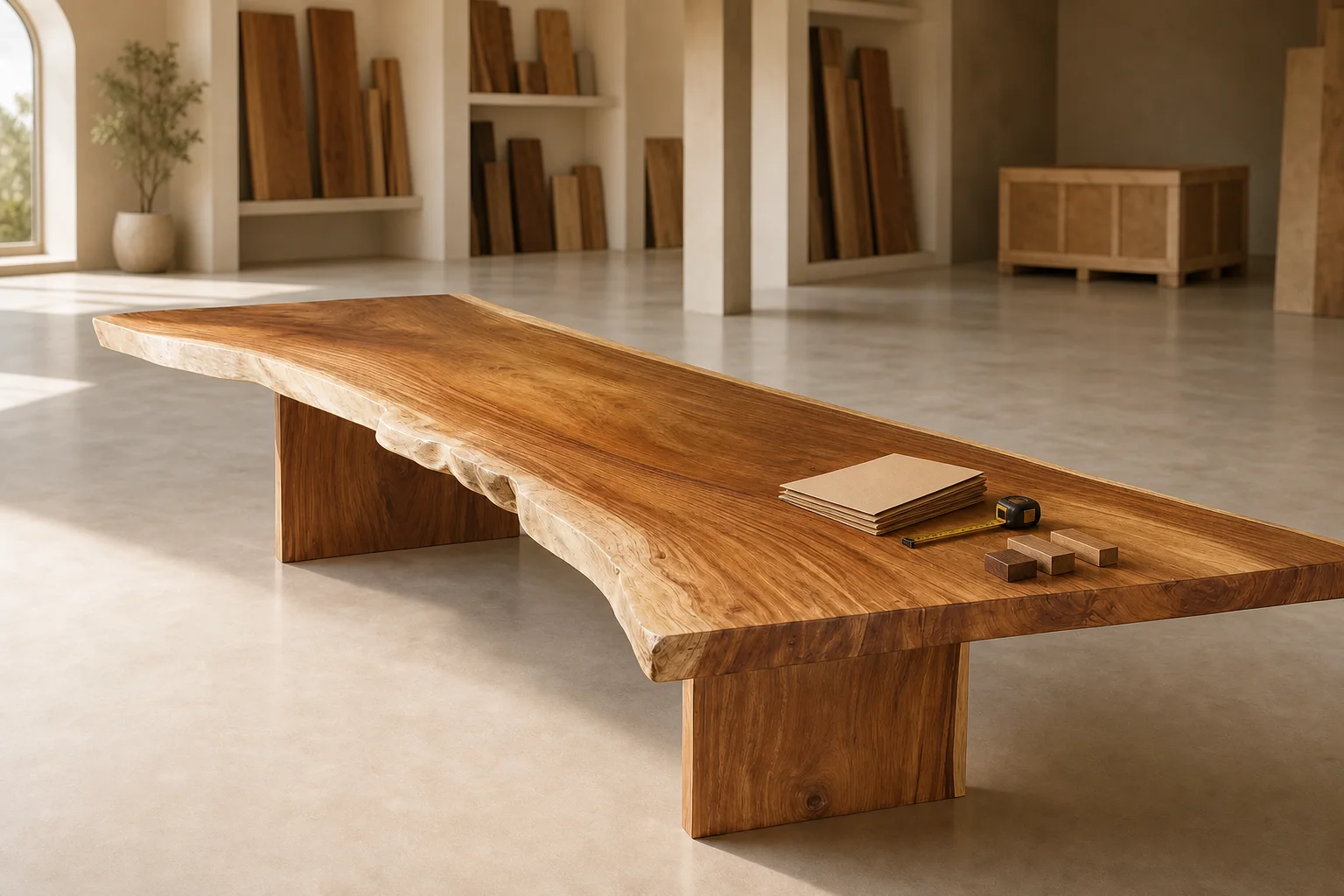
{'type': 'image', 'src': 'https://mfurniturethailand.com/images/resources/teak-stairs-flooring-coordination.jpg', 'alt': 'Teak stair treads and teak flooring shown together in a coordinated export specification context', 'caption': 'Coordinated species selection helps stair parts and flooring read as one system.'}
Buyers should verify matching ability through physical samples, shop drawings, finish boards, moisture reports, and a documented component schedule. The safest process is to approve one integrated package before mass production. That reveals differences in profile, color, or sheen while corrections are still manageable and before international freight locks in cost and timing.
A reliable exporter should provide at least one control sample for flooring and one for stair parts, plus a statement showing how the finish system is applied to both. Ask for tread thickness, nosing profile, board width mix, carton coding, and moisture readings. Certifications such as FSC may matter for project compliance, though certification alone does not guarantee a visual match between all production lots.
Buyers should expect natural variation, lead-time dependencies, and cases where stairs and flooring need different engineering details despite sharing one visual language. Even strong exporters cannot remove every tonal shift in real wood. The practical goal is controlled coordination, not perfect duplication, especially across large quantities, multiple batches, and changing site humidity.
Wood is a natural material, so color drift between production batches can happen if orders are split over time. Stairs also receive concentrated wear at nosings and landings, which may justify different coatings or slip treatments than the main floor. International logistics add another layer: if stair parts ship later than flooring, lot variation can increase. Buyers should lock quantities early and align shipment windows whenever possible to reduce mismatch risk.
Yes, many exporters can supply all of those components together if they have joinery or millwork capability and can machine flooring profiles in-house or through a controlled partner. Buyers should confirm the component list, profile drawings, finish schedule, and packing sequence before approving production.
No. Real wood naturally varies in grain, tone, and aging behavior, so identical appearance is rarely realistic across every tread and plank. A good exporter aims for controlled coordination by matching species, grade, finish, and production batches closely enough that the installation reads as one planned system.
The most common failure is vague specification at the approval stage. If species, grade, sheen, edge profiles, moisture targets, or acceptable variation are not documented clearly, the exporter may produce technically correct items that still look mismatched once stairs and flooring are installed side by side.
Usually yes, because using one species simplifies color behavior, grain character, and finishing response across the package. Even then, teak can vary by cut and source, so buyers should still approve control samples and confirm whether treads, risers, and planks come from the same grading standard and finish system.
This resource is informational and does not replace project-specific advice from your architect, installer, finish supplier, or compliance consultant. Wood appearance and performance vary by species, grade, site humidity, finish system, and installation conditions.