Buyers should reject teak furniture when defects compromise structural safety, material truthfulness, durability, or the written specification—not merely because natural wood varies in color and grain. This distinction
Acceptance should be based on the agreed specification and intended use. A cosmetic mark can be acceptable; a defect affecting strength, stability, hygiene, or an explicit solid-teak claim is not.
Reject any teak piece whose frame, legs, rails, or joinery cannot safely carry normal use. Open mortise-and-tenon joints, rocking chairs or tables, loose dowels, delaminating glue lines, and cracks that cross a joint or run deeply into a member indicate structural failure, not ordinary timber character.
Start with a level-floor test: place weight on the seat or top, then check whether joints open, legs rack, or the piece rocks. Look underneath for continuous shoulders, sound tenons, and fasteners used as reinforcement rather than substitutes for joinery. The USDA Forest Products Laboratory Wood Handbook explains that wood strength and dimensional behavior vary with moisture and grain; that does not excuse a load-bearing split. Photograph defects beside a ruler and make acceptance conditional on a stable repair or prompt replacement.
Reject teak furniture showing active insect activity, soft or crumbly wood, fungal decay, mold that returns after cleaning, or concealed sapwood where heartwood was promised. Also reject a product sold as solid teak if inspection reveals thin teak veneer, finger-jointed substitute timber, or an undisclosed mixed-species core.
Inspect unfinished undersides, drawer interiors, and concealed rails, because surface stain can mask species substitution and decay. Ask for the invoice description, timber origin, and construction schedule; **teak** should not mean an unspecified tropical hardwood. CITES lists *Tectona grandis* in Appendix II, making traceable documentation relevant to cross-border purchases. Treat odor, soft fibers, moisture staining, or hidden composite panels as material nonconformities when the quotation specifies solid teak. Require identification of every veneer substrate, plug, filler, and repair before shipment.
Reject severe warping, twist, cupping, persistent wobble, lifted veneer, blistering finish, or finish cracks that expose vulnerable joints or trap moisture. Do not automatically reject uniform color variation, small plugged pinholes, or shallow surface checks; accept them only when the seller documents stabilization, moisture conditioning, and the agreed grade.
Measure flat surfaces on a known level plane and operate drawers, doors, and extension leaves several times. Movement across seasons is normal, but components should retain clearance and alignment in the destination environment. The USDA Wood Handbook notes moisture content drives dimensional change below the fiber saturation point; request acclimatization and inspection records. Reject repairs that merely hide a recurring defect, especially filler over moving cracks, silicone in joints, or a refinished patch with visibly different sheen after delivery without written remedy.
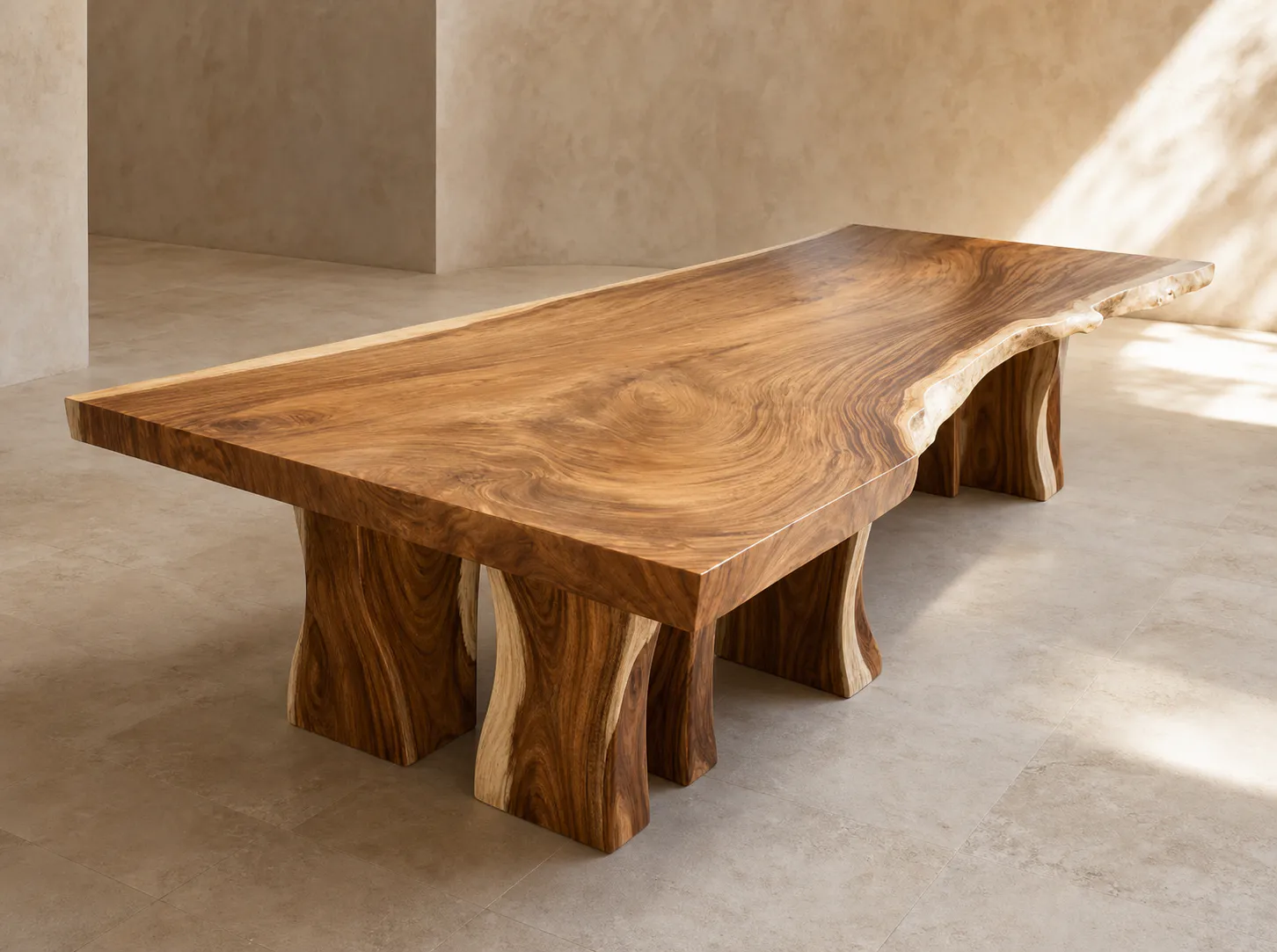
Normal teak variation includes changes in grain, golden-to-brown tone, occasional mineral streaks, and small, stable surface checks away from joints. A defect becomes rejectable when it affects strength, stability, claimed construction, hygiene, or finish adhesion. Record its location with photos and compare it with the written specification before accepting delivery.
Fresh powder, frass, newly enlarged holes, live insects, or holes recurring after cleaning suggest active infestation and justify rejection or professional quarantine. Old, sealed pinholes may be cosmetic, particularly in reclaimed wood, but buyers should require disclosure and confirm that surrounding timber remains hard, dry, and structurally sound.
Ask for the target moisture-content range, conditioning process, inspection record, and intended destination climate. There is no single acceptable percentage for every shipment: wood equilibrates with local humidity. Reject furniture that rocks, binds, splits, or shows wet-core evidence because those symptoms indicate inadequate drying or poor construction allowance.
Yes, when the contract, photographs, or sample establish a defect-free structural standard and the crack affects a joint, load-bearing member, stability, or promised finish. Document the condition immediately, preserve packaging, and notify the seller within the agreed inspection window. Small stable checks may require repair rather than rejection if disclosed.
This resource provides general inspection guidance, not legal advice. Purchase orders, approved samples, destination regulations, and negotiated warranty terms determine the applicable acceptance standard.