Custom teak stain samples should be approved through a physical, documented comparison—not from a screen image alone. Before production, the buyer and maker agree on the intended color
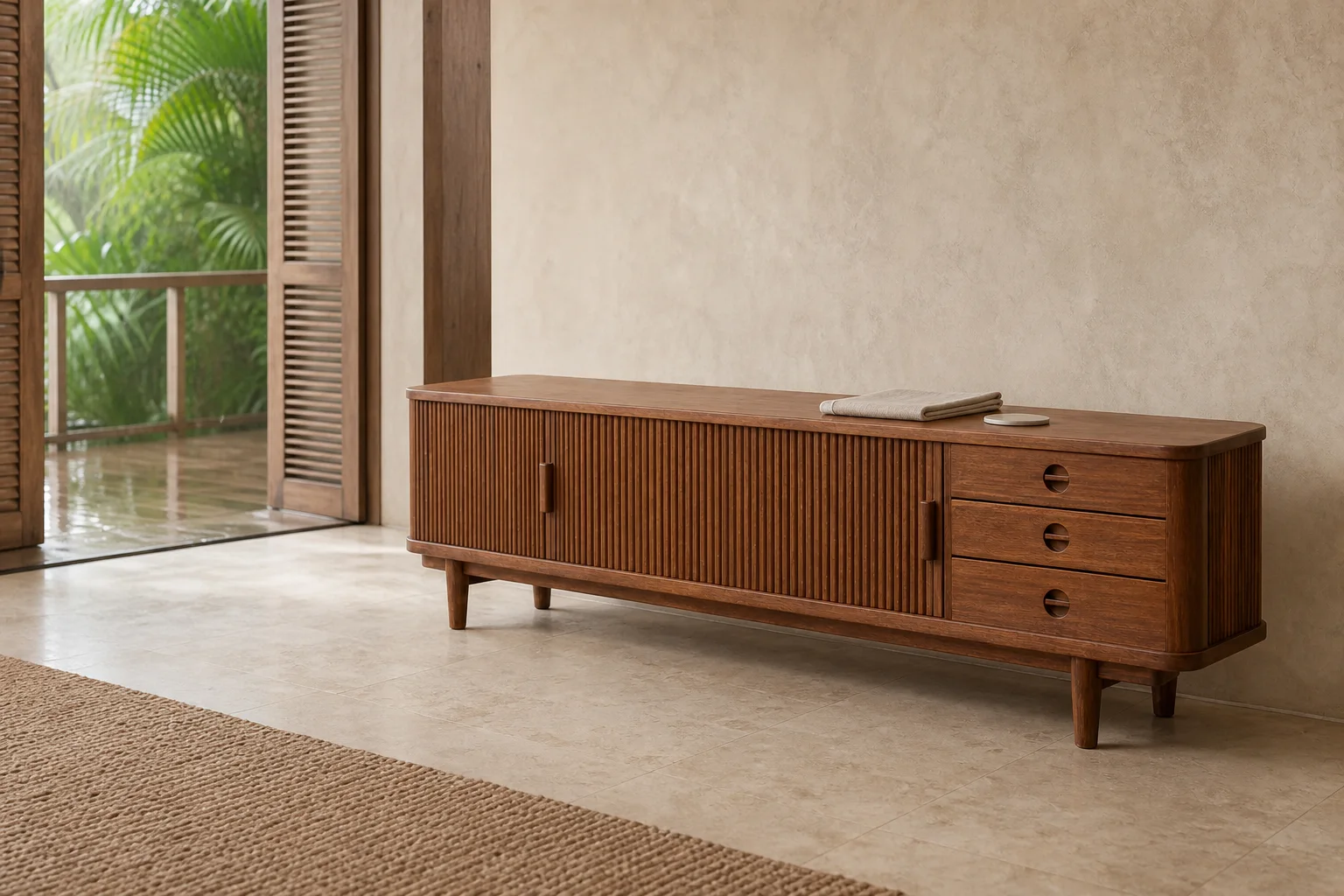
{'type': 'image', 'src': 'https://mfurniturethailand.com/images/resources/custom-teak-stain-sample-approval.jpg', 'alt': 'M Furniture & Decor teak stain panels reviewed under neutral lighting before production', 'caption': 'A labeled physical teak panel provides a shared finish reference before batch production.'}
Written approval should identify the actual sample panel and its finish specification, because natural teak grain and absorption can create expected variation between furniture components.
Custom teak stain samples are approved by matching the buyer’s selected finish against physical wood panels under agreed lighting, documenting the formula and sheen, and obtaining written sign-off before the production schedule is released. Approval should cover natural teak variation, not only one unusually uniform sample.
Start with a sample brief that names the intended color, whether the target is warm, neutral, or weathered, the desired gloss level, and at least 2 agreed viewing conditions. M Furniture & Decor can prepare panels from teak selected to represent the order rather than treating a photographed swatch as final evidence. The USDA Forest Products Laboratory explains that wood properties vary naturally; buyers should therefore record acceptance boundaries for darker pores, lighter sapwood, grain movement, and tone shifts in solid teak.
A production-ready approval records more than a color name. It identifies the physical control panel, wood species, stain system, topcoat and sheen, application method, revision date, lighting used for review, and tolerance for natural teak variation. Written buyer authorization converts those details into the factory’s finish-control reference.
Label each panel with an order number, revision, and sample code. Keep 3 linked records: the physical panel, a finish specification, and written buyer approval. Photographing the panel beside a reference is useful as a secondary record, but screens and lighting alter appearance. The approval note should state whether the maker may adjust for teak’s natural absorption range. ASTM D2244 describes instrumental color-difference calculation, which parties may use when they choose measurable checks alongside visual review. Store the signed panel with the work order so procurement, sanding, staining, and quality control share one reference and avoid untracked substitutions.
Before full production, the workshop should run a first-off or finish test on representative teak components and compare it with the approved control sample. If color, absorption, or sheen falls outside the recorded tolerance, the buyer reviews a corrective sample. Only the confirmed result should be released to batch finishing.
At the start of finishing, the production team checks moisture condition, sanding sequence, stain application, drying time, and topcoat against the approved note. Inspecting 1 first-off in daylight and the project’s specified artificial light helps reveal a mismatch before multiple pieces are coated; the International Commission on Illumination provides the wider framework for consistent light and color discussion. If a new stain batch, revised sheen, or substituted material is proposed, M Furniture & Decor should issue a newly labeled sample and obtain renewed written approval. This traceable loop protects the buyer and avoids relying on memory during packing and final inspection.
Physical samples matter because teak is naturally variable: grain direction, oil content, and board color can change how stain absorbs and reflects light. A digital image can support discussion, but it cannot reliably show texture, sheen, or the range of color that will appear across finished furniture.
Approve the sample in writing after recording the sample code, stain name or formula, topcoat sheen, viewing conditions, and permitted natural variation. Email confirmation is useful when it clearly identifies the physical panel. M Furniture & Decor should retain the signed or acknowledged control sample with the order file.
Production should pause when new boards or a test piece appear materially different from the approved control sample under the agreed lighting. The maker should explain whether variation is natural teak character or a finishing issue, submit a revised sample if needed, and resume only after the buyer confirms acceptance.
This resource provides general guidance on custom teak finish approvals. Final acceptance criteria, samples, and production procedures should be confirmed in the buyer’s written order documentation with M Furniture & Decor.