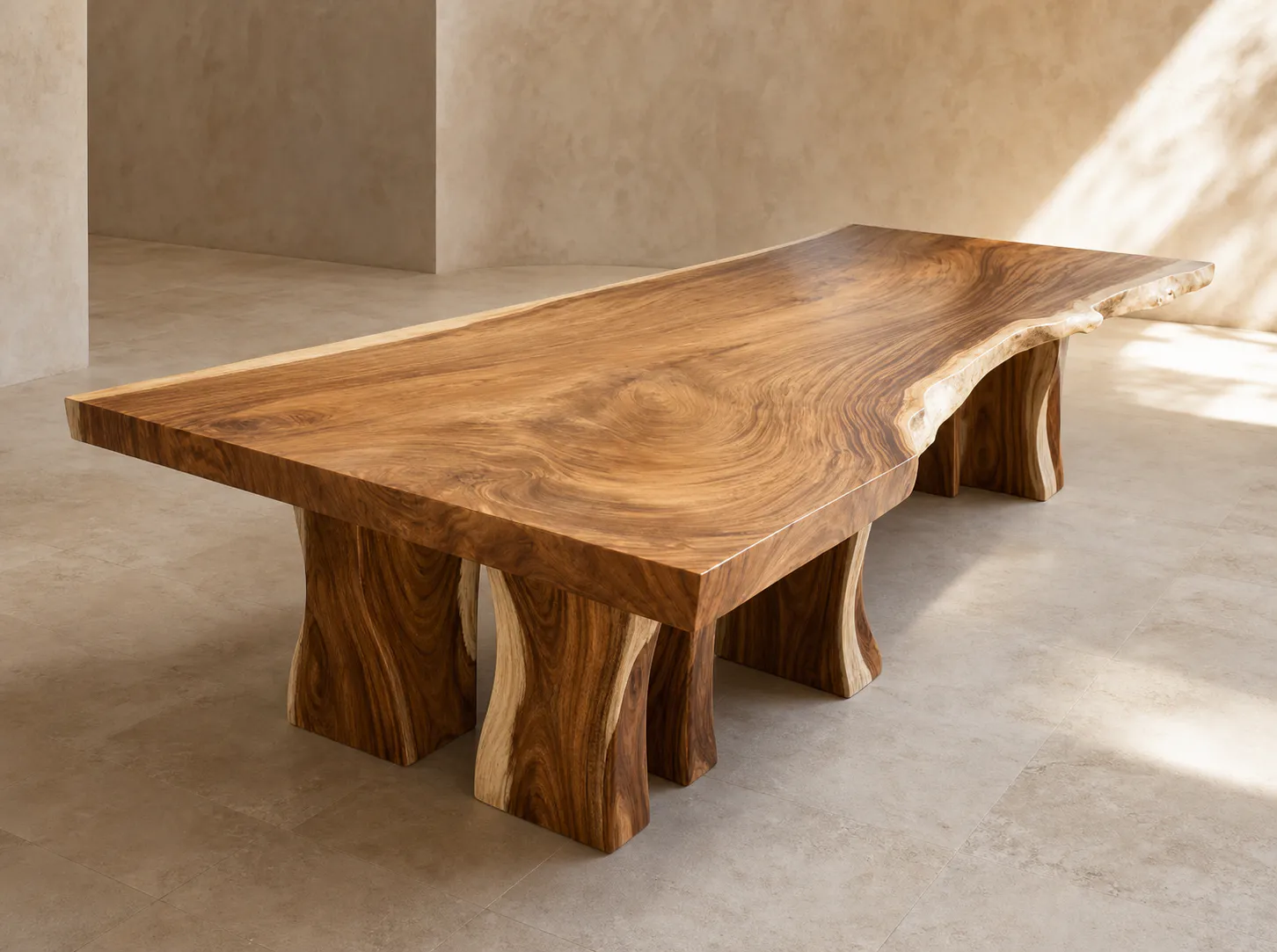
A well-chosen teak vanity fits the bathroom without restricting movement, uses stable solid-wood construction, and protects the timber from routine splashes and humidity. Start with the room’s measured
Choose vanity size from the finished bathroom layout, not from a product photograph. Record wall width, maximum usable depth, door and drawer travel, plumbing positions, and comfortable circulation. A single basin generally suits compact rooms, while a wider double vanity needs enough counter space and two users’ clear access.
Mark the proposed cabinet footprint on the floor and wall before selecting a model. Include skirting, tile thickness, countertop overhang, mirror position, outlet locations and the path of nearby doors. A shallow vanity can preserve circulation in a narrow bathroom, while a deeper cabinet may improve basin and drawer capacity. For wall-mounted designs, verify the wall structure and fixing method with the installer before finalizing the order.
Plan the basin, faucet and drain together. Vessel basins raise the rim height, so cabinet height and faucet reach must work as a set; undermount and inset basins have different cut-out requirements. Confirm whether the chosen basin needs an overflow and whether the faucet mounts on the counter or wall. Manufacturers’ dimensional drawings are more useful than nominal labels such as “large” or “hotel size.” USDA Forest Products Laboratory guidance also supports designing wood components around their service environment.
Look for a vanity made from clearly specified solid teak where it matters structurally, with well-fitted joinery and stable panel construction. Ask whether visible faces, drawer parts, frames and interior panels are solid wood or veneer. Avoid assuming that teak color alone proves species, quality, durability or construction method.
Teak is valued in exterior and interior applications because its natural extractives and dimensional behavior can suit demanding environments, but no timber is maintenance-free in a wet room. Inspect consistent grain selection, flush joints, smooth interior surfaces and drawer operation. Solid wood can move as humidity changes, so sound construction allows panels to move where appropriate instead of locking every board rigidly into place.
Ask the supplier to identify the timber as teak, describe the origin and provide any available chain-of-custody documentation. The Forest Stewardship Council explains certification and chain-of-custody concepts that help buyers assess sourcing claims. For commercial specifications, retain species, finish, dimensions and hardware details with the purchase record. This creates a clearer handover document for designers, procurement teams and future maintenance staff.
Select a finish designed for indoor bathroom humidity and specify hardware that resists corrosion. Teak’s natural properties help, but standing water, harsh cleaners and poor ventilation can still mark wood and shorten hardware life. Confirm the finish system, cleaning method, recoat process and exclusions before installation rather than relying on generic water-resistant claims.
A finish changes both appearance and maintenance. Oil finishes can emphasize grain and permit localized renewal, while film-forming finishes may offer a more sealed surface but require careful repair if damaged. Ask whether all faces, edges, cut-outs and interior surfaces receive finish treatment. Areas around the basin rim, faucet holes and plumbing penetrations deserve particular attention because repeated wetting concentrates there.
Choose hinges, drawer runners, pulls and fasteners suitable for humid service, and provide ventilation to remove persistent moisture. Wipe splashes promptly, use pH-neutral cleaning products recommended by the maker, and do not leave wet towels against timber. The USDA Wood Handbook describes how moisture affects wood; in practice, extraction fans and routine drying matter as much as the cabinet’s material.
Choose storage around actual toiletries, cleaning access and plumbing, then confirm installation responsibilities and timber documentation before purchase. Drawers organize small items but require space around traps; cabinets accommodate taller bottles. A capable installer, correct wall support and a written specification reduce avoidable fitting changes, moisture traps and aftercare uncertainty.
List what the vanity must hold: towels, electrical grooming tools, spare soap, cleaning products or guest amenities. A U-shaped drawer can work around a trap, whereas a full cabinet gives flexible volume for taller containers. Leave access to isolation valves and waste connections. In hospitality bathrooms, standardizing basin, mixer, pull and finish selections can simplify replacement parts and housekeeping routines across multiple rooms.
Before approving production, confirm the finished floor level, wall condition, basin template, faucet specification, countertop material and who seals interfaces during installation. For timber origin, request documentation proportionate to the project and market requirements; CITES explains the role of international controls for listed species. Keep care instructions with the project closeout file, then inspect finish and sealant condition periodically rather than waiting for visible damage.
Teak can be a suitable bathroom-vanity material when it is properly constructed, finished and maintained. Its natural extractives and stability make it valued for humid settings, but it should not sit in standing water. Use good ventilation, wipe splashes promptly, protect cut edges, and follow the maker’s cleaning and refinishing instructions.
Choose a wall-mounted teak vanity when you want visible floor area, easier floor cleaning and an adjustable installation height, provided the wall can support it. Choose a freestanding vanity when floor support, traditional proportions or simpler placement suit the project. In either case, confirm plumbing locations, leveling needs and access for servicing.
Maintain a teak vanity by wiping water and toothpaste splashes quickly, cleaning with a soft cloth and a maker-approved mild cleaner, and keeping the bathroom ventilated. Avoid abrasive pads, bleach and prolonged wet towels. Inspect the finish, basin sealant and hardware periodically, then recoat or repair the finish using the specified system when needed.
This resource is educational and reflects general furniture-specification considerations. Confirm local building requirements, wall capacity, plumbing, electrical work and installation details with qualified project professionals.