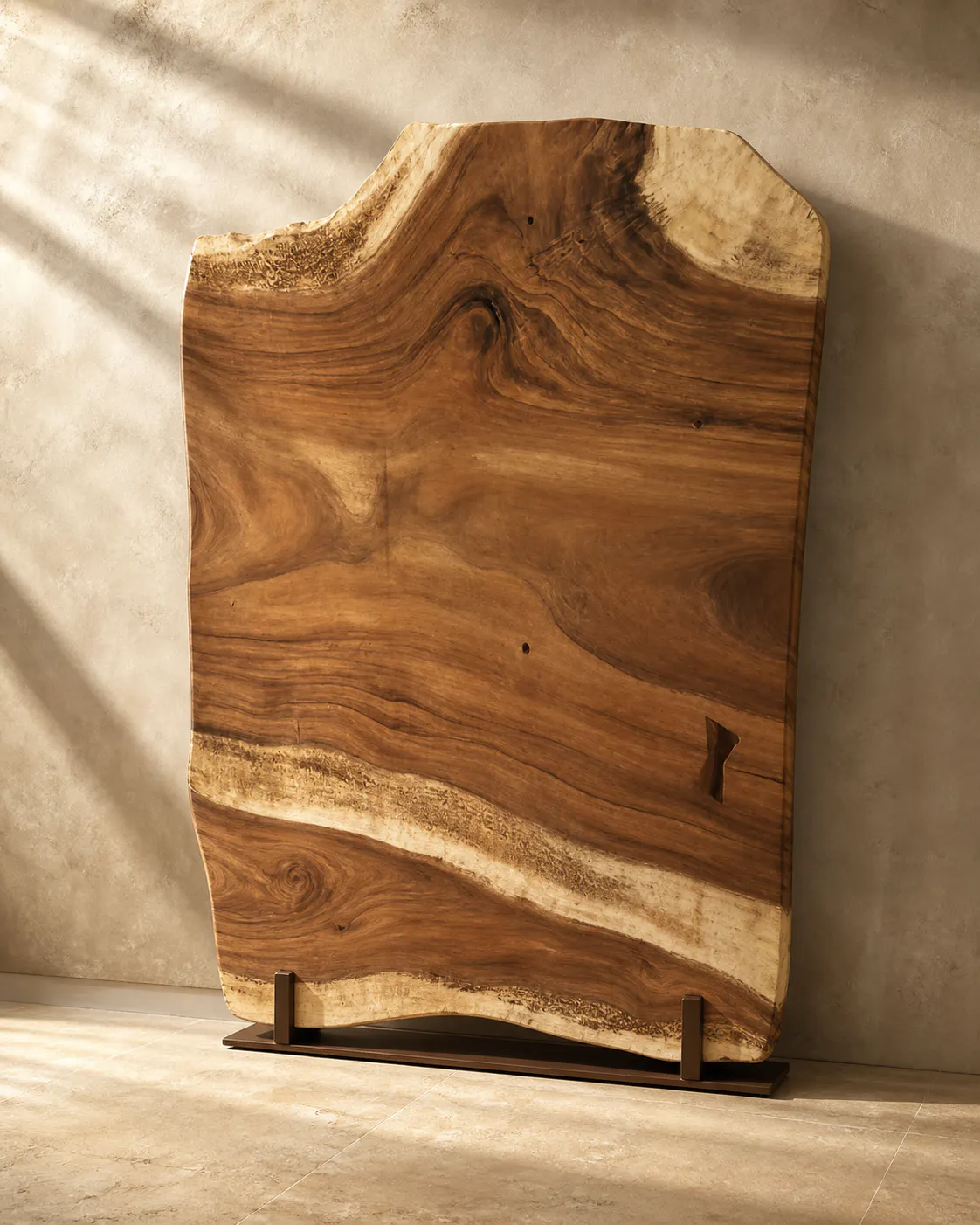
A well-chosen teak tray is solid, stable, appropriately sized, and finished for its intended use. Teak is valued for its natural durability and dimensional stability, but a tray’s
Before ordering, decide whether the tray will be used for drinks, food presentation, bedside organization, bathroom storage, or purely decorative display. That single decision guides its ideal size, rim height, finish, and care routine.
A quality teak tray starts with material verification: it should be solid teak rather than a thin veneer over MDF, have evenly sanded surfaces, and sit flat without rocking. Prioritize clear sourcing information, sound joinery, and practical dimensions over dramatic color, which naturally changes as teak ages.
Ask the supplier to confirm whether the tray is solid teak throughout, including its handles, rim, and base. Examine photographs for continuous grain and consistent material at exposed edges; veneer may be suitable for some furniture, but it is less desirable where a tray can receive repeated moisture and knocks. The USDA Wood Handbook explains why wood movement and construction details matter in service.
Set the tray on a level surface, or request confirmation that it has been checked for rocking. Look for cleanly fitted corners, smooth underside edges, and no splinters around handholds. Responsible material claims should be supported by supplier records or chain-of-custody information; FSC standards provide a useful reference point when evaluating forest-management and sourcing statements.
Tray dimensions should follow the objects it will carry and the space where it will rest. Measure the available surface, then allow enough clearance for handles and safe lifting. Raised edges help contain glasses and small items, while a low-profile tray suits serving or display.
Measure the table, ottoman, counter, or shelf before choosing a tray. For drinks, allow space between glasses so hands can lift them without collision, and leave a comfortable margin around the tray on its resting surface. Handles add to the overall footprint, so compare external dimensions rather than only the usable interior. A rectangular tray commonly fits consoles and coffee tables, while a round tray can soften a compact side-table arrangement.
Choose rim height according to risk and purpose. A raised rim offers more security for bottles, cups, or remote controls, whereas a shallow profile makes display objects and plates easier to access. Consider weight as well: a larger solid-teak tray can become heavy once loaded. Review M Furniture’s teak furniture care guide alongside the tray’s stated dimensions before ordering.
Finish and care determine whether a teak tray remains suitable for serving, humid rooms, or decorative use. Choose a finish whose manufacturer states its intended contact and cleaning use, avoid prolonged standing water, and expect untreated or oiled teak to develop a deeper patina with time.
A tray used around food or drinks needs a fully cured finish suitable for the supplier’s stated use. Do not assume every clear coat, oil, or wax is appropriate for direct food contact; request product details when that use matters. The U.S. Food and Drug Administration’s safe food handling guidance also supports prompt cleaning and sensible separation of food-contact surfaces from contamination risks.
For routine care, wipe spills promptly with a soft damp cloth, then dry the tray rather than leaving moisture beneath cups or bottles. Avoid abrasive pads, harsh chemicals, and extended soaking. Oiled or unfinished teak may require periodic renewal and will darken over time, while sealed surfaces generally need gentler cleaning. See how to care for solid teak for practical maintenance steps.
A teak tray marketed for food service should have a finish explicitly identified by its manufacturer for that use and should be fully cured before contact. If that information is absent, use it for dry packaged items or decoration instead. Follow the finish maker’s cleaning instructions, particularly after refinishing.
Ask for a material specification stating solid teak and inspect exposed edges, handles, and the underside for consistent wood rather than a thin surface layer. Solid wood usually shows continuous grain variation. Also ask whether the base, rim, and handles use teak, because descriptions can refer only to visible surfaces.
Choose handles when the tray will regularly carry drinks, dishes, or heavier objects between rooms. They improve grip and help keep hands away from the tray’s contents, but increase its overall footprint. For a stationary coffee-table or display tray, a handle-free design can provide a cleaner, more compact silhouette.
Teak tolerates humidity well, but a tray should not be left outdoors permanently or exposed to standing rain and intense sun. Outdoor use can accelerate weathering, finish wear, and surface checking. Bring it inside after use, dry it promptly, and follow the supplier’s guidance for re-oiling or resealing.
This educational resource is published by M Furniture & Decor. Product specifications, finish suitability, and sourcing documentation can vary by maker and should be confirmed with the supplier before purchase.