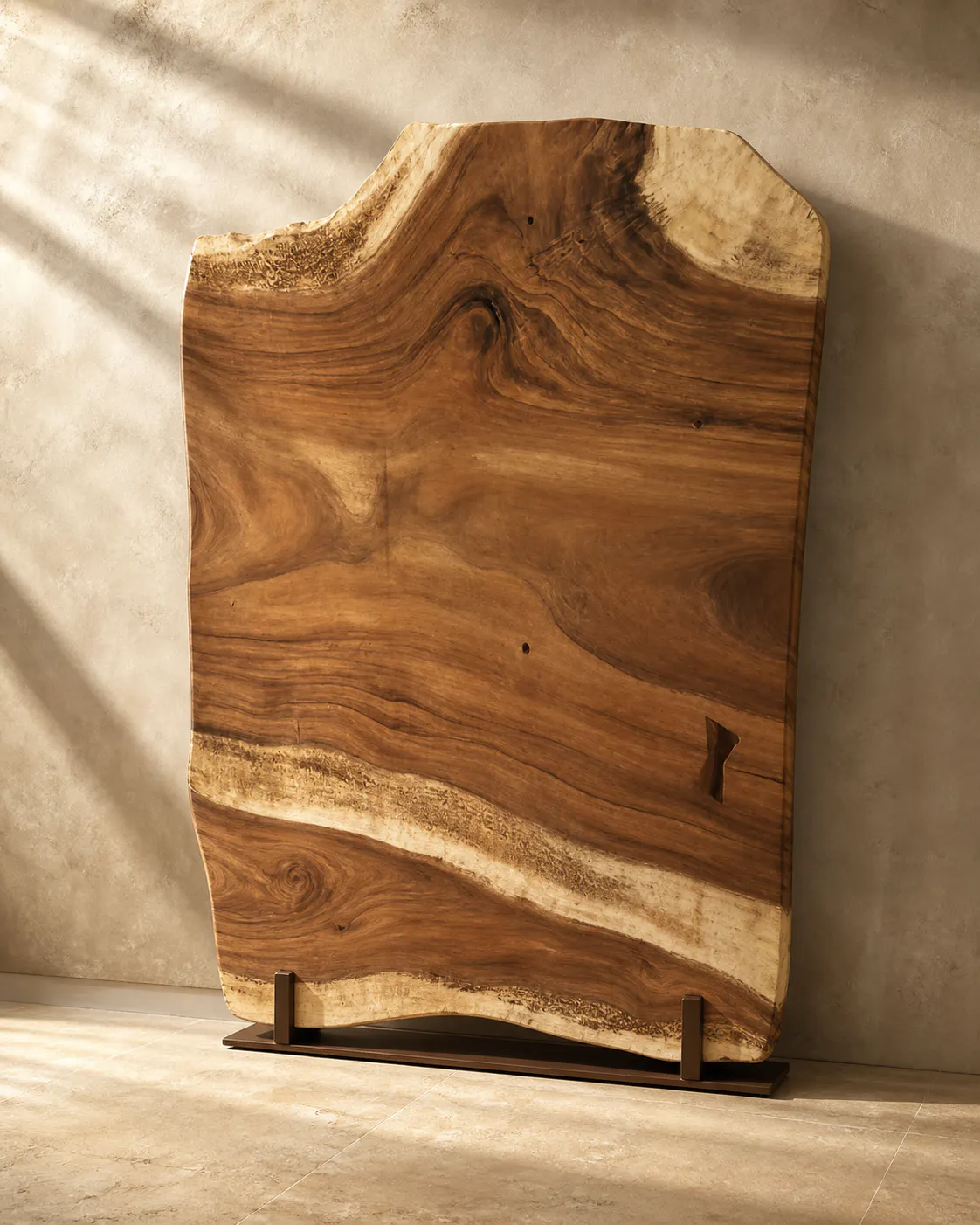
A well-chosen teak sideboard combines verified timber, useful storage, and proportions that work with the room every day. Teak is valued for its warm grain and natural durability
Ask for a written specification covering timber species, solid-wood and veneer components, finish type, dimensions, and care instructions before confirming an order.
Choose the timber first: specify solid teak rather than a teak-faced panel, ask for provenance and finish details, and inspect how the case is joined. A credible sideboard should balance timber stability, usable storage, and dimensions suited to the room, not simply show an attractive grain pattern.
Start with a clear materials list. Ask whether the cabinet body, doors, drawer fronts, shelves, and back use solid teak, veneer, engineered board, or a combination. Responsible sourcing documentation can provide useful context; the Forest Stewardship Council explains certification standards, while CITES maintains international trade information for listed species. Look for aligned doors, consistent reveals, smooth drawer action, and joinery designed to accommodate seasonal timber movement rather than relying only on visible grain.

Size a teak sideboard from the room outward: measure the wall, door swings, walkway, and the items it must hold before selecting a cabinet. Compare overall width, depth, height, interior shelf spacing, and leg clearance, because an otherwise suitable design can feel oversized or restrict daily movement.
Measure the intended wall at least twice, including skirting boards, switches, vents, and nearby doors. Mark the proposed width and depth on the floor with tape, then test routes around it. A 90 cm walkway is a useful planning target in many rooms, while drawers and hinged doors need additional operating space. Decide what belongs inside: dinnerware, linens, electronics, barware, or documents. Adjustable shelves, cable openings, and a mix of drawers with cupboards can make a teak sideboard more practical than a larger but less organized cabinet.
Assess construction and care by asking how the solid wood was dried, what joinery supports wide panels, and which finish is used. Select a finish that fits spills and cleaning habits, while allowing teak's color to mature naturally; confirm maintenance instructions before purchase and delivery.
Teak changes tone with light exposure, and the finish determines how easily the surface can be cleaned or renewed. Ask whether the sideboard uses oil, lacquer, polyurethane, or another coating, and request the maker's written care guidance. Avoid placing hot, wet, or abrasive objects directly on the top; use mats and wipe spills promptly. The Wood Database teak profile describes teak's properties, but furniture performance also depends on drying, panel design, finish application, and indoor humidity. Confirm delivery dimensions, assembly needs, and warranty terms before buying.
Solid teak is appropriate when you value repairability, visible grain, and long service, but verify what “solid” describes. Ask whether the cabinet box, shelves, drawer fronts, and back are solid timber or veneer. Veneer can be practical; transparent material specifications matter more than a label alone.
Most dining or living-room sideboards work at a depth that preserves a comfortable route around them. Measure from the finished wall to the front edge, then reserve clearance for chairs, doors, and drawers. For tighter rooms, shallow storage may be more useful than maximum capacity, provided serving pieces still fit.
Use a finish designed for furniture and follow the maker's written care directions. Wipe spills promptly with a soft, lightly damp cloth, avoid abrasive cleaners, and use pads beneath hot or wet items. Oil, lacquer, and polyurethane finishes differ in appearance and repair method, so confirm the exact system before refinishing.
This resource is published by M Furniture & Decor, a Thai teak furniture maker. Product specifications, finish options, and availability should be confirmed for each individual order.