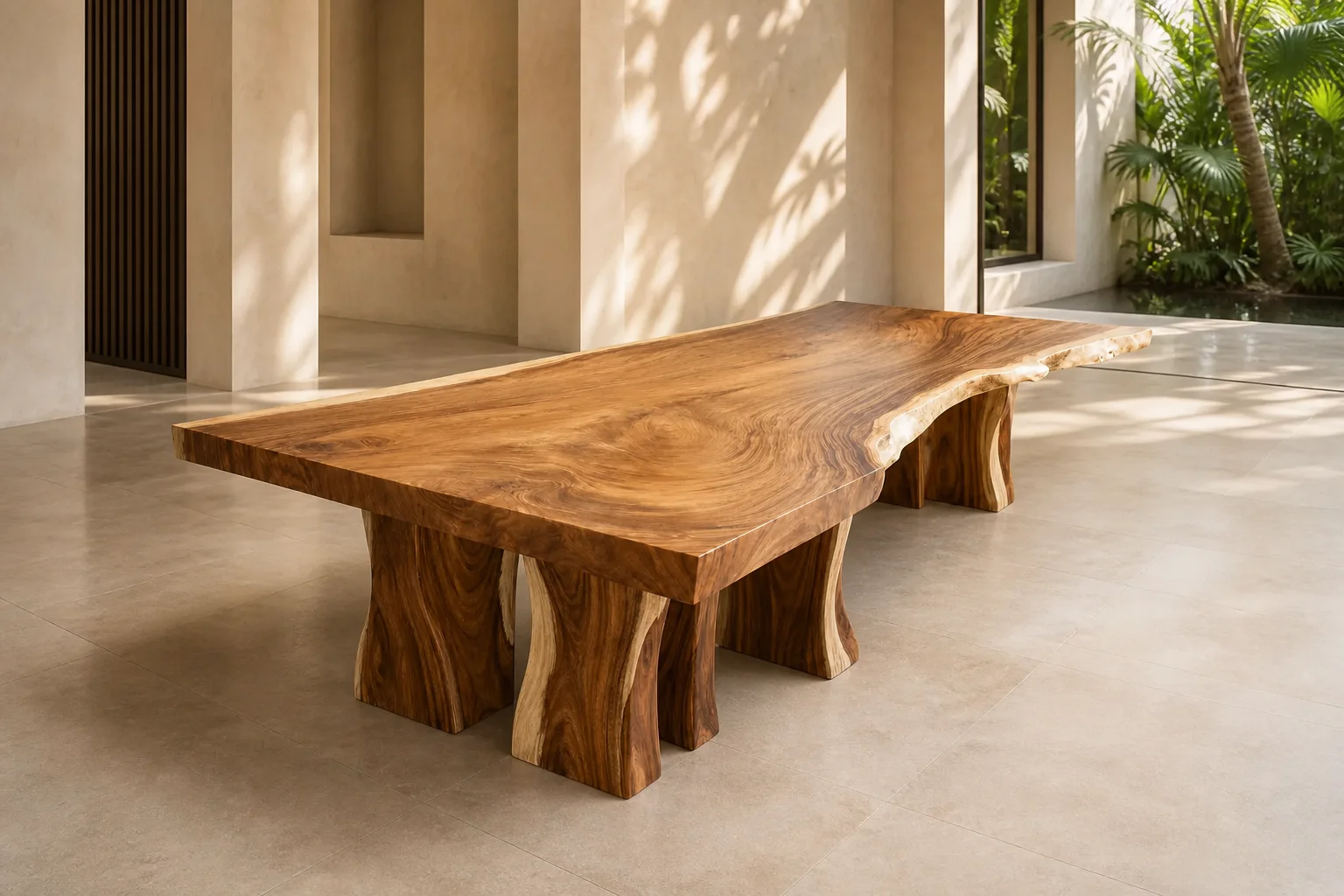
A teak round coffee table is a strong choice when its diameter preserves circulation, its height works with the seating, and its timber and construction are clearly specified
Start with a scaled floor plan, then compare written specifications rather than photographs alone. Useful details include the stated species, top thickness, base footprint, joinery, finish, care instructions, packing method, and lead time. This approach helps buyers compare made-to-order Thai teak furniture with retail alternatives while accounting for actual room use and delivery access.
A suitable round teak coffee table leaves 30–45 cm between the sofa and table, preserves main walkways, and sits near cushion height. For many homes, 60–80 cm diameters suit compact seating and 90–110 cm diameters suit larger groups, but taped floor outlines provide the most reliable check.
Measure the proposed location before choosing a profile or finish. Mark the diameter with masking tape, sit in each seat, and check whether knees, drawers, doors, and routes still work. A table approximately level with, or slightly below, the seat cushion is usually convenient for drinks and books. The base matters as much as the top: a broad pedestal or well-spaced legs should remain stable without consuming useful foot space. For general furniture planning context, review the room-layout guidance published by Architectural Digest alongside your own measured plan.
Inspect whether the top, base, and legs are solid teak, how the parts are joined, and whether the design allows wood to move with humidity. Choose a finish for its installation conditions: protected indoor rooms need spill resistance, while covered outdoor settings require realistic expectations about moisture, sunlight, and colour change.
Ask for a material schedule that distinguishes solid teak from veneer, engineered board, or other timber species. A solid-wood top should be attached in a way that accommodates seasonal expansion and contraction rather than being fixed rigidly across its width. Examine close photographs of joints, underside finishing, level feet, and the base-to-top connection. Teak contains natural oils, yet it is not maintenance-free in exposed conditions. Confirm the coating, cleaning method, and refinishing options with the maker, and compare wood properties through The Wood Database’s teak reference.
Verify teak by requesting the stated species, origin, supplier records, and any certification claim in writing. If Forest Stewardship Council certification is claimed, check the certificate holder and code through FSC rather than relying on a logo. Retain invoices and consult an import professional for destination-specific requirements before shipment.
Teak commonly refers to *Tectona grandis*, but a product name alone does not establish origin or legality. Ask the seller for the timber species, country of harvest or manufacture, and documentation that supports the sourcing claim. The Forest Stewardship Council provides information on certification and controlled wood, while CITES publishes international wildlife-trade resources. Rules, declarations, and documentary expectations may differ by origin, product form, and destination. A customs broker can confirm what applies to a particular order; keep the quotation, invoice, packing list, and correspondence together.
Before ordering, approve a written specification listing diameter, height, top thickness, edge profile, timber, finish, weight, packing, lead time, and delivery terms. Check every doorway, lift, stair turn, and installation route. For international orders, clarify freight, insurance, duties, local delivery, and who handles damage claims.
Request dimensions in millimetres or centimetres and ensure the drawing shows both the top diameter and the widest base measurement. Share photos and measurements of gates, elevators, corridors, stair landings, and door openings, especially for a heavy solid-teak piece. Confirm whether the quotation includes crating, freight, cargo insurance, destination charges, and placement inside the property. Made-to-order furniture may require several weeks before dispatch, so align the production schedule with renovation or hospitality-project milestones. Review the final drawing against the approved specification before production begins, then retain it with the order record.
Choose the diameter from the seating footprint, not from a product photograph. A 60–80 cm round table often works for compact sofas, while 90–110 cm can suit larger arrangements. Leave about 30–45 cm for legroom, protect main circulation routes, and test the outline on the floor before ordering.
A coffee table usually works well when its top is close to the sofa cushion height or slightly lower. Measure the finished cushion, not only the sofa frame, because soft cushions compress. Also consider intended use: a table used frequently for meals, drinks, or laptops may need more convenient reach.
Solid teak provides a continuous timber construction that can be refinished over time, but it should be built to accommodate normal seasonal movement. Veneer can be appropriate in some designs, provided the specification is transparent. Ask exactly which components are solid teak, which are veneered, and what substrate is used.
Request the stated botanical species, country of origin, supplier documentation, and any certification details in writing. For an FSC claim, ask for the certificate holder and code, then verify it through FSC resources. Keep the invoice and shipment documents, and seek customs advice when importing across borders.
This guide is published by M Furniture & Decor, a teak furniture maker. Measurements are planning guidance, not building, customs, or legal advice; buyers should confirm project-specific requirements with their designer, carrier, customs broker, or relevant authority.