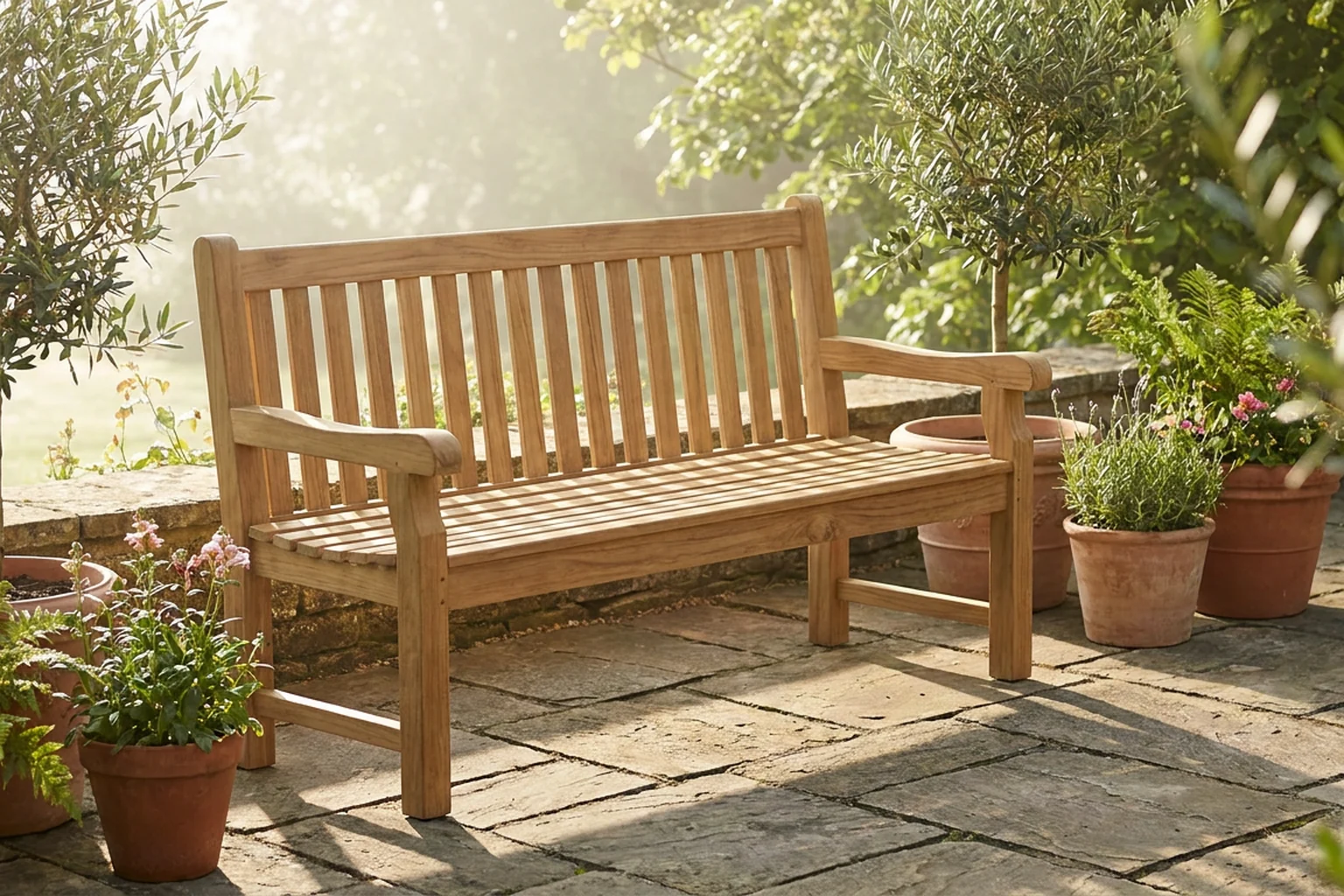
A well-chosen teak patio furniture set combines documented **Tectona grandis** timber, sound construction, comfortable proportions, and a care routine that fits your climate and schedule. Teak is valued
Ask for the set’s full dimensions, timber origin documentation, hardware specification, cushion details, care guidance, warranty terms, and delivery measurements before confirming an order.
Assess teak before comparing styles: ask the supplier to identify the species as **Tectona grandis**, provide chain-of-custody or harvest documentation, and explain whether the timber is plantation-grown or reclaimed. Then inspect board selection, moisture control, joinery, and corrosion-resistant hardware, because these details influence stability, longevity, and repairability outdoors.
Start with traceability rather than colour alone. The Forest Stewardship Council’s forest-management certification framework can help buyers understand independently certified forestry, while CITES species records provide a reference point for international trade controls. Request written identification of the timber, origin, and any certification claim. For construction, examine consistent grain, smooth sanding, mortise-and-tenon or similarly robust joints, and stainless steel or marine-grade fasteners. Avoid relying on a showroom finish to judge structural quality; ask how components are dried, assembled, and supported.
Plan the set around use, circulation, and table height rather than a product photo. Measure the patio, reserve clear walking routes, and choose chair, bench, sofa, and table proportions that serve dining or lounging. Check seat height, arm clearance, adjustable feet, cushion ties, and access through gates, lifts, or doors before purchase.
Map the available footprint and include the space required when chairs are pulled back. A dining chair commonly needs about 60 centimetres of width at the table, with additional clearance behind it for movement; confirm the manufacturer’s actual dimensions instead of using a generic rule. Compare table height with chair seat height, and check whether umbrellas, planters, or railings will interfere with use. The USDA Forest Products Laboratory Wood Handbook explains why wood changes dimension with moisture, making level placement and drainage sensible planning details. Verify package dimensions and access routes before delivery.
Choose a care plan before buying: teak left unfinished typically weathers toward grey, while periodic cleaning and a suitable finish preserve a different appearance. Ask what cleaning products, oil or sealer, cushion storage, replacement parts, and warranty coverage the supplier recommends. This turns finish preference into a realistic long-term ownership decision.
Place teak where rain can drain and air can circulate beneath the legs. Remove leaves, food residue, and standing water regularly; these steps reduce surface staining and help prevent moisture from being held against the timber. In humid, coastal, or heavily shaded settings, follow the maker’s cleaning interval rather than applying oils automatically. Cushion quality matters as much as frame quality: check foam density, removable covers, fastening points, and whether covers are stored dry during prolonged rain. For fabric-specific instructions, consult the manufacturer’s Sunbrella care and cleaning guidance. Ask whether replacement cushions, glides, and hardware can be ordered later.
Untreated teak can remain outdoors year-round because its natural oils support weather resistance, but conditions still matter. Standing water, trapped debris, poor airflow, and freeze-thaw exposure can shorten service life. Use breathable covers only when furniture is dry, maintain drainage, and follow the maker’s care instructions for your climate.
FSC certification is not the only way to assess teak, but it is a useful independent forestry and chain-of-custody signal when claims can be verified. Ask for certificate details, timber origin, and invoice documentation. If certification is unavailable, request clear written information about legal harvest, species identification, and supplier traceability.
Oiling is mainly an appearance decision, not a universal requirement for outdoor teak. It can deepen colour temporarily, but it also creates an ongoing maintenance commitment and may attract dust or encourage uneven finishing if applied incorrectly. Ask the maker which products are compatible with the specific timber, construction, and climate.
Choose corrosion-resistant fasteners, especially for humid, coastal, or poolside locations. Stainless steel is commonly specified because it helps reduce rust staining around joints, although the appropriate grade depends on exposure. Ask the supplier to identify the hardware material, whether fittings are replaceable, and how moving parts should be maintained.
This resource is published by M Furniture & Decor. Product availability, timber documentation, construction specifications, and care instructions should be confirmed with the supplier for the specific furniture set being considered.