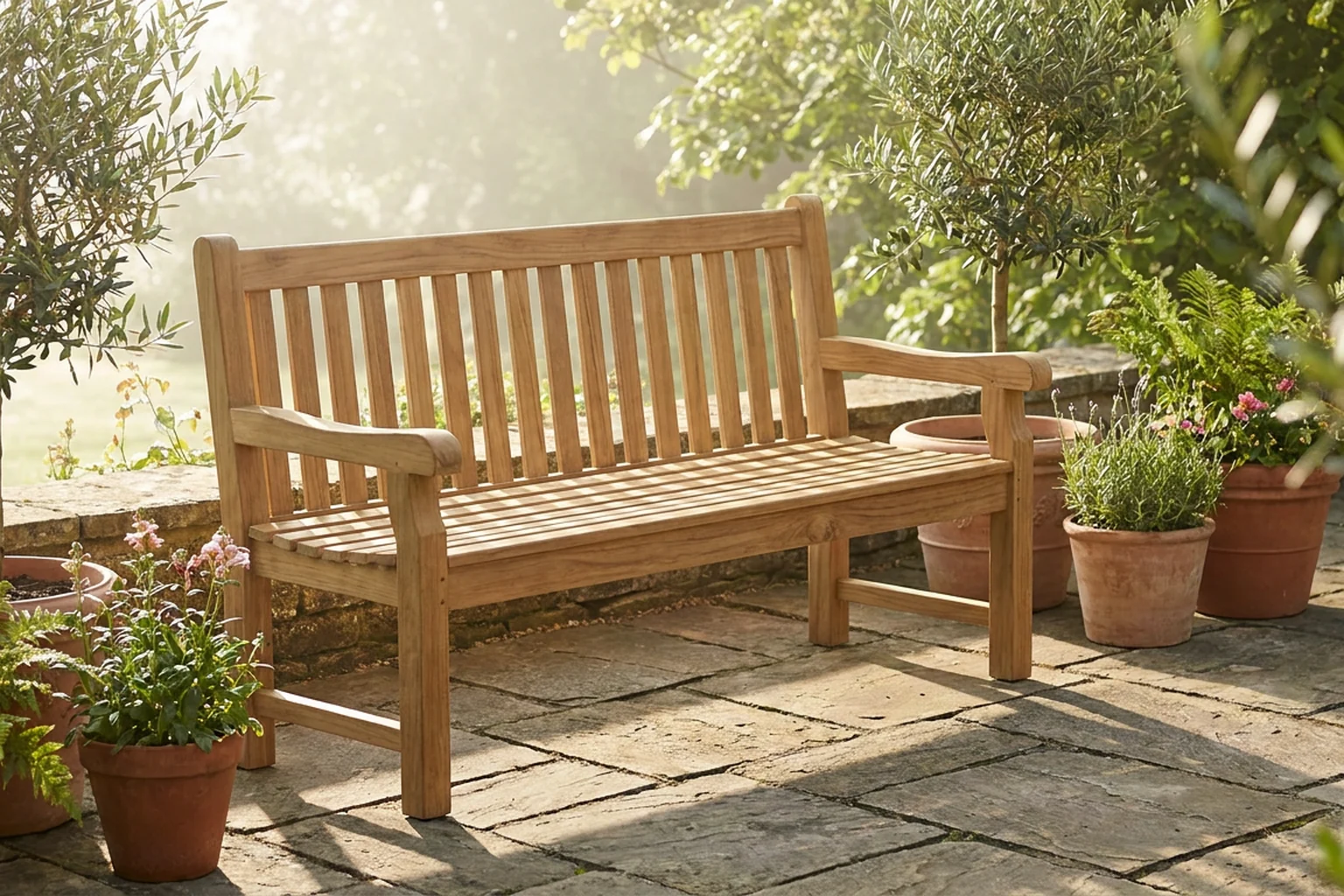
A well-chosen teak outdoor dining table combines solid timber, water-shedding construction, appropriate seating space, and a finish expectation you can maintain. Teak is often selected for its dense
Buying tip: request the timber species, solid-wood versus veneer specification, hardware details, and care instructions in writing before placing an order.
Assess a teak table by verifying that the top, frame, and legs are solid teak, then examine how parts meet and shed water. Dense teak is valued for outdoor durability, but construction, moisture movement, and finishing determine whether a table stays stable through seasons of sun and rain.
Ask for the timber specification rather than relying on the word teak: plantation-grown *Tectona grandis*, reclaimed teak, veneers, and mixed-hardwood components can differ in appearance, repairability, and price. Look underneath for full-length aprons, robust leg connections, and stainless or corrosion-resistant fasteners; exposed end grain and flat ledges should drain. The USDA Forest Products Laboratory discusses wood durability by species and exposure. Small surface checks can occur outdoors, but rocking, loose joints, and thin screw-only attachments are warning signs.
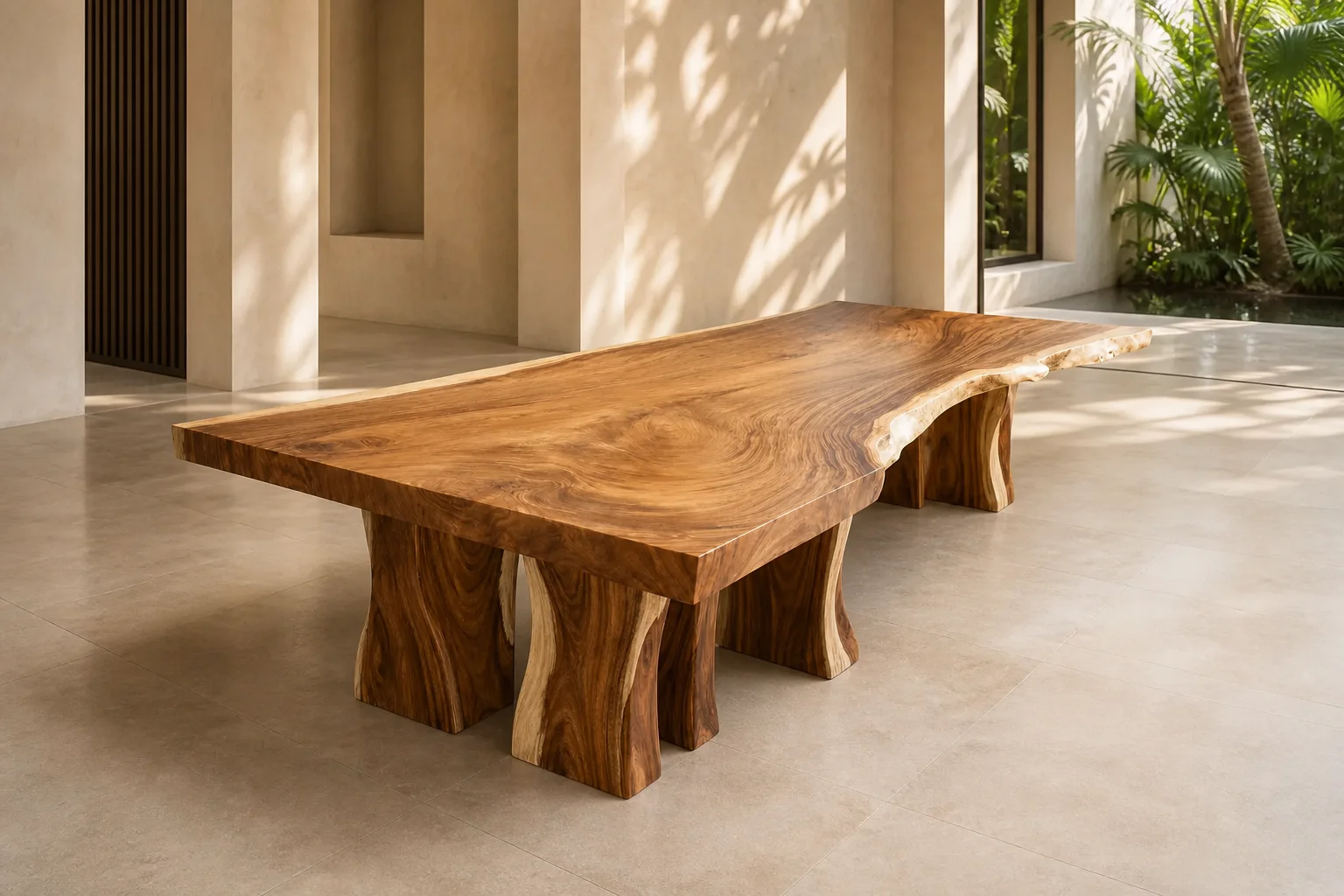
Choose a table size after measuring the dining area and preserving clearance for chairs and movement. Allow roughly 90 centimetres around usable table edges where possible, then match seating capacity to everyday use rather than occasional maximum guests. Extendable designs can suit compact patios when their leaf mechanism is protected and stable.
Start with the patio's usable footprint, not its overall boundary: plan around planters, doors, columns, grills, and circulation routes. As a practical guide, allow about 60 centimetres of table edge per diner and keep approximately 90 centimetres behind occupied chairs for access; tighter urban balconies may need a smaller round or square format. A 180-centimetre rectangular table commonly accommodates six people, depending on chair width. Review accessibility guidance from the U.S. Access Board when designing hospitality or accessible settings, and confirm the manufacturer's closed and extended dimensions before delivery.
Select teak with clear species, origin, and chain-of-custody information, then choose a finish based on the appearance and maintenance you accept. Untreated teak generally develops a silver-grey patina outdoors; oil or protective coatings can alter colour, but they require periodic assessment and renewal under local conditions.
Responsible purchasing begins with traceable documentation, especially when teak is imported across borders. Ask whether the supplier can identify the forest source, mill, and relevant certification or legality records. Forest Stewardship Council certification can provide useful chain-of-custody context, though buyers should verify certificate claims directly. For appearance, untreated teak gradually shifts from warm brown to grey under ultraviolet light and rain. Teak oil can enrich colour temporarily, while film-forming finishes may need more careful preparation and maintenance. Test any cleaner or finish on an inconspicuous area and follow the table maker's instructions.
Before ordering, confirm delivery access, table weight, assembly requirements, warranty coverage, and the maker's cleaning guidance. Maintain teak by removing debris, washing gently with mild soap and water, and allowing complete drying. Avoid pressure washing, harsh bleach, and airtight covers that can trap moisture against the wood.
A useful pre-purchase checklist covers more than the tabletop. Measure gates, elevators, and door openings; confirm whether legs detach; and ask who levels the table on uneven paving. Inspect the warranty for exclusions involving weather, finish changes, and commercial use. Routine care is usually simple: brush away leaves, wash with a soft brush and mild soapy water, rinse, then dry naturally. The American Wood Council notes that wood performance is influenced by moisture exposure and detailing. Use breathable furniture covers only when the table is clean and dry, and remove them regularly to ventilate.
Teak can stay outdoors year-round because its natural oils and dense structure resist moisture better than many woods, but it still needs sensible placement. Use level feet, allow water to drain, clean airborne grime, and avoid trapping moisture beneath impermeable covers. Severe weather may justify temporary protection.
Teak does not require oil to remain suitable for outdoor use. Left unfinished, it typically changes from brown to a silver-grey patina as sun and rain affect the surface. Apply teak oil only if you prefer a richer colour and can repeat cleaning and application as directed by the manufacturer.
Ask for a written material specification naming *Tectona grandis* and identifying which components are solid wood. Examine edges and undersides for continuous grain, substantial framing, and consistent material. Veneer can be legitimate in some products, but it should be clearly disclosed rather than presented as solid teak construction.
Aim for about 90 centimetres between the table edge and walls, planters, or other fixed obstacles so seated guests can move chairs comfortably. Allow roughly 60 centimetres of table edge per person. Smaller balconies may require tighter planning, narrower chairs, or a round table that improves circulation.
This guide is published by M Furniture & Decor. Product specifications, maintenance requirements, certification status, and warranty terms vary by maker and should be confirmed for the specific table being considered.