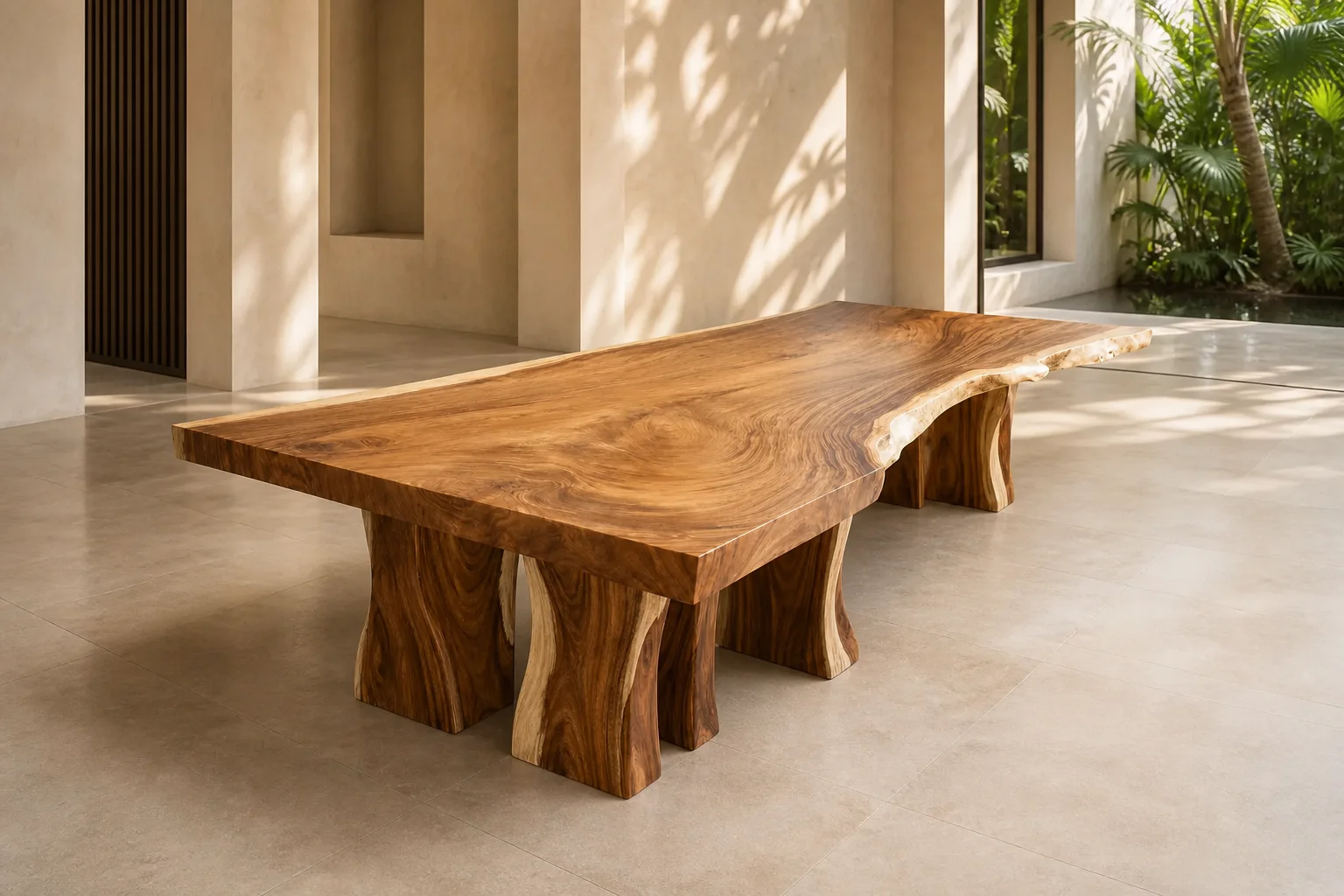
A teak office desk should be selected as a working tool first and a furniture piece second. Measure the room, equipment, user posture, and access route; then compare
For a home office, executive suite, hotel workspace, or design project, a written specification prevents assumptions. It should record overall dimensions, usable worktop area, timber construction, finish, drawer layout, cable provisions, packaging, and delivery conditions. These details help buyers compare teak desks on function rather than photographs alone.
Ask for dimensions in millimetres or centimetres, plus clear photos of the underside, drawer interiors, joints, and finish—not only the top surface.
Start with the work surface and the user, not the room alone. A desk needs clear width for screens, keyboard, papers, and writing; adequate depth for viewing distance; and a height that permits relaxed shoulders. Measure circulation, chair travel, door clearance, and cable access before choosing a teak desk design.
Use actual equipment as the template. A single-screen setup can need a compact surface, whereas two displays, paper plans, or a desktop computer require more clear area and cable routing. The UK Health and Safety Executive’s workstation guidance supports arranging screens, keyboard, and chair to avoid awkward posture.
As a starting point, many buyers compare desks around 70–80 cm high and 60–75 cm deep, then adjust for chair height and monitor placement. Mark the proposed footprint on the floor. Allow room for a chair to move, drawers to open, and at least one route to power without trailing cables across circulation space.
Verify that “teak” identifies the species and construction, then ask for evidence that the supply chain suits procurement requirements. Solid teak, teak veneer, finger-jointed components, and mixed-material furniture perform and price differently. For commercial or export orders, request written specifications, finish details, and relevant chain-of-custody records before approving production.
Ask the maker whether the top, apron, legs, drawer fronts, and internal components are solid teak, veneer, or another material. This matters because visible grain does not by itself confirm construction. Request timber species information and clear descriptions of panels, edge treatment, and any engineered components used for stability.
If responsible sourcing is part of the brief, ask whether documentation is available for the order and what it covers. FSC chain-of-custody certification tracks certified material through supply chains, but buyers should confirm certificate scope, product claims, and invoice wording directly with the supplier. Keep these records with the project specification.
Choose joinery and finish according to how the desk will be used and where it will live. A well-built teak desk should feel rigid, sit without rocking, and allow normal wood movement as humidity changes. Inspect edges, drawer action, underside finishing, and repairability rather than judging quality only by the top surface.
Examine how legs connect to the frame, whether drawers run smoothly, and whether the desk remains stable on a level floor. Solid-wood panels expand and contract with moisture changes, so construction should accommodate movement instead of locking wide panels rigidly. The USDA Wood Handbook explains why moisture and grain direction matter in wood design.
Choose a finish for the maintenance level and exposure expected. A clear finish can retain teak’s warm tone while offering surface protection; a more natural treatment may need more regular attention. Ask for a sample or finish schedule, then check it under the room’s lighting. Inspect all four sides, underside edges, and drawer interiors for consistency.
Select storage, cable management, and delivery arrangements after the desk’s ergonomic and material requirements are settled. A minimalist teak table may suit laptop work, while a workstation needs planned routes for power and equipment. Confirm drawer orientation, leg clearance, access constraints, packaging, assembly, and the manufacturer’s process for resolving transit damage.
List the functions the desk must support: laptop work, dual monitors, writing, filing, video calls, or shared use. Then specify two or three practical features, such as a cable grommet, shallow pencil drawer, locking pedestal, or modesty panel. More storage is not always better if it reduces knee clearance or prevents a comfortable seated position.
For an export order from Bangkok or another production location, verify packed dimensions, total pieces, assembly instructions, and the delivery route into the building. M Furniture & Decor buyers can also confirm the finish, hardware, and drawer placement before production. Photograph the desk on arrival and report visible packaging damage before installation or disposal.
Yes. A teak desk can work with dual monitors when its width, depth, and base are sized for the screens, arms, keyboard, and cables. Confirm the desktop’s clear usable area rather than relying on an overall product label. Leave space behind monitors for adjustment, ventilation, and access to power.
Teak is prized for its natural durability and dimensional stability, but no wood desk is maintenance-free. Dust with a soft dry cloth, clean spills promptly, and follow the finish maker’s instructions. Avoid harsh solvents, standing water, direct heat, and prolonged sun exposure; these conditions can alter color or stress a finish.
Ask for the timber species, country of manufacture, construction description, finish specification, lead time, packaging plan, and any chain-of-custody documentation relevant to the order. Also request overall dimensions, interior drawer dimensions, assembly requirements, and care guidance. These details make quotes comparable and reduce surprises after international delivery.
Solid teak means the visible structural components are made from teak lumber rather than a thin teak veneer over another core. Some well-made desks combine solid wood with engineered panels for stability, so ask which parts use each material. The answer matters for repair options, grain continuity, weight, and price.
This resource is published by M Furniture & Decor, a teak furniture maker. Recommendations are general buying guidance; buyers should confirm final specifications, timber documentation, delivery terms, and care instructions with their selected supplier.