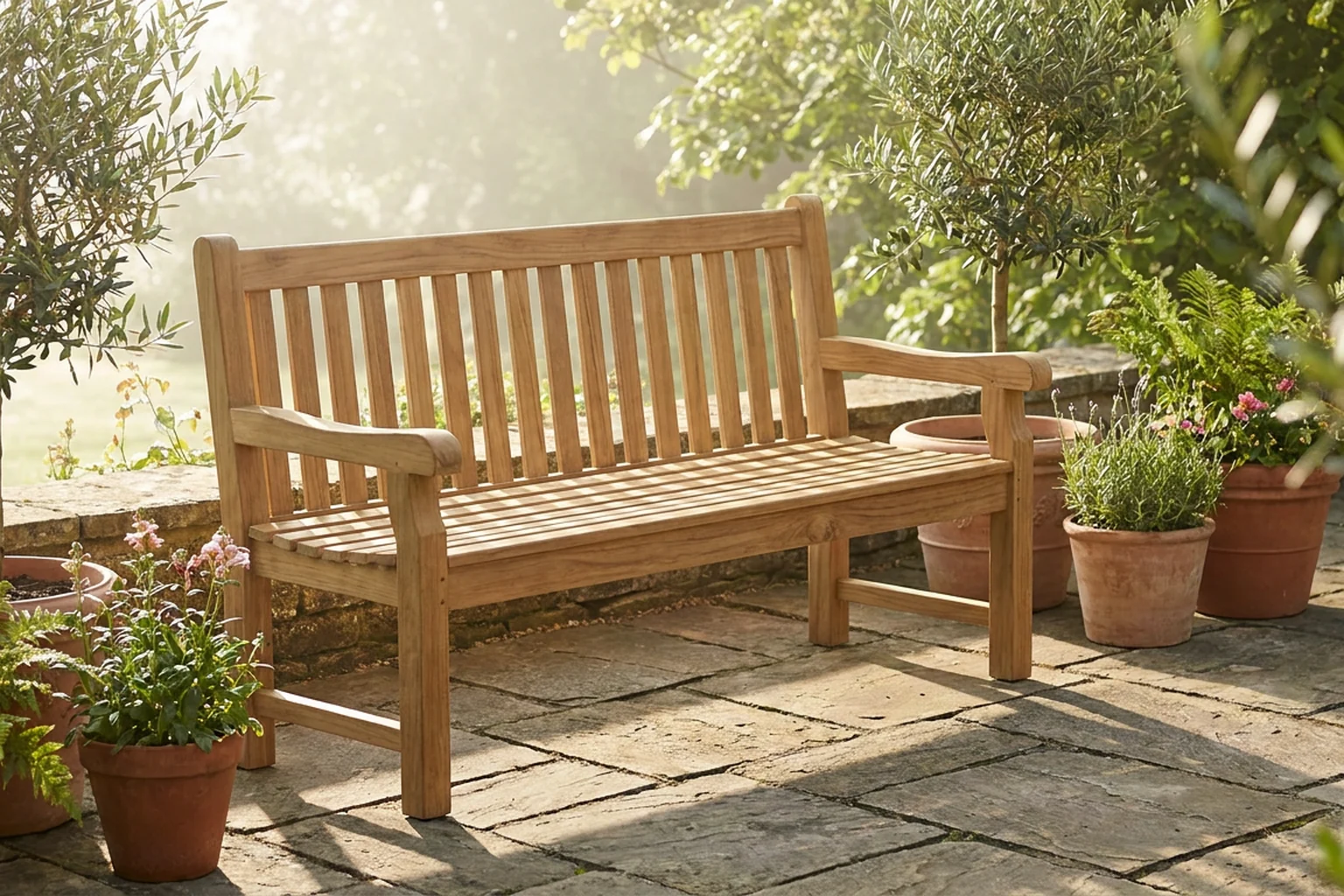
A well-chosen teak garden bench combines verified solid timber, stable construction, comfortable proportions, and a care plan suited to its exposure. Teak is valued for outdoor furniture because
Ask for the wood species, timber origin, moisture-conditioning process, construction method, final dimensions, finish, and care guidance before purchasing.
Choose a teak garden bench by matching its size, construction, timber source, finish, and maintenance needs to the site. Prioritize heartwood teak, strong joinery, comfortable proportions, and drainage-friendly details. Then confirm documentation, delivery access, and whether the bench will remain outdoors through every season.
Ask whether the bench is solid teak rather than veneer over another substrate, and request the timber species and origin. Teak heartwood is generally preferred for exposed components because it contains more natural extractives than sapwood. Responsible sourcing matters too: FSC certification or equivalent chain-of-custody documentation can help buyers assess the supply route. Review boards for consistent machining, smooth sanding, and sensible grain selection; natural colour variation is normal in real wood.
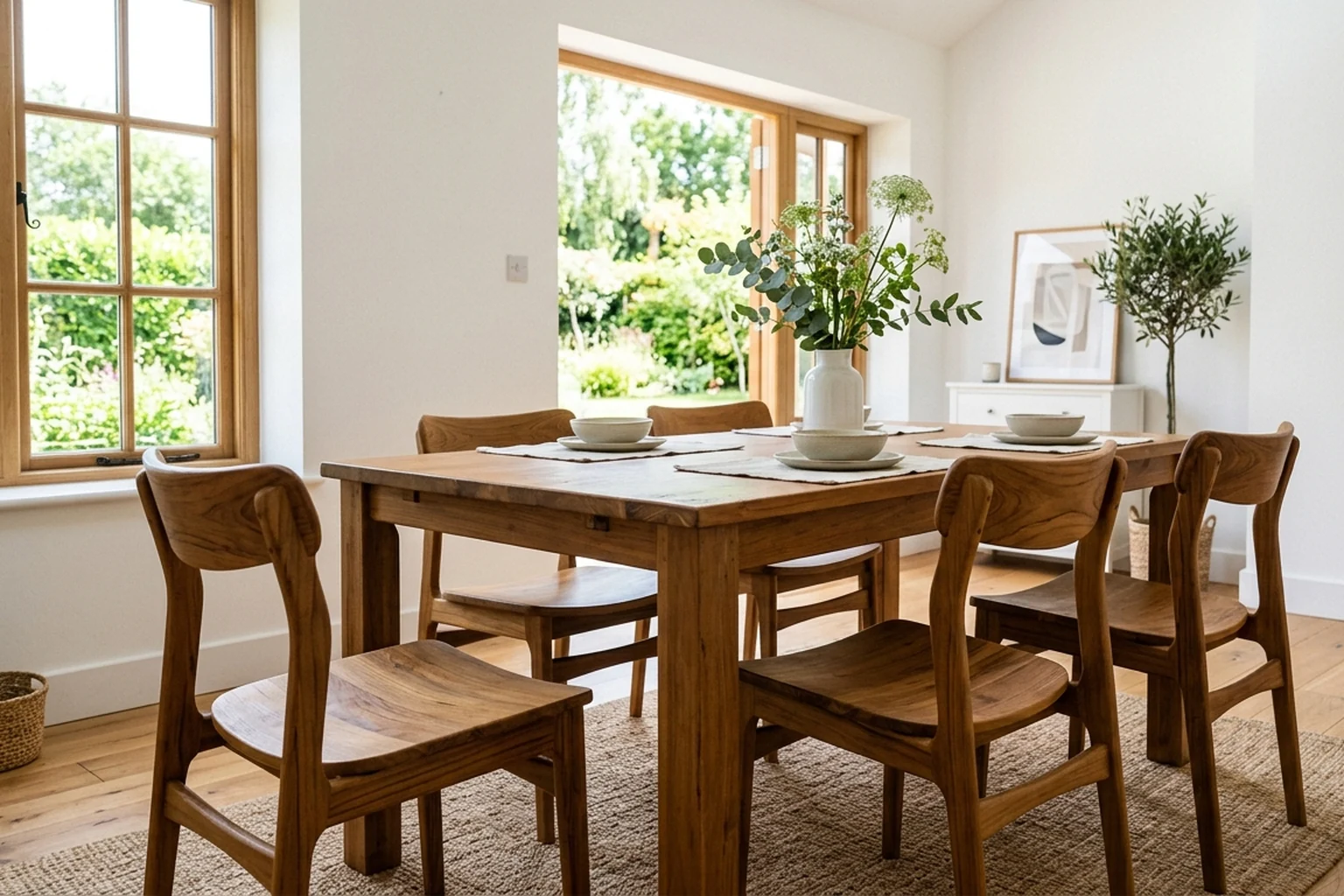
Measure the intended location before ordering: bench width should preserve a clear walking route, while seat height and depth should suit regular users. For many adult settings, roughly 43–46 cm seat height and 40–46 cm depth are practical starting ranges, but arm design and cushions change usable space.
Start with a scaled site plan or tape measure, including gates, paths, planters, and door swings. A 120 cm bench commonly accommodates two adults, while a 150 cm bench offers more room, depending on arm width and user preference. Leave circulation around the bench so people can pass without stepping onto planting beds or gravel edges. For accessible public settings, consult the relevant local project requirements rather than relying only on residential dimensions. The USDA Wood Handbook is a useful reference for wood behaviour.
{'type': 'table', 'caption': 'Starting points for teak garden bench planning', 'headers': ['Bench width', 'Typical use', 'Planning consideration'], 'rows': [['120 cm', 'Two adults', 'Useful for compact patios and entry gardens'], ['150 cm', 'Two to three adults', 'Allow extra path clearance at both ends'], ['180 cm', 'Three adults', 'Check delivery route and level ground support']]}
Construction determines whether a teak bench stays stable after repeated wet-dry cycles. Look for mortise-and-tenon joints, exterior-rated stainless hardware where hardware is used, smooth end grain, and slatted surfaces that shed rain. Reject loose joints, wide checks, or components that trap water against the timber.
Examine the places where legs meet rails, arms, and seat supports. Properly fitted mortise-and-tenon joints distribute load better than shallow fasteners alone, while stainless-steel hardware can reduce corrosion risk in wet or coastal environments. Slatted seats and backs should provide drainage and allow seasonal movement without rubbing. Check that feet do not sit in standing water and that the bench can stand level on its intended surface. Wood movement is expected outdoors; persistent wobble, open joints, or trapped moisture are not.
A garden bench has at least 4 ground-contact points, so level support and drainage at each foot are essential checks before installation.
Specify the finish and care plan according to appearance, not a promise that teak needs no attention. Untreated teak typically weathers toward a silvery grey; cleaning preserves cleanliness, while suitable exterior oil changes colour and requires renewal. Covering should remain breathable, and seasonal inspection catches small problems early.
Decide first whether you want the original warm teak tone or a naturally weathered grey surface. Leaving teak unfinished does not mean neglect: brush away debris, wash gently when needed, and keep drainage gaps clear. Oils and exterior finishes can deepen colour but require reapplication according to exposure and the product instructions. Avoid impermeable covers that hold condensation against the timber. Inspect the bench at least twice yearly for loose hardware, rough raised grain, and movement at joints, especially after a rainy season.
Teak performs outdoors because its natural oils and dense grain help it resist weathering, but it is not maintenance-free. Select well-dried material, avoid persistent standing water, and clean it periodically. A protected position and adjustable feet reduce moisture exposure, staining, and uneven movement over time.
Choose unfinished teak if you accept a gradual silver-grey patina and prefer a lower-intervention appearance. Choose a compatible exterior oil or finish if you want to retain or deepen brown tones. Either option needs cleaning, clear drainage, and inspection; finishes add renewal work rather than eliminating maintenance.
A 120 cm teak bench is often suitable for two adults, while 150 cm offers more shared seating room and 180 cm can suit three adults. Measure arm width, adjacent circulation, and the delivery route before deciding. Site proportions matter more than capacity alone, especially on narrow patios.
Mortise-and-tenon joinery is a useful indicator because it creates broad wood-to-wood contact at structural connections. Where fasteners are necessary, corrosion-resistant stainless steel is generally appropriate for outdoor use. Inspect all joints for a firm fit, aligned rails, and no signs of water trapping or wobble.
This guide is published by M Furniture & Decor for general product-selection education. Timber availability, finishes, dimensions, project requirements, and local conditions vary; confirm final specifications with the supplier before ordering.