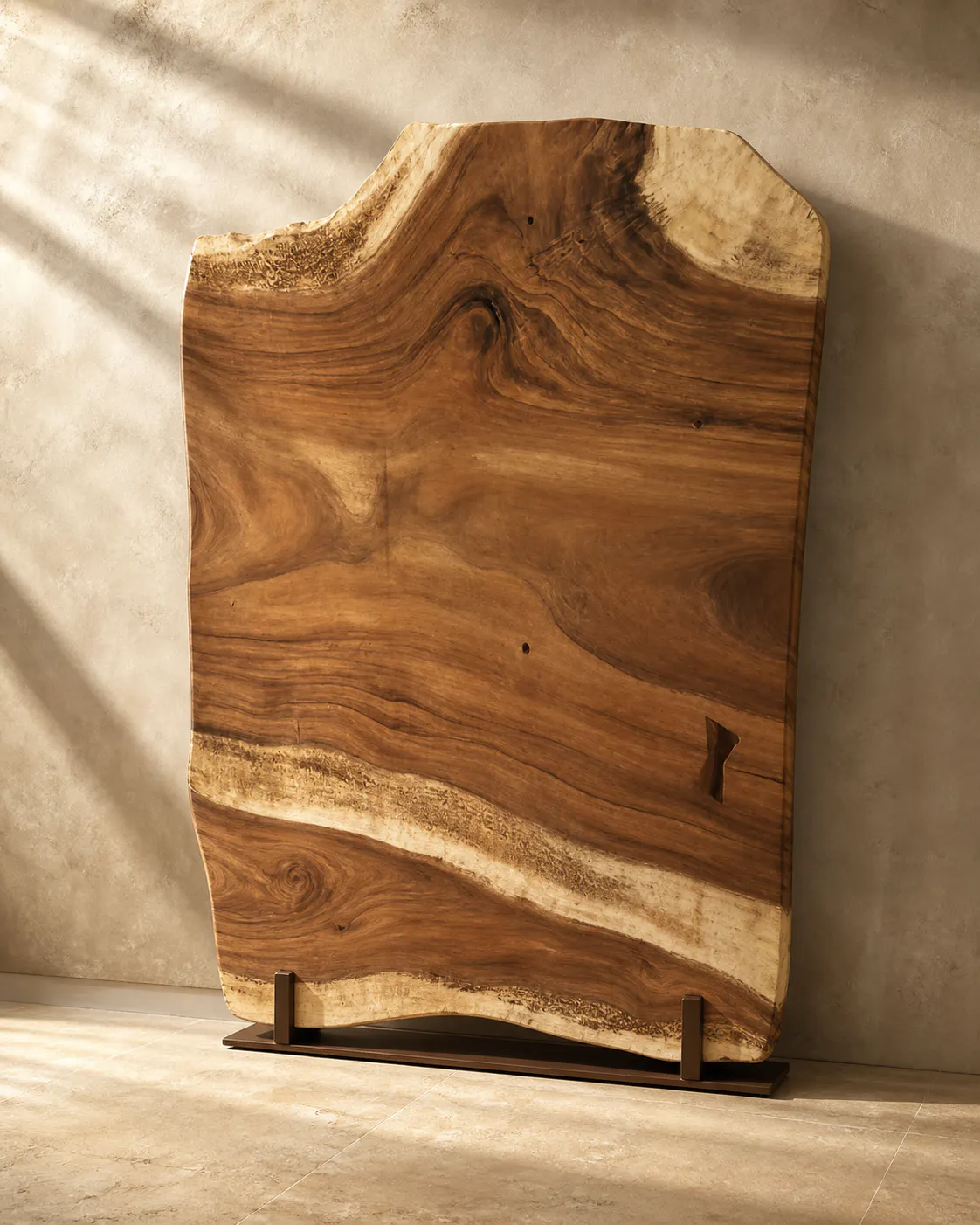
Choose teak by prioritizing sound construction, disclosed finishing, and a size you will use and maintain regularly. Teak, or *Tectona grandis*, is valued for natural extractives and moisture
{'type': 'image', 'src': 'https://mfurniturethailand.com/en/images/resources/choose-teak-cutting-board-inspection.jpg', 'alt': 'Teak cutting board inspection showing grain, joints, and smooth food-preparation surface', 'caption': 'Inspect the surface, joints, edges, and underside before choosing a teak cutting board.'}
Judge teak quality by construction and moisture stability rather than color alone. A suitable board is one solid piece or a carefully glued panel with tight joints, a level face, rounded corners, and no splits. Ask the seller how the teak was dried, assembled, sanded, and finished before purchase.
Teak’s natural extractives help it tolerate moisture, but they do not make poor joinery acceptable. Inspect every glue line for gaps, raised seams, or color changes that suggest movement; then place the board on a flat counter to check for rocking. Dense hardwoods move as humidity changes, a behavior explained in the USDA Forest Products Laboratory Wood Handbook. Avoid boards with deep cracks, loose feet, sharp corners, or an unfinished underside that may absorb moisture differently from the cutting face.
Choose grain orientation according to how you chop and how much board movement you accept. Edge-grain teak is usually lighter and practical for everyday slicing, while end-grain teak can be gentler on knife edges. Avoid boards with exposed end checks, uneven feet, or decorative grooves that trap moisture.
Edge-grain boards show long wood fibers across the cutting surface and are commonly a sensible balance of stability, weight, and price. End-grain boards display fiber ends, are often thicker, and can feel more forgiving during repeated chopping, although they need equally careful assembly. For a general home board, 30 × 45 cm provides useful working space without dominating a counter. Choose a reversible, flat design when possible; juice grooves and handles add utility but create more edges to clean. The USDA cutting-board guidance emphasizes keeping cutting surfaces clean and in good condition.
Food safety depends on a clean, intact board and a finish suited to food contact, not on teak alone. Ask whether the maker used pure mineral oil, a beeswax-and-oil blend, or another disclosed finish. Do not buy a board with unknown coatings, persistent odor, tackiness, deep cracks, or loose glue joints.
Ask for the exact finishing product rather than relying on a vague “food safe” claim. A seller should be able to explain whether the board uses mineral oil, a cured hardwax oil, or another finish, plus how to refresh it. A smooth, non-tacky surface is easier to wash and inspect. After preparing raw animal foods, wash promptly with hot, soapy water, rinse, and dry thoroughly; the USDA Food Safety and Inspection Service provides handling guidance. The FDA Food Code also frames the importance of cleanable, well-maintained food-contact surfaces.
Match board dimensions, thickness, and handle details to your actual kitchen routine. A 30 × 45 cm board suits many home prep tasks; a thicker board is steadier but heavier. Choose reversible flat faces for flexibility, then plan to hand-wash, dry upright, and re-oil when the surface looks dry.
Measure the sink, drying area, cabinet, and usual prep zone before ordering. A board around 2.5 to 4 cm thick feels stable for heavier chopping, yet can be awkward if it cannot dry fully on edge. Hand-wash teak with mild soap; never soak it, leave it in standing water, or put it in a dishwasher. Dry both faces and edges before storing. Reapply a disclosed food-contact-suitable oil when the wood looks pale or feels dry. Review the USDA’s cutting-board care guidance and use the wood-movement principles in the Wood Handbook to avoid preventable warping.
Teak can be used for a cutting board when the board is sound, clean, and finished with a disclosed food-contact-suitable product. Its natural oils do not remove the need for sanitation or drying. Reject cracked boards, failing glue joints, and unknown coatings, particularly if they leave an odor or sticky residue.
End-grain teak can be a sensible choice for frequent chopping because knife edges meet wood fibers differently than on edge-grain faces. It is often thicker, heavier, and more expensive. The practical test remains build quality: joints should be tight, the board should sit flat, and the surface should have no open checks.
Hand-wash a teak cutting board with mild soap, rinse it promptly, and dry it upright rather than soaking or running it through a dishwasher. Apply a food-contact-suitable board oil when the surface appears dry. Regular cleaning matters most after raw meat, poultry, seafood, or other foods requiring careful sanitation.
Ask the seller to identify the exact finish, its curing instructions, and whether it is intended for food-contact woodware. Mineral oil and beeswax blends are common maintenance options, but disclosure matters more than a generic food-safe label. Avoid finishes that remain tacky, smell strongly, flake, or lack product information.
This resource is educational and reflects general wood-care and food-surface guidance. Product specifications, finishes, and care instructions should always be confirmed with the individual manufacturer or seller.