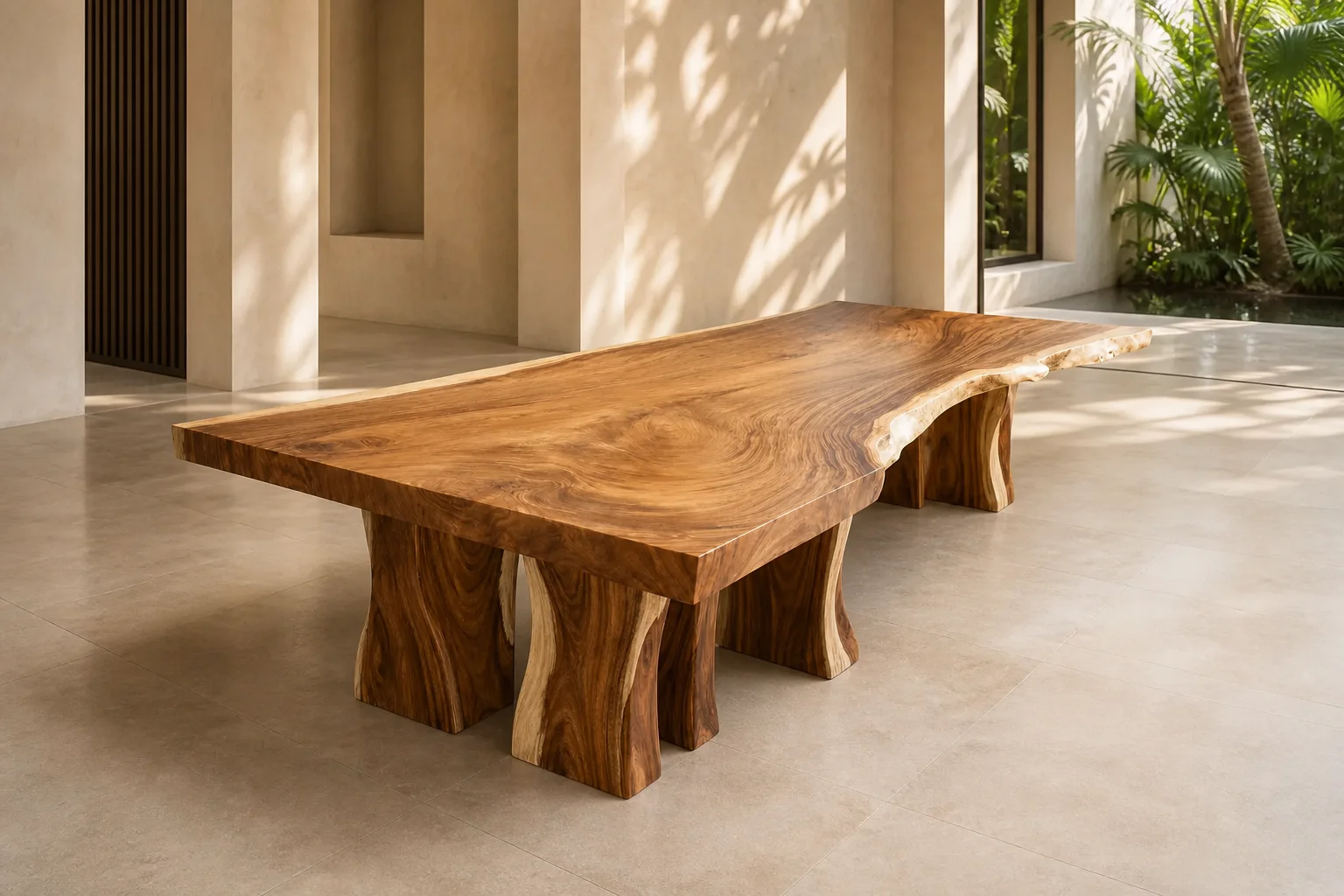
A teak console table should fit the route through your room, suit its storage or display role, and have documented materials and construction. Start by measuring width, depth
Keep the product specification, finish approval, invoice, and delivery terms together. These documents make it easier to compare options and resolve questions after purchase.
Start with the room: choose a console width that leaves visual breathing room, a depth that preserves the walkway, and a height that relates comfortably to adjacent seating or entry fixtures. Mark the footprint on the floor before buying, because proportion and circulation usually determine whether a teak console feels useful rather than imposing.
Measure the usable zone, not only the bare wall. In a busy hall, a 25–40 cm depth can preserve more passing space than a 45 cm cabinet; in a broad foyer, extra depth can support lamps or baskets. Allow for door swings, skirting, radiators, and drawer pulls. Use painter’s tape to trial the footprint and keep any required accessible route aligned with ADA clear-width guidance. A console behind a sofa should also leave room to sit, vacuum, and reach outlets.
Confirm the table is described accurately: solid teak means primary components are teak wood, while teak veneer is a thin teak face over another core. Neither construction is automatically unsuitable, but the specification, timber origin, and certification evidence should fit your durability expectations, budget, and sourcing requirements.
Read the specification line by line: identify species as *Tectona grandis*, list which parts are solid wood, and note any engineered panels. Ask for country of manufacture, timber origin where available, moisture-conditioning practice, and finish. If a seller makes an FSC claim, request its certificate code and check it in the FSC certificate database; certification applies through a documented chain of custody, not simply a logo. For international purchases, retain the written specification with your invoice and packing list. Natural colour variation is normal in teak and should be shown in current product photos.
Inspect construction where load and movement meet: stable legs, well-fitted joints, a flat top, and hardware that operates smoothly matter more than decorative grain alone. Select a finish based on indoor exposure and maintenance tolerance, then ask how the maker expects the finish to age, be cleaned, and be repaired.
Examine underside photos and, where possible, the physical table. Look for consistent joinery, secure rails, level feet, and drawers that open without binding. Ask whether the top is solid boards or a veneered panel and how seasonal wood movement is accommodated. Teak’s properties do not remove the need for appropriate indoor care; the USDA Wood Handbook explains that wood responds to moisture. Place the console away from persistent direct sun, wet umbrellas, and heat sources, and use felt pads beneath lamps or objects that could trap moisture.
Before ordering, verify the complete landed decision: final dimensions, finish sample, lead time, packaging, delivery route, assembly, taxes, and return conditions. A teak console is easier to buy confidently when the quote states exactly what is included and when responsibility transfers, especially for bespoke or cross-border shipments.
Request a dimensioned drawing and a photo of the selected finish before production begins. Measure lifts, stairs, doors, and turns; a table that fits the room may not fit the route. For exports, clarify packaging, insurance, duties, and the agreed Incoterms® rule, which allocates delivery responsibilities. Confirm whether variations in grain, colour, and hand finishing are acceptable, and save approvals in writing. On arrival, inspect the carton and table before signing where carrier terms allow, recording any damage immediately with photographs.
A console table is usually narrower and shallower than a sideboard, intended for an entry, hallway, or behind a sofa. Choose it when you need a display surface or limited drop-zone storage without consuming room depth. A sideboard suits larger dining storage needs, while a console prioritizes circulation and visual lightness.
For most homes, measure the unobstructed route rather than choosing a universal depth. Slim consoles often work where doors, drawers, and people pass close by; deeper designs suit generous foyers or sofa backs. Tape the proposed outline on the floor, open nearby doors, and test the path with everyday traffic before committing.
Ask the seller to identify the timber species, country of harvest or manufacture, and the documents supporting legal or certified sourcing. Where certification is claimed, request the chain-of-custody certificate code and verify it through FSC. Documentation should match the invoice, product specification, and shipment records, not merely a generic sustainability statement.
Clean an indoor teak console with a soft dry or lightly damp cloth, then dry it promptly. Avoid abrasive pads, silicone polishes, and standing water, which can mark or dull a finish. Follow the maker’s finish-specific instructions before applying oil or wax; treatment that suits unfinished teak may not suit lacquered surfaces.
This guide is published by M Furniture & Decor. Product dimensions, timber specifications, finishes, certification status, and delivery terms vary by item and should be confirmed in writing before purchase.