A teak chandelier is a suitable choice when its scale fits the furnished zone, its timber construction matches the interior’s climate and maintenance needs, and its electrical and
Measure the table, ceiling height, junction-box location, and desired hanging zone before comparing chandelier designs or requesting a quotation.
Choose a teak chandelier by matching its diameter and hanging height to the room, then confirming a clear circulation zone below it. Start with the table or seating area rather than the room alone: the fixture should visually anchor that zone without blocking sightlines, doors, or cabinet access.
For dining rooms, a practical starting range is a fixture about one-half to two-thirds of table width; center it on the table, not necessarily the room. Hang it roughly 30–36 inches above the tabletop, adjusting for tall users and shades that obstruct views. In a circulation area, retain at least 7 feet of floor clearance. Verify final proportions using a scaled drawing and ceiling plan; IES guidance can inform task and ambient-light planning. A multi-arm design can distribute light across a longer table without demanding one oversized shade.
Teak is appropriate for a chandelier when its grain, color variation, finish, and joinery suit the interior and local climate. Ask whether the wood is solid teak or veneer, how it was dried, and what documentation supports legal, responsible sourcing before treating appearance as the only buying criterion.
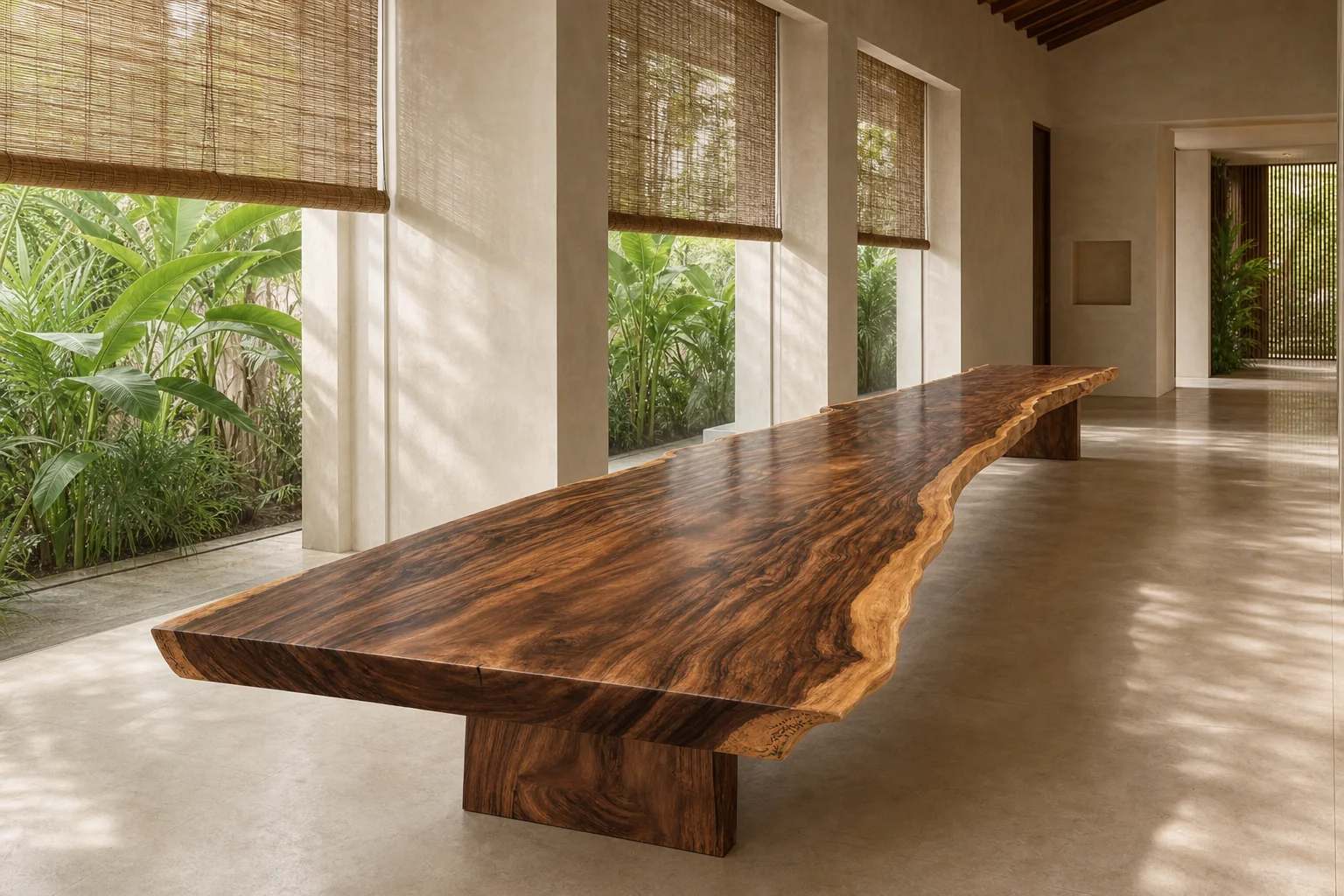
Inspect photographs in natural and installed light because teak can range from honey brown to deeper golden tones, while grain direction changes across components. Solid teak offers repairable surface depth, whereas veneer needs careful edge and substrate inspection. Ask for moisture-conditioning practices, finish type, and care instructions, especially in humid kitchens, coastal homes, or air-conditioned interiors. Responsible sourcing claims should be supported by traceable paperwork such as FSC chain-of-custody documentation where applicable. Well-fitted joints, consistent sanding, and concealed fasteners are more useful quality indicators than color alone.
{'type': 'image', 'src': 'https://mfurniturethailand.com/images/resources/teak-chandelier-grain-finish.jpg', 'alt': 'M Furniture teak chandelier grain and finish inspection context', 'caption': 'Evaluate teak grain direction, surface finish, joinery and electrical integration together.'}
A teak chandelier must be selected as both furniture and an electrical fixture: confirm load support, wiring, lampholders, bulbs, and control compatibility. The ceiling junction box and mounting hardware must carry the finished fixture’s stated weight; decorative timber parts never substitute for certified electrical or structural components.
Request the total installed weight, canopy dimensions, chain or rod length, voltage, socket type, maximum wattage, and dimmer compatibility before purchase. Use the destination market’s required listed components and have a qualified electrician assess the junction box, ceiling structure, grounding, and local code obligations. UL Solutions explains why tested lighting components matter. LED bulbs usually reduce heat and energy use, but bulb shape and color temperature still determine whether the teak reads warm, neutral, or overly yellow. Never alter factory wiring without professional advice.
Before ordering, compare a teak chandelier through specifications rather than photographs: obtain scaled drawings, timber and finish details, electrical ratings, lead time, packing method, and after-sales terms. For custom work, approve a sample or finish swatch and document every agreed dimension, canopy detail, and bulb requirement in writing.
A useful quotation separates fixture dimensions, drop length, electrical configuration, timber finish, bulb inclusion, packing, freight, and installation responsibilities. Ask for images of a comparable completed piece and a drawing showing arm spread, canopy size, and cable routing. For international orders, clarify who handles duties, insurance, and damage claims; ICC Incoterms provide shared delivery terms. Confirm whether replacement sockets, glass, shades, or wooden components can be supplied later. This record reduces avoidable mismatch between an approved design and the delivered chandelier.
For a dining table, begin at roughly 50–67% of the tabletop width and review a scaled drawing before purchase. The useful final diameter depends on ceiling height, chair clearance, shade depth, and how many bulbs are visible. A wide room does not automatically require an oversized fixture.
Solid teak generally provides greater surface depth for refinishing and makes grain continuity easier to assess. Veneer can still be suitable when it uses a stable substrate and carefully finished edges. Ask the supplier to identify the construction honestly, explain the finish system, and provide close photographs of joints and edges.
No. Installation depends on the chandelier’s finished weight, mounting hardware, junction box rating, ceiling structure, and local electrical requirements. A qualified electrician should verify that the support can carry the load and that grounding, wiring, voltage, and controls are compatible before the fixture is hung.
Teak is valued for durability, but indoor humidity swings can still affect wood movement, finish appearance, and metal electrical parts. Keep the fixture away from direct water and excessive steam, use the specified cleaning method, and ask about the finish for coastal or highly humid interiors before ordering.
M Furniture & Decor manufactures and exports teak furniture. This guide is educational and does not replace advice from a qualified electrician, installer, or local building authority.