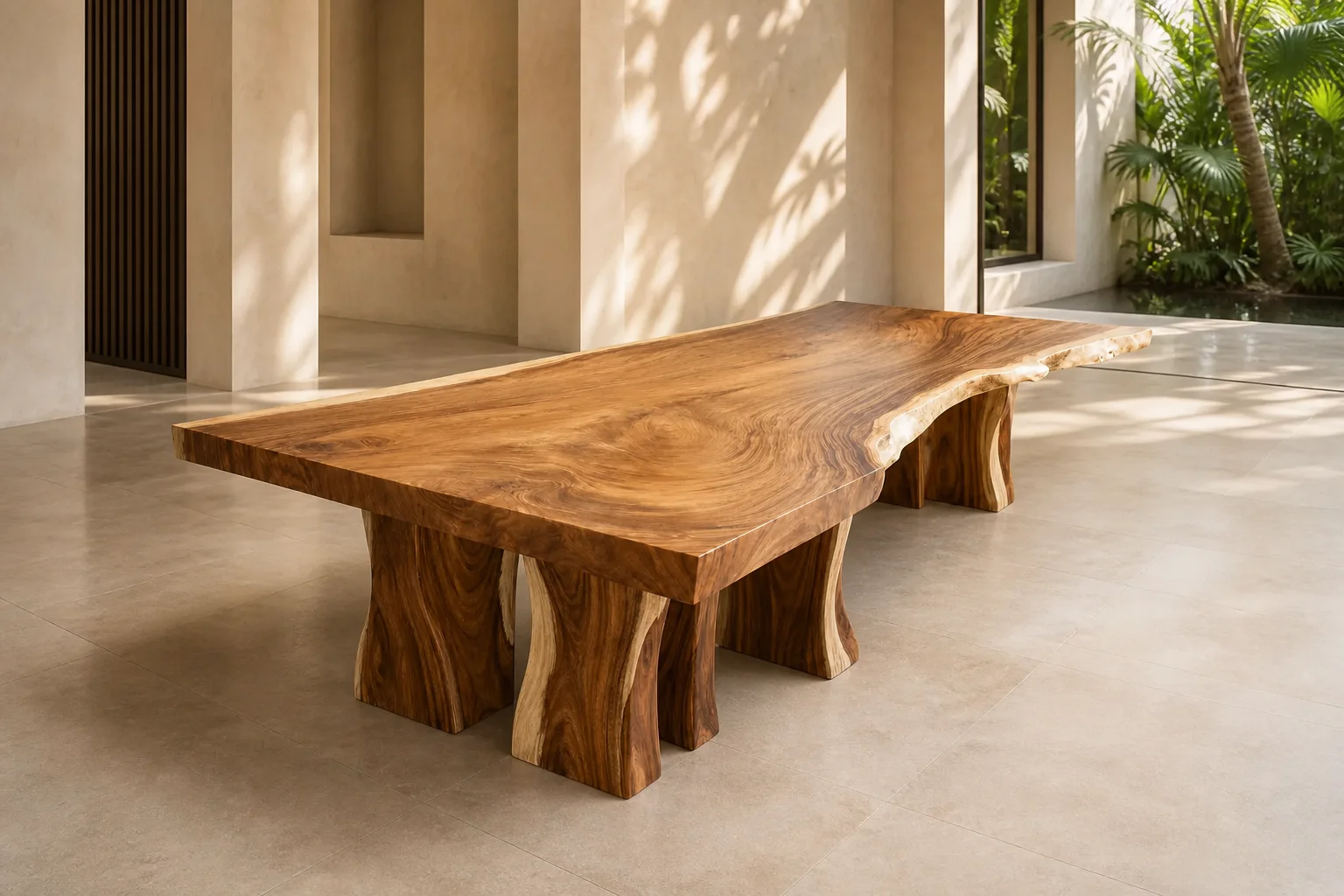
Choose a teak bar-height table by starting with the seated user, not the tabletop alone. Confirm the finished table height against the compressed stool-seat height, map the table
Measure finished dimensions, including tabletop thickness, glides, and cushions. Catalogue dimensions can differ from the usable seated height.
Start with the user’s seated posture: a bar-height table normally pairs with bar stools rather than counter stools. Measure the actual stool seat height, not its overall height, and select a tabletop that leaves comfortable knee and thigh clearance while supporting the number of diners expected.
For most residential settings, use the finished measurement after glides or adjustable feet are fitted. A 102–107 cm table commonly works with 71–76 cm seats, preserving roughly 25–30 cm of clearance; confirm comfort with the selected stool because cushion compression changes the result. Allow about 60 cm of table edge per diner and at least 90 cm behind occupied stools for movement. For hospitality layouts, share a scaled plan with the designer and verify local accessibility and circulation requirements before production. The ADA Standards illustrate why documented clearances matter.
Evaluate teak by asking what is solid Tectona grandis, what is veneer or engineered core, and where each component is used. Request a written specification for moisture condition, grain selection, finish, joinery, hardware, and timber traceability so the delivered table matches the quoted construction.
Solid teak can suit frequently used surfaces because the material is durable, but construction details determine long-term performance. Ask whether legs, apron, top, and edge build-up are solid wood; request close photographs of mortise-and-tenon or equivalent joints. The USDA Wood Handbook explains wood movement with changing moisture, so wide tops need sensible allowance rather than rigid restraint. For responsible sourcing, ask for applicable FSC chain-of-custody documentation and identify the supplier named on it. Inspect a finish sample under your project lighting and compare it to approved drawings.
Choose the table footprint and base after mapping room circulation, stool positions, and daily use. A stable base must keep legs and crossbars clear of knees, while a correctly sized top provides serving space without making seating or cleaning difficult in the intended location.
Round tops ease circulation in compact rooms, whereas rectangular tops align efficiently along walls or in rows. Measure the largest usable zone, including door swings, then tape the proposed top and stool envelopes on the floor. Compare pedestal and four-leg bases with real seating positions: pedestals can improve corner seating, while four legs may add visual structure but reduce knee room. If the table will live outdoors, confirm drainage, UV exposure, cover use, and finish renewal with the maker. FSC notes that certification claims should be verified through documented supply-chain information, not assumed from a species name alone.
Most bar-height tables are about 102–107 cm high and pair with 71–76 cm bar stools. Treat those ranges as a starting point, because seat cushions, footrests, tabletop thickness, glides, and user preference affect comfort. Confirm the finished table and compressed seat measurements together before you place an order.
Teak is often selected for outdoor furniture, but outdoor suitability still depends on design, joinery, finish, drainage, and maintenance. Specify whether the table will be exposed to sun and rain, and ask the maker how end grain, hardware, protective covers, and periodic cleaning or refinishing should be handled.
Ask for overall height, top width and length or diameter, base footprint, tabletop thickness, stool clearance, timber construction, finish, hardware, and delivery access requirements. Include a drawing showing overhangs and leg positions. Written approval of the final specification helps prevent confusion between showroom appearance, quotation language, and the manufactured table.
M Furniture & Decor manufactures teak and solid wood furniture. This guide is educational and recommends that buyers verify final dimensions, timber documentation, and site conditions with their designer, supplier, or project team.