The right restaurant furniture supplier can deliver seating and tables that fit the concept, withstand daily service, arrive in usable condition, and remain supportable after opening. Evaluate suppliers
Request the specification, finish sample, quotation, production schedule, packing details, and warranty before authorizing a deposit.
Start by converting your restaurant concept into a written furniture brief covering seating capacity, layout, style, use intensity, cleaning routine, climate, and budget. A suitable supplier can translate that brief into commercial specifications, provide samples and drawings, and identify practical trade-offs before production begins.
List each furniture type, quantity, target dimensions, preferred materials, finish colour, upholstery performance, and delivery location. Include floor plans or CAD drawings where available, because aisle clearance, table spacing, and chair movement affect model selection. Ask suppliers to state whether each item is intended for commercial use and to explain its construction. BIFMA standards provide a useful reference point when discussing durability and performance expectations, although local project requirements may differ.
Verify that the supplier's materials and construction match restaurant service conditions rather than residential use. Ask for species, moisture-content, finish, joinery, upholstery, load, and test documentation; then inspect a sample under realistic cleaning and handling conditions. Compliance needs vary by country, venue, and contract.
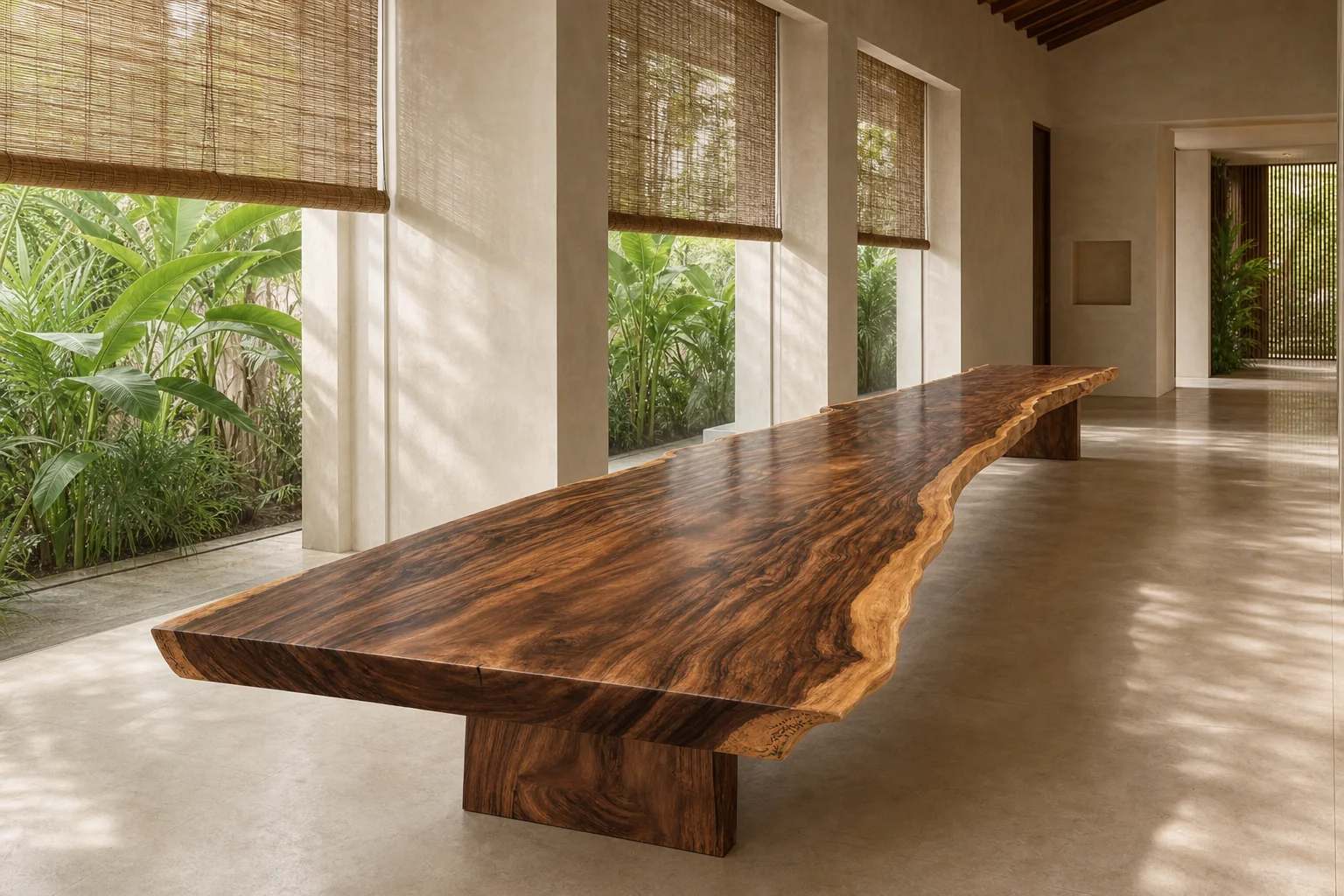
For solid wood, ask the supplier to identify the timber species, moisture-control process, joint type, finish system, and maintenance guidance. Teak, oak, ash, rubberwood, metal, rattan, and engineered panels each respond differently to moisture, impact, heat, and cleaning. Where responsible sourcing matters, ask whether the supplier can document material traceability through FSC Chain of Custody certification. Approve a physical sample or first article, then define the acceptable variation in grain, colour, welds, and upholstery.
{'type': 'table', 'caption': 'Evidence to request before approving restaurant furniture', 'headers': ['Area', 'Ask the supplier for', 'Why it matters'], 'rows': [['Wood and panels', 'Species, construction drawing, moisture and finish information', 'Supports durability and predictable appearance'], ['Seating', 'Frame details, upholstery specification, foam and load information', 'Helps assess frequent-service suitability'], ['Finish', 'Approved sample and cleaning guidance', 'Reduces colour and maintenance disputes']]}
Choose on total project reliability, not unit price alone. A dependable restaurant furniture supplier provides a documented quotation, production timeline, quality-control checkpoints, packing plan, shipping terms, warranty process, and a named contact for replacements. Confirm all change orders and acceptance criteria in writing before deposit.
Compare like-for-like quotations: quantities, materials, finishes, hardware, packaging, taxes, freight, insurance, installation, and replacement parts should be clear. Ask for milestones covering sample approval, material procurement, production, inspection, final balance, and dispatch. For cross-border orders, identify the agreed Incoterms rule and the party responsible at each transfer point. A lower ex-works price can cost more when packing, export documents, inland delivery, damage claims, or site access have been omitted.
Restaurant furniture should generally be specified for frequent commercial use, but requirements depend on occupancy, service style, local regulation, and venue conditions. Request evidence for the exact chair, table, finish, or upholstery configuration being quoted, since a supplier’s general catalogue claim may not apply to every model.
Lead time includes design approval, material procurement, fabrication, finishing, quality inspection, packing, and transport; it is not simply workshop production time. Ask for a milestone schedule and identify which approvals can pause it. For imported furniture, compare the promised ex-works date with the realistic delivery date at your project.
Ask for a written warranty that states its duration, covered defects, exclusions, claim procedure, remedy, and responsibility for freight or installation. Also ask how replacement components are identified and shipped. A useful warranty is supported by documented quality checks and a responsive contact, not merely a broad marketing statement.
This resource provides general procurement information. Restaurant operators, architects, and buyers should confirm applicable building, fire, accessibility, import, and safety requirements with qualified local professionals and the relevant authorities.