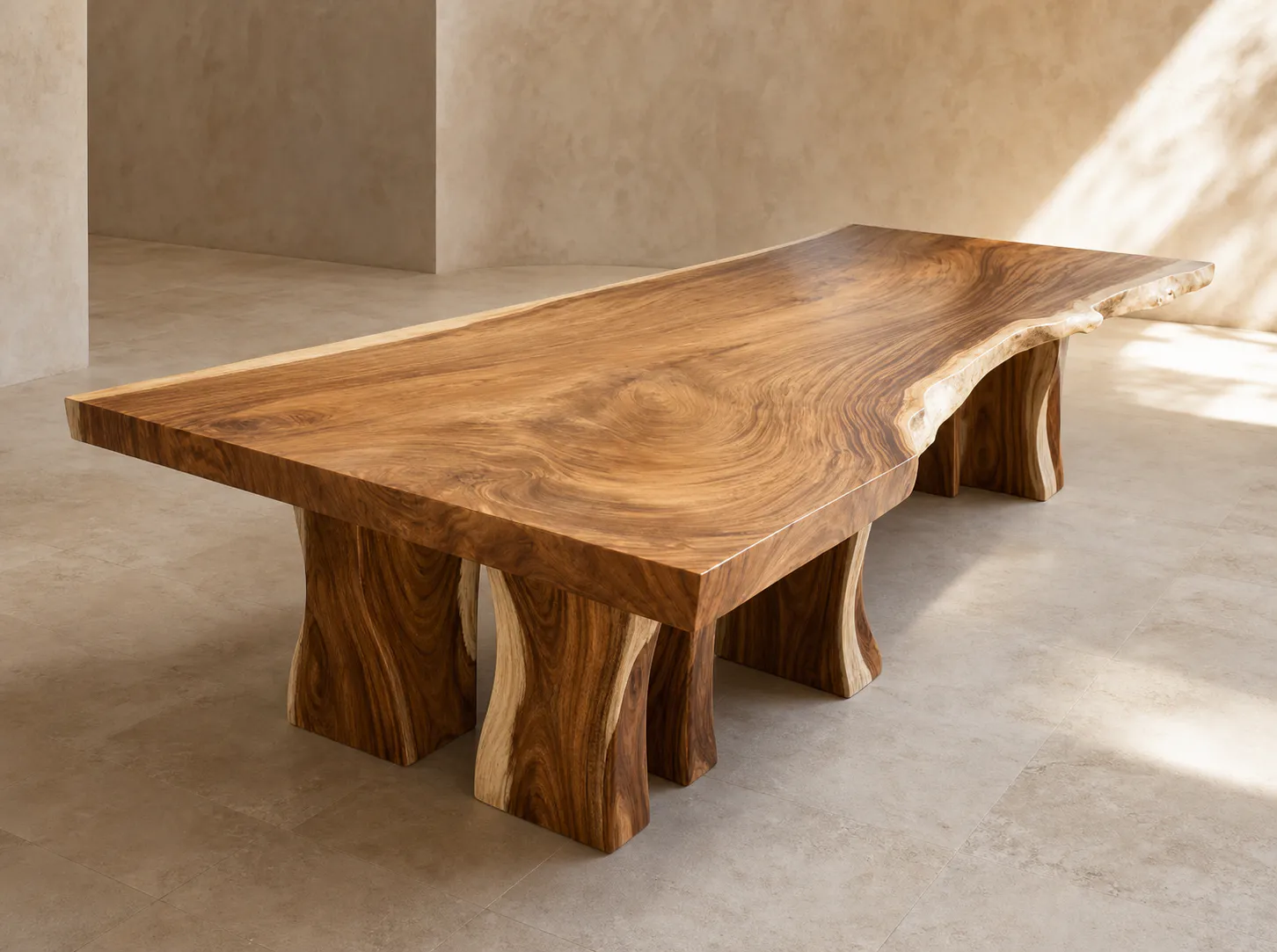
Solid teak furniture varies in color because teak is a natural material, not a uniform manufactured surface. A single table, cabinet, or chair can combine boards with different
Natural tonal variation is especially visible on broad panels, where several solid teak boards meet and reflect light differently.
Color variation in solid teak furniture comes mainly from natural differences in heartwood and sapwood, tree age, growing conditions, grain orientation, and board matching. Teak is not a uniformly colored material, so pieces cut from different boards can show golden, brown, olive, or darker streaked areas.
Teak, botanically known as *Tectona grandis*, develops darker heartwood as the tree matures, while sapwood is typically paler. Growth rate, soil minerals, rainfall, and the section of log used can also affect extractives that influence color. Grain direction changes how light reflects from a surface, making adjacent boards appear different even under the same finish. The USDA Forest Products Laboratory Wood Handbook explains that wood properties vary within and among trees; furniture makers manage that variation through sorting and panel layout rather than eliminating it entirely.
Sunlight, oxygen, humidity, handling, and finish chemistry can alter teak after furniture is made. UV exposure commonly shifts unprotected wood toward a weathered gray tone, while oils, sealers, and clear coats can deepen or warm its appearance. Uneven exposure may make one area change faster than another.
Freshly sanded teak often looks lighter than teak that has oxidized or received oil. Indoor daylight through windows can gradually change exposed surfaces, whereas rugs, place settings, or cabinet doors shield other areas and create contrast. Outdoor teak experiences stronger UV and rain cycles, which can lead to silver-gray weathering if left unfinished. A finish can also amber as it ages, so a repaired board may not immediately match surrounding wood. The Food and Agriculture Organization identifies teak as an important tropical hardwood resource; its natural oils support durability but do not prevent surface color change.
Teak color variation deserves investigation when it is sharply localized, newly appearing, associated with roughness, odor, loosened finish, or moisture damage. Normal variation follows board boundaries, grain, and exposure patterns. Stains from water, heat, metal, or incompatible cleaners usually look less integrated with the wood’s natural figure.
Inspect a piece in diffuse daylight before judging its color. Expect gradual shifts between boards, especially on solid tops and wide cabinet fronts. Ask whether boards were selected for a uniform look or a deliberately varied natural layout; both are valid design choices. Concern is more appropriate for dark rings, black spotting, sticky finish, raised grain, or a sudden pale patch after a spill. Keep teak clean with a lightly damp soft cloth and dry it promptly. Avoid aggressive bleaching, silicone polishes, and random oil applications, which can create a patchier appearance than the original wood.
Color variation can be consistent with real solid teak because natural boards differ in heartwood, sapwood, grain, and extractive content. It is not proof by itself, however. Confirm solid construction by examining edges, joinery, grain continuity, material specifications, and the maker’s documentation rather than relying on color alone.
Teak may look more visually integrated as surfaces oxidize and receive similar light exposure, but it will not become perfectly uniform. Sun-facing areas can still change faster than shaded sections. Consistent placement, gentle cleaning, and a compatible finish system help color develop more evenly across the piece.
Teak oil can temporarily deepen color, but it may exaggerate differences when some boards absorb more than others. Test any product on a hidden area first. For significant unevenness, consult the furniture maker or a qualified wood-finishing professional about cleaning, sanding, and refinishing the entire surface consistently.
A replacement or newly sanded teak board can look darker or lighter because it has different grain, heartwood content, moisture level, and oxidation history. The surrounding finish may also have aged. Matching requires careful stain or finish testing, then time for the repaired surface to acclimate and oxidize.
This educational resource describes general solid-teak characteristics and care considerations. Actual color, grain, and finish behavior vary by timber selection, construction, environment, and maintenance history.