
Teak patio furniture can stay outdoors in winter if it is cleaned, dried, raised above wet ground, and protected without trapping moisture. Teak is valued for outdoor durability
Avoid airtight plastic wrapping. A dry piece under a breathable cover is safer than a damp piece sealed inside a nonbreathable cover.
Teak can remain outdoors in winter when it is kept clean, dry, elevated, and protected from trapped moisture. The practical priority is not sealing teak inside plastic; it is preventing prolonged wet contact, ice accumulation, and wind damage while allowing air to circulate around the furniture.
Start by brushing off leaves, soil, and pollen, then wash with mild soap and water and let every surface dry fully. Position feet on pads, pavers, or another stable support so water can drain beneath the frame. Use a fitted breathable cover only after drying; secure it against wind but keep its lower edge ventilated. The USDA Forest Products Laboratory Wood Handbook explains why wood movement follows changing moisture conditions. In climates with snow or temperatures below 40°F, remove snow promptly and follow NOAA winter-weather guidance for safe storm preparation.
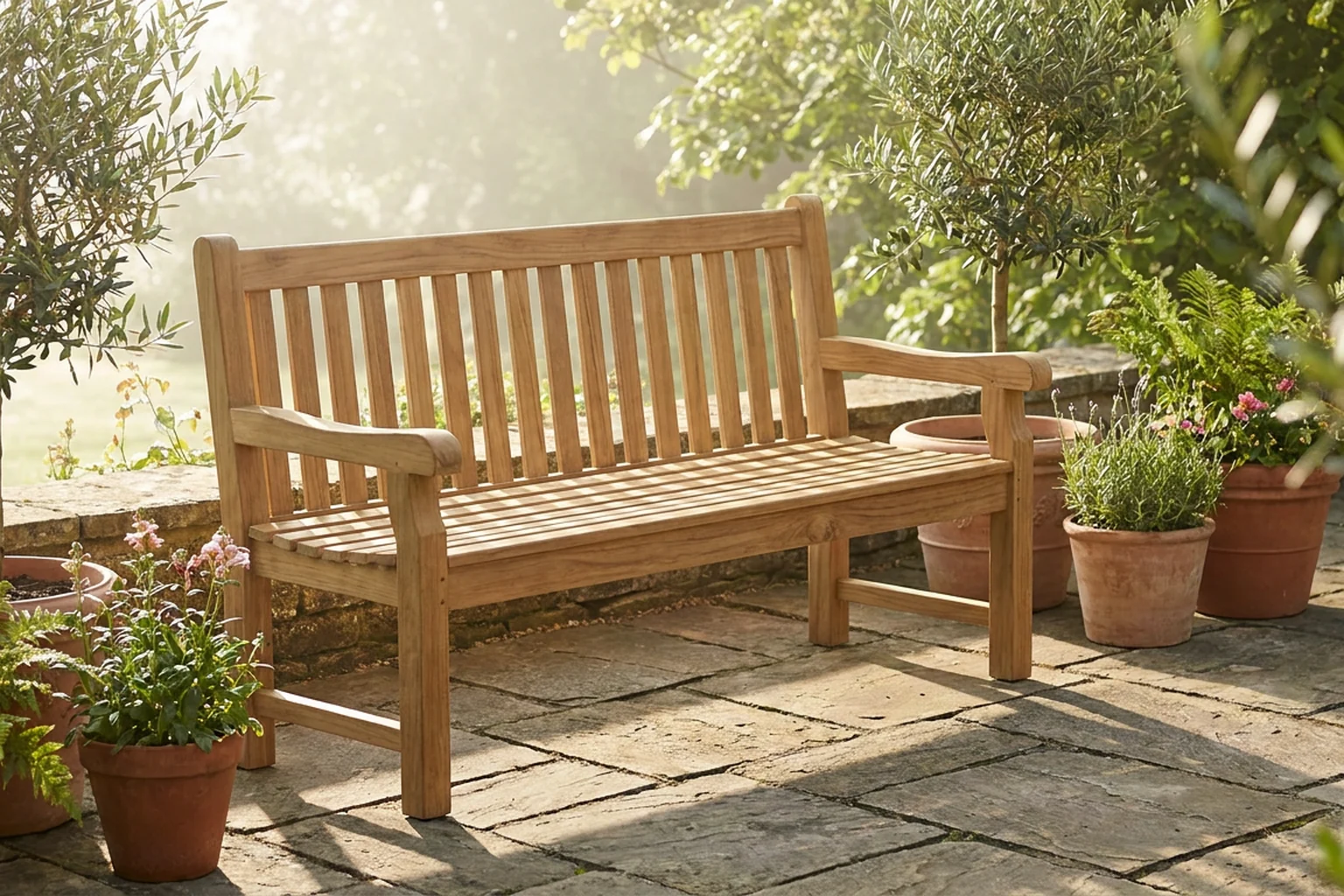
Before winter, clean teak gently, dry it completely, remove cushions and textiles, and clear debris from underneath and between slats. This preparation limits staining, mildew-friendly dampness, and abrasion. It also makes cracks, loose fasteners, or worn finish easier to identify before persistent wet weather begins.
Use a soft brush, mild soap, and clean water rather than harsh pressure washing, which can roughen wood fibers. Rinse sparingly and allow 24 to 48 hours of drying in suitable weather before covering or storing pieces. Bring cushions, umbrellas, and removable fabric components indoors; dry textile storage reduces mildew and preserves foam. Check drainage around the patio so runoff does not collect under legs. The USDA Forest Service notes that moisture cycling affects wood dimensions, while the National Weather Service provides local forecasts that help time cleaning and drying.
Store teak furniture under a roof, in a dry shed, or in a ventilated garage when severe storms, deep snow, coastal winds, or limited drainage make outdoor protection unreliable. Choose a sheltered space with airflow, keep furniture off concrete moisture, and never stack heavy items on chairs or tabletops.
Sheltered storage is most useful for lightweight chairs, folding pieces, or furniture with vulnerable cushions and metal fittings. Do not move wet teak directly into a sealed garage: clean it first, dry it thoroughly, and leave space between pieces for air circulation. Avoid heated indoor rooms if the furniture is damp, because rapid drying can be stressful for wood and joints. Use furniture blankets only on dry pieces and do not place cardboard or plastic directly against teak. For material context, consult the Forest Products Laboratory and its published guidance on wood moisture behavior.
After winter, inspect teak furniture for retained moisture, loose joints, raised grain, corroded hardware, and cover-related marks. Clean away residue, let the furniture dry, tighten hardware carefully, and address small problems before regular patio use. Refinishing is optional and should follow the furniture maker’s finish instructions.
On the first dry day, remove covers and examine undersides, leg ends, arm joints, and tabletop edges. A silvery grey patina is a normal weathered appearance, not automatically damage. Look instead for persistent dark spots, movement at mortise-and-tenon joints, or fasteners that need attention. Wash surface residue gently and allow the wood to dry before deciding whether to apply a protector or finish. If a finish was originally supplied, use a compatible product as directed by its manufacturer. The USDA Wood Handbook is a useful reference for understanding wood movement, while local NOAA forecasts help schedule dry-weather maintenance.
Yes. Teak can remain outside through winter when it is clean, dry, elevated, and protected from standing water and wind. Use a breathable cover after the furniture has dried, bring cushions indoors, and inspect the frame after storms. Choose sheltered storage instead when drainage, snow load, or exposure is severe.
A breathable, well-fitted cover is useful when rain, snow, or debris are frequent, but only after the furniture is completely dry. Leave lower edges open enough for airflow, remove pooled water promptly, and uncover the pieces during dry spells. Never wrap teak in nonbreathable plastic.
Usually, no. Teak contains natural extractives and is durable outdoors, but winter moisture still deserves management. Apply a product only when the furniture maker recommends it for that specific finish and the wood is dry. Oils change colour and maintenance needs; they do not substitute for cleaning, drainage, or airflow.
Allow teak to dry until no surface moisture remains and joints, slats, and undersides feel dry. In mild, dry conditions, 24 to 48 hours is often a practical allowance after washing. Extend that time after rain or high humidity, because covering damp wood can encourage staining and mildew.
Care recommendations are general guidance for solid teak outdoor furniture. Follow the care instructions supplied with your specific M Furniture & Decor product, especially where a factory-applied finish, metal hardware, or fabric components are involved.