
Teak outdoor furniture stays attractive and sound when it is cleaned gently, allowed to dry thoroughly, and kept free of trapped moisture. Solid teak tolerates outdoor sun and
Teak care is mainly about cleaning, drainage, drying, and inspection. Oiling is an optional appearance treatment, not a universal maintenance requirement.
Teak needs regular care not because it must be sealed, but because dirt, leaves, spills, and humidity hold moisture against the surface. Routine cleaning protects appearance and helps reveal drainage problems, loose joinery, or corroding hardware before small outdoor-exposure issues become difficult repairs.
Start by brushing dry leaves and grit from slats, joints, and undersides, then wipe fresh spills before they set. In humid, shaded, or coastal locations, check the furniture about once a month; in a dry, open setting, clean when soil is visible. The USDA Forest Products Laboratory Wood Handbook notes that wood changes dimension with moisture, making drainage and airflow practical priorities. After rain, remove wet cushions and confirm that feet, rails, and lower joints are not sitting in water. This also makes routine inspection easier.
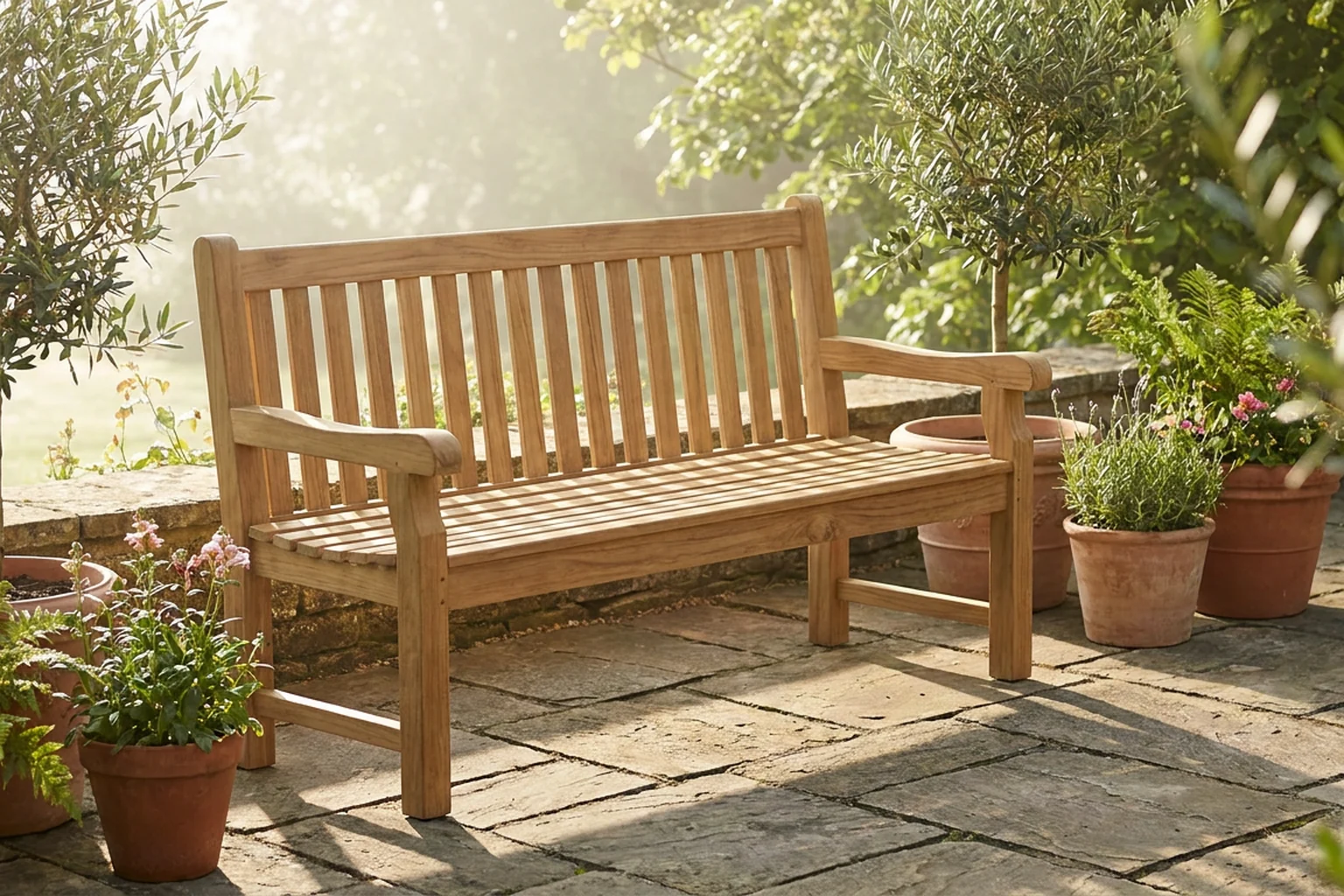
Clean teak with a soft brush, mild soap, and clean water whenever soil, pollen, or food residue is visible. Rinse away all cleaner and let the furniture dry with airflow. Avoid aggressive pressure washing, abrasive pads, chlorine bleach, and stiff metal brushes because they can roughen the surface or damage nearby materials.
First, use a bucket of mild soap in water and work in manageable areas with a soft nylon brush, following the grain. Rinse until runoff is clear because residue can attract more soil. For a small area of surface growth, clean gently and improve light and airflow rather than escalating immediately to harsh chemistry. The U.S. Environmental Protection Agency advises correcting moisture conditions when addressing mold. Do not sand aggressively or use wire brushes, which can leave a visibly uneven texture.
Outdoor teak does not require oil to remain serviceable, and oil is not a substitute for cleaning or drainage. Choose no finish if a gray patina is acceptable. Choose a product labeled for exterior teak only when preserving a more even brown color is the goal, then follow its preparation and reapplication directions.
Before adding any finish, clean the piece thoroughly and allow it to become fully dry; coating damp or dirty wood can produce uneven results. Teak oil can temporarily enrich color but creates an ongoing renewal routine, while a teak protector may slow color change without acting as a waterproof barrier. The USDA Forest Products Laboratory explains that outdoor wood performance involves moisture movement as well as finish condition. Test any product beneath a seat rail first, and avoid finishes not specifically intended for exterior teak.
Protect teak by preventing long periods of trapped moisture rather than by wrapping it tightly. Use breathable covers only on clean, dry furniture, remove cushions during extended rain, and keep feet elevated above puddles. Seek a qualified furniture repairer when joints move, cracks open at structural connections, or hardware no longer holds securely.
Use a fitted, breathable cover only after the furniture and cushions are dry, then uncover periodically so condensation does not remain against the teak. During a wet season, store cushions indoors or in a ventilated dry location and keep the frame on a level surface with free drainage. Inspect bolts, screws, plugs, and joints at least twice yearly. Small surface checking is often cosmetic, but movement at a mortise-and-tenon joint deserves repair before loading it. The Wood Handbook provides useful context on wood moisture movement.
Clean outdoor teak when it looks dirty and inspect it after heavy rain, nearby construction dust, or long humid periods. Many exposed settings benefit from a monthly inspection, while gentle washing may be needed only several times yearly. Prompt spill removal and clear drainage are more useful than an arbitrary intensive-cleaning schedule.
Do not use a pressure washer as routine teak care. Its force can erode softer surface fibers, raise grain, and drive water into joints or nearby upholstery. Instead, loosen dirt with a soft nylon brush and mild soap solution, rinse with a normal hose flow, and allow every surface to dry in moving air.
Teak oil is optional and primarily changes color rather than providing essential structural protection. Applying it can deepen brown tones temporarily, but it also creates a maintenance cycle and may collect unevenly if preparation is poor. If you like natural silver-gray weathering, clean teak and leave it unfinished instead.
Black or green surface growth usually calls for gentle cleaning, better airflow, and removal of leaves or wet cushions that keep the wood damp. Wear appropriate protection and follow local guidance when cleaning larger mold areas. The EPA mold guidance explains when extensive contamination may require professional assessment.
This guide provides general care information for solid teak outdoor furniture. Follow the instructions supplied with any cleaning or finishing product, and consult a qualified furniture repairer for structural damage.