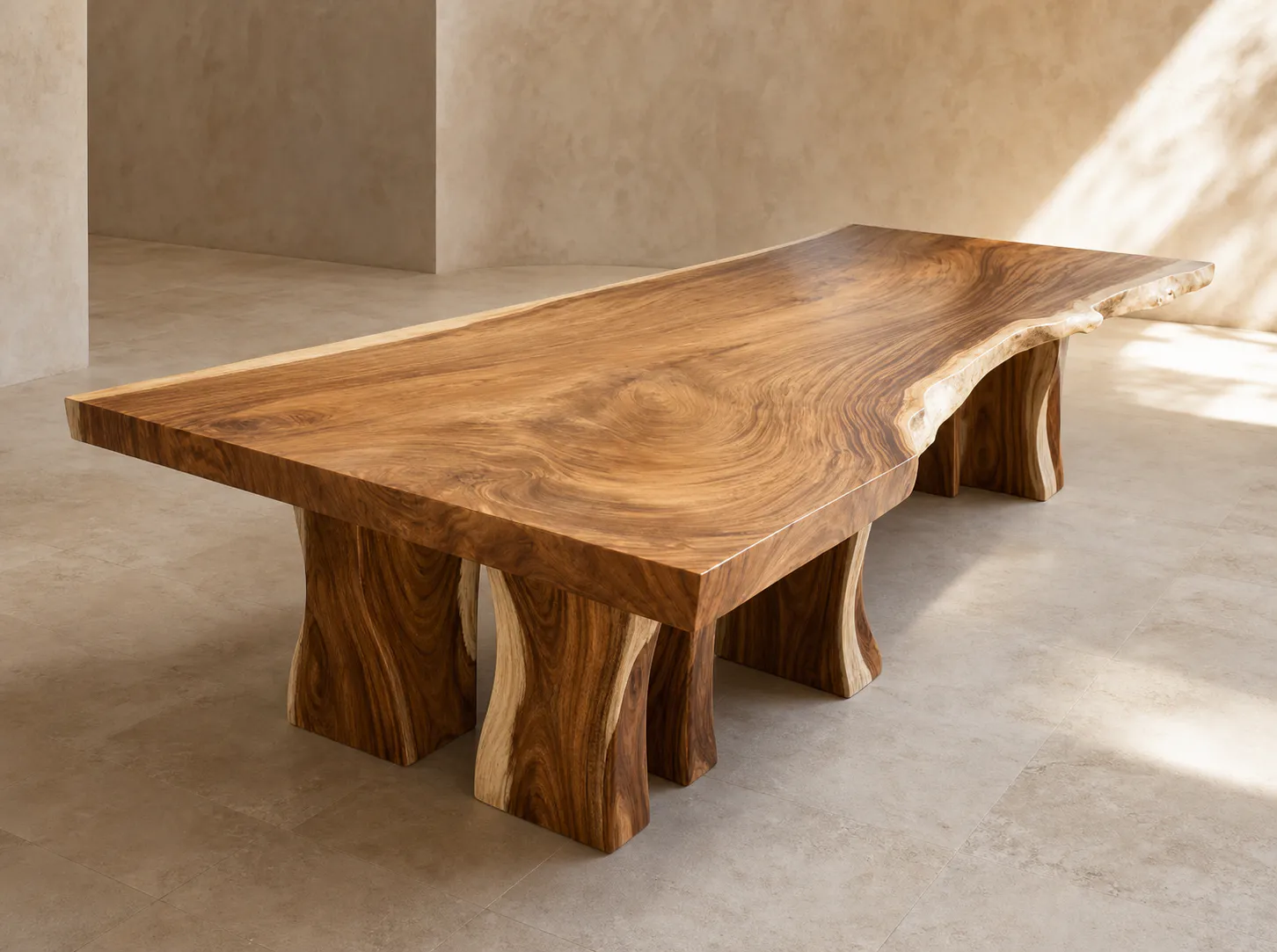
Genuine solid teak lumber is verified through converging evidence, not color alone. A buyer should confirm that wood continues through the component’s thickness, inspect a freshly exposed end
Use visual traits to screen lumber, documentation to support identity, and independent testing when the order value or dispute risk is high.
Solid teak means a component made through its full thickness from teak wood rather than teak-faced veneer over another core. It does not automatically mean old-growth, premium grade, or one-piece construction: properly disclosed edge-glued teak boards can still be solid wood. Confirm both construction and species before comparing price.
Start by separating material identity from furniture terminology. Ask the supplier for an unfinished offcut or a clear image of a drilled, hidden edge: teak veneer appears as a thin face above a different core, while solid stock continues through the section. Edge-glued staves are acceptable when all staves are teak. Do not infer solid construction from a “teak finish,” a teak color, or a trade name alone. The USDA Wood Handbook explains why wood properties vary by species and moisture condition.
Visual inspection can screen teak, but it cannot authenticate it. Genuine teak commonly shows golden-brown to medium-brown heartwood, darker streaks, a coarse uneven texture, and a waxy or oily surface; color changes with light and finishing. Examine fresh end grain and compare several boards rather than relying on photographs.
Use a 10× loupe on a freshly cut end, not a stained face. Teak, *Tectona grandis*, is commonly described as ring porous; visible pores, growth-ring pattern, and natural oiliness can support a screening decision. Sanding, stain, weathering, and kiln treatment can obscure every one of these clues. Compare an offcut with an authenticated reference and treat a pronounced perfume-like odor as only a clue. USDA Forest Products Laboratory guidance supports measuring rather than guessing wood condition.
Documentation is the strongest practical evidence when visual cues are ambiguous. Request the botanical name *Tectona grandis*, country of harvest, invoice line description, quantity, and chain-of-custody or legality records. Match those records to the exact shipment and lot number; a generic certificate or furniture photograph does not verify the boards delivered.
Place documents into a three-part audit trail: species identity, stated origin, and shipment traceability. The commercial invoice and packing list should match bundle labels, dimensions, and quantities received. If FSC claims are made, verify the supplier certificate and claim through FSC chain-of-custody information. Import, export, and legality obligations differ by route and origin, so confirm whether any permit rules apply using CITES timber guidance. A document that cannot be tied to a lot is supporting context, not proof.
Moisture content and independent inspection help determine whether a teak purchase is usable and correctly represented. Use a pin meter calibrated for the species or confirm with oven-dry testing, then record readings across the lot. For high-value orders, retain a sample, photograph markings, and specify third-party inspection and dispute remedies in the purchase contract.
Set acceptance criteria before the container opens. Record moisture readings from multiple boards, photograph every bundle label, and compare board count and dimensions with the packing list. A target moisture range should reflect the destination climate and intended use; there is no universal percentage suitable for every project. Ask the meter operator to document its species correction and method. For a contested reading, ASTM D4442 describes direct wood-moisture measurement methods. Where species identity remains uncertain, commission an independent wood anatomist or laboratory before machining the lot.
No. Solid teak can be a single board or an edge-glued panel, provided the component is teak through its full thickness. Finger-jointed or laminated construction should be disclosed because it affects appearance and repair options. Veneer is different: it is a thin teak face bonded to a separate substrate.
No. A moisture meter measures electrical resistance or capacitance related to water, not botanical species, and species settings influence the result. It helps assess drying and dimensional-risk conditions. To verify teak, combine meter results with construction inspection, shipment documentation, and, when risk warrants it, anatomical or laboratory identification.
Request an invoice and packing list naming *Tectona grandis*, the supplier’s lot or bundle number, declared origin, quantity, and dimensions. Ask for applicable harvest, export, legality, or FSC chain-of-custody records. Keep copies tied to the purchase order, because documents without shipment-level identifiers are weak evidence.
Yes. Plantation-grown lumber can be genuine teak if it is *Tectona grandis* and the stated construction is accurate. Plantation origin may affect board size, color variation, knots, and price, but it does not turn teak into veneer or another species. Buyers should evaluate grade and drying separately from botanical identity.
This educational resource is published by M Furniture & Decor, a teak furniture maker. Buyers should obtain independent legal, customs, certification, and laboratory advice where their purchase or import requirements warrant it.