Buyers compare deck board grades by balancing how the boards **look**, how they **perform**, and how much variation the project can tolerate. In practice, that means checking knot
A hospitality terrace, residential deck, pool surround, or yacht-style outdoor platform may all need different grade tolerances. For example, a premium visible surface usually demands fewer defects and more consistent color, while a service area may accept wider variation to reduce cost. The key is comparing grades against the installation environment, maintenance plan, and buyer expectations rather than judging them only by label.
{'type': 'table', 'caption': 'Core factors buyers use to compare deck board grades', 'headers': ['Comparison factor', 'What buyers check', 'Why it matters'], 'rows': [['Appearance', 'Knots, grain, color, sapwood, machining', 'Controls visual consistency on exposed surfaces'], ['Stability', 'Moisture content, straightness, warp, checks', 'Affects installation speed and long-term movement'], ['Durability', 'Species, density, decay resistance, treatment', 'Shapes lifespan in wet, sunny, or marine settings'], ['Value', 'Grade price versus waste allowance', 'Determines true installed cost, not just board cost']]}
Deck board grades usually tell buyers how much natural variation and how many visible or structural defects are allowed within a shipment. A grade is essentially a sorting system for appearance and usability, helping buyers predict consistency, installation waste, finishing results, and whether a board suits premium visible areas or more utility-focused applications.
Grades are not universal across every species, country, or mill, so buyers should request the supplier’s written grading rules rather than relying on a broad term like *premium* or *standard*. In hardwood decking, the same name can imply different limits on knots, sapwood, splits, machining marks, or color variation depending on the exporter, sawmill, or trade practice.
A useful comparison starts with asking whether the grade is appearance-based, structural, or both. Many deck purchases are primarily appearance-driven because the walking surface is fully visible. Resources from the USDA Forest Products Laboratory and American Wood Council help buyers understand how wood properties and grading terminology affect performance.

The most important visible characteristics are knot size, grain consistency, color variation, sapwood content, surface checks, and machining quality. Buyers compare these features because they directly affect how uniform the installed deck appears, how much board selection is needed on site, and whether the finished project matches design expectations for a refined or rustic look.
Premium-grade buyers usually want tighter control over appearance because the installed deck is judged from standing height across a large field of boards. Even small differences in color, grain, or edge machining become obvious over 50 or 100 square meters. That is why sample boards and shipment photos often matter as much as the written grade description.
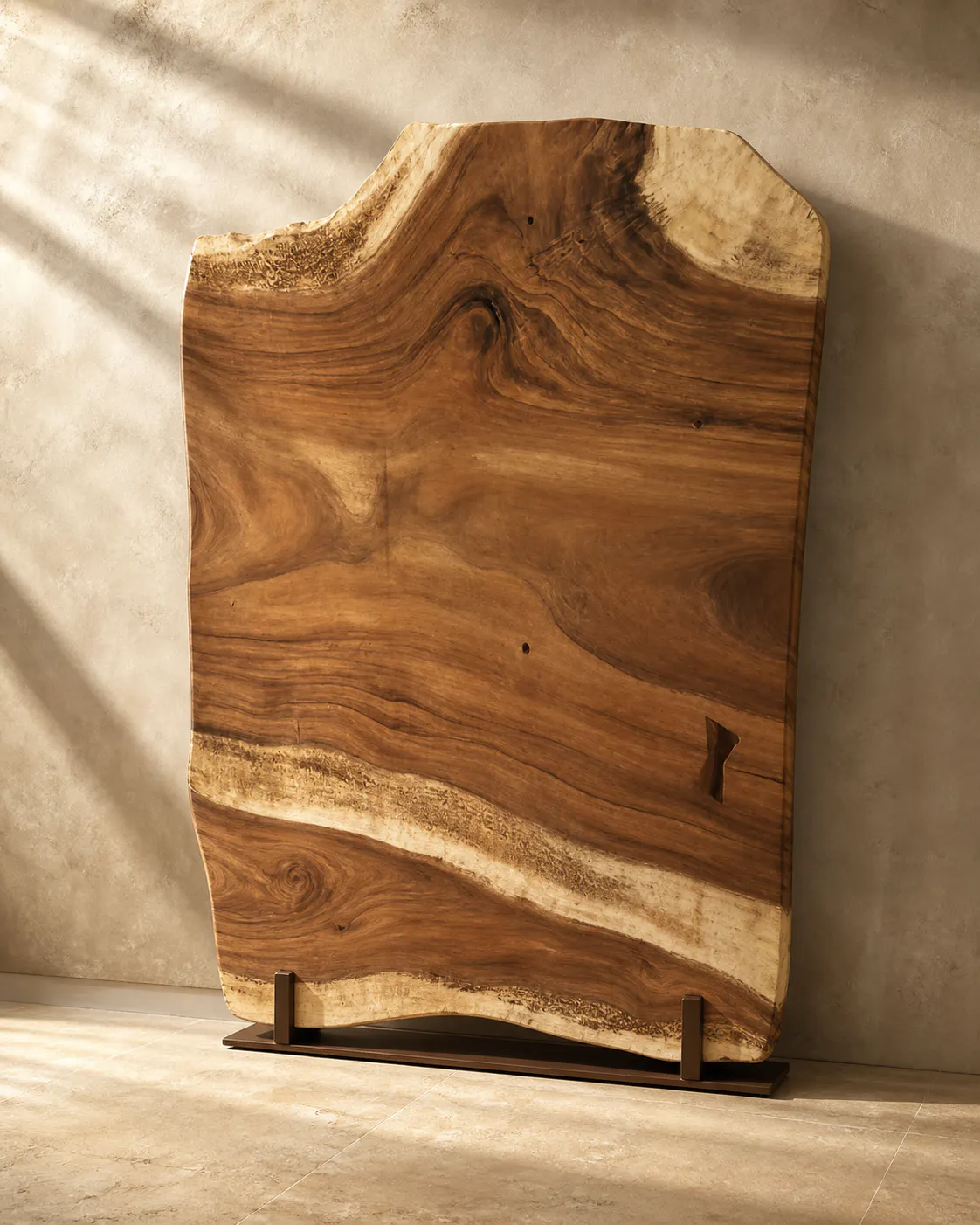
{'type': 'image', 'src': 'https://mfurniturethailand.com/images/resources/deck-board-grade-visual-comparison.jpg', 'alt': 'Deck board grade comparison showing teak boards with different grain, knots, and color variation in outdoor decking context', 'caption': 'Visual grading comparison helps buyers align expectations before production and shipping.'}
Common red flags include oversized knots, torn grain, chipped edges, heavy sapwood, end splits, and inconsistent thickness. Buyers should also ask how many boards per bundle may fall at the edge of the grade limit. Guidance on wood appearance terminology from APA and general wood science references from USDA FPL can support more consistent evaluation.
Buyers compare performance by looking beyond cosmetics to moisture content, straightness, density, decay resistance, dimensional stability, and expected service environment. A board that looks clean at delivery can still perform poorly if it is too wet, poorly machined, or mismatched to sun, rain, pool chemicals, or marine exposure.
Performance comparison should include moisture targets, because overly wet boards may shrink after installation while overly dry boards can react sharply in humid climates. Buyers also review whether the species naturally resists decay and insects, whether the profile drains water well, and whether the board remains stable when exposed to repeated wet-dry cycles.
For hardwood species such as teak, Cumaru, Ipe, or Garapa, the grade should be considered together with species properties, not separately. A lower appearance grade in a durable species may still outperform a cleaner-looking but less stable alternative. Buyers can use technical references from the Forest Products Laboratory to compare density, movement, and durability factors before purchase.
Price comparison changes because lower-priced grades can create higher installed costs through waste, board rejection, slower sorting, and inconsistent finishing. Buyers should compare **usable yield**, labor impact, and visual acceptance rates, not just cost per linear meter or cubic meter, when deciding whether a premium grade actually saves money.
A deck board priced 10% to 20% lower may look attractive in procurement, yet lose value if installers must cull more boards for visible surfaces. More defects can also increase layout time because crews spend longer selecting pieces for prominent zones, edges, stairs, and picture-frame borders. This is especially relevant in hotels, villas, and commercial projects where uniformity affects guest perception.
A practical method is to compare quoted price against expected waste percentage and installation efficiency. If a premium grade reduces rejection and shortens labor time, its total installed cost may be lower despite the higher board price. Buyers should ask suppliers for realistic yield assumptions, bundle consistency, and replacement policy before approving the order.
Buyers should ask suppliers for written grade definitions, moisture targets, defect limits, machining tolerances, sample photos, species identification, and replacement terms. These questions turn vague grade labels into verifiable specifications, reducing disputes over appearance, waste, and site performance once the decking arrives and installation begins.
These questions are especially important in export trade, where terminology can vary between Thailand, Indonesia, Europe, and North America. A concise written specification reduces ambiguity and gives procurement teams a document they can compare across mills. If the project requires certification or traceability, buyers should also confirm chain-of-custody and species documentation before payment.
A simple buyer checklist is to compare grade definition, visible defects, moisture content, board straightness, machining accuracy, species durability, expected waste, and supplier replacement policy side by side. This keeps the decision focused on installed results rather than labels, helping buyers choose the grade that fits both design standards and total project cost.
{'type': 'table', 'caption': 'Buyer checklist for side-by-side deck grade evaluation', 'headers': ['Checkpoint', 'Acceptable example', 'Buyer note'], 'rows': [['Written grade rule', 'Clear defect and appearance limits', 'Avoid undefined marketing labels'], ['Moisture content', 'Declared target range before shipment', 'Reduces movement surprises'], ['Visible defects', 'Controlled knots, checks, sapwood, warp', 'Match to project visibility'], ['Machining', 'Clean edges and consistent dimensions', 'Speeds installation'], ['Yield and replacements', 'Supplier states waste and claims policy', 'Improves budget accuracy']]}
When comparing quotes, ask each supplier to grade against the same visual and technical checklist. That makes price comparisons more meaningful and reduces misunderstandings after delivery.
For many buyers, the most reliable decision process is to approve a physical sample, request current production photos, and attach the accepted grade description to the purchase order. That simple step aligns the supplier, installer, and client on what the delivered deck boards should look like in the real project, not just in a catalog description.
No. The highest grade is only the best choice when the project needs maximum visual consistency and can justify the cost. For secondary areas, screened spaces, or utility decks, a lower grade may deliver acceptable performance and better value if defect limits, moisture control, and species durability still meet project needs.
Lower grades often allow more color variation, larger knots, greater sapwood presence, minor checks, and more noticeable grain irregularity. The exact limits depend on the species and supplier. Buyers should request a written grading sheet and recent production photos so acceptable variation is defined before the shipment is approved.
Buyers should normalize the comparison by using the same checklist for every quote: species, grade definition, moisture content, dimensions, defect limits, machining quality, expected waste, and claims policy. Comparing only price per meter or board can be misleading because one supplier’s lower grade may include much higher rejection and labor costs.
Yes. Grade controls appearance and defect tolerance, but species strongly influences density, decay resistance, movement, maintenance needs, and service life. A clean-looking board in a less suitable species may underperform outdoors, while a slightly lower appearance grade in durable teak or another stable hardwood may provide better long-term results.
This resource is for general buying guidance and does not replace project-specific engineering, building-code review, or supplier technical documentation. Buyers should confirm grade definitions, species suitability, moisture targets, and installation requirements with their selected manufacturer or contractor before purchase.