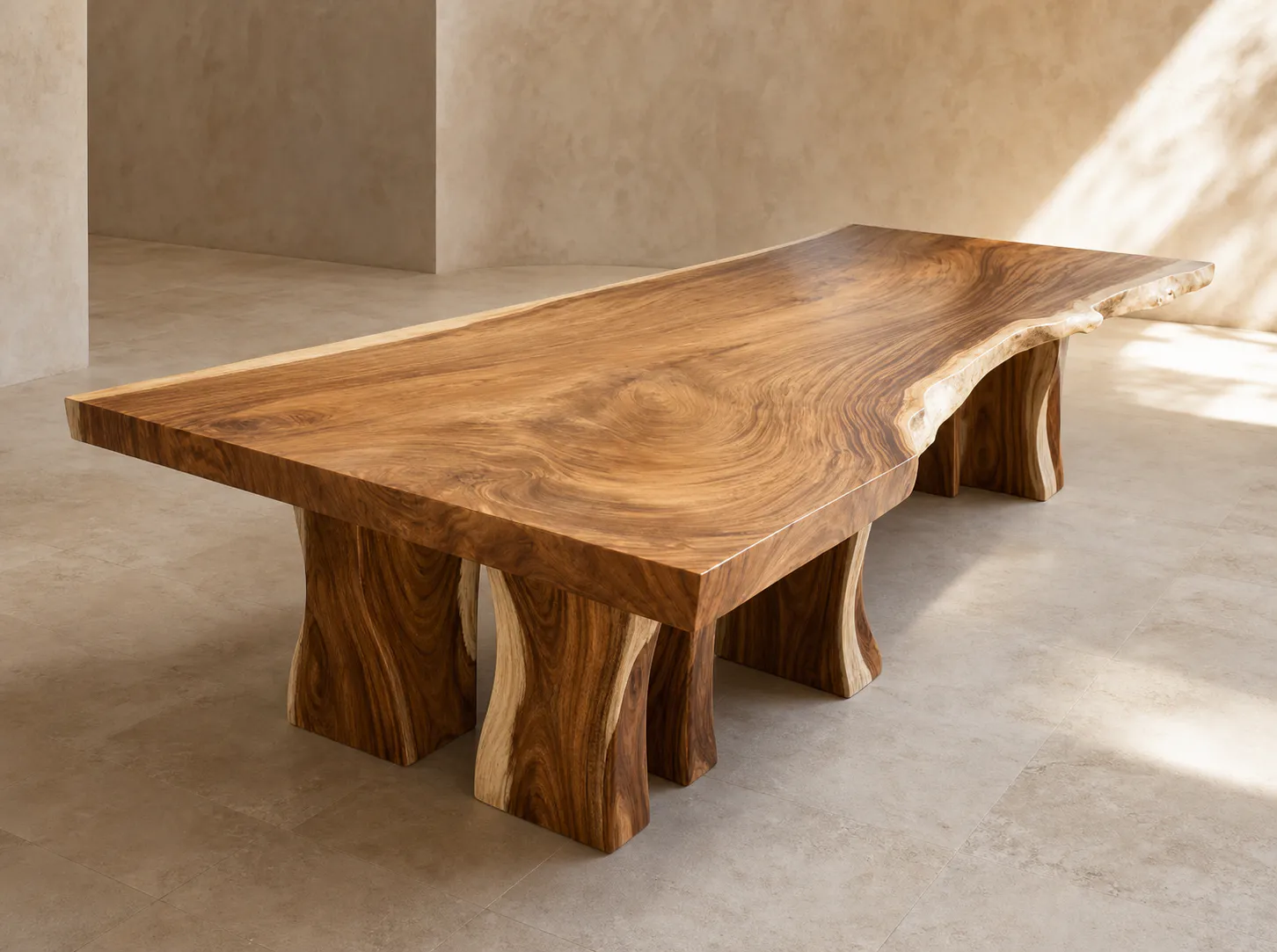
Buyers should choose engineered teak over solid teak when the project is primarily indoors and priorities include cost control, panel stability, lower weight, and consistent appearance across large
Engineered teak usually means a real teak veneer or teak lamella bonded to a substrate such as plywood, MDF, or blockboard. It is not the same as teak-look laminate or printed melamine.
{'type': 'table', 'caption': 'Fast decision guide: engineered teak vs solid teak', 'headers': ['Situation', 'Choose engineered teak', 'Choose solid teak'], 'rows': [['Large indoor panels or cabinetry', 'Yes', 'Sometimes'], ['Outdoor furniture or wet exposure', 'Usually no', 'Usually yes'], ['Tight budget with teak appearance goals', 'Yes', 'Sometimes no'], ['Frequent future refinishing expected', 'Limited', 'Yes']]}
Engineered teak is the smarter choice when buyers need real teak aesthetics with lower cost, better indoor stability, and lighter construction. It suits cabinetry, hospitality casegoods, wall paneling, and wide tops where humidity changes can move solid wood. For appearance-driven interior projects, engineered teak often delivers the practical balance buyers need.
Choose engineered teak when the surface appearance of teak matters more than having full-thickness teak throughout the component. In apartments, hotels, offices, and retail interiors, substrates such as plywood can reduce seasonal movement compared with wide solid boards. That matters for flush cabinet doors, long credenzas, and conference tables. Buyers working to a budget also often gain measurable savings because premium old-growth style solid teak sections cost more than veneer-faced or teak-laminated constructions.
Solid teak is usually the better option when buyers expect outdoor exposure, structural wear, repeated sanding, or decades of service life. Because the material is teak all the way through, it tolerates deeper refinishing and repairs. For heirloom furniture, benches, and many exterior pieces, solid teak remains the more durable choice.
Solid teak is preferred when furniture must handle weather, heavy use, edge impacts, or repeated restoration. Outdoor benches, dining sets, loungers, and marine-adjacent applications benefit from teak’s natural oils and full-thickness construction, although finish and joinery still matter. Solid teak also offers more refinishing headroom because scratches, dents, and stains can often be sanded back multiple times. Buyers seeking a piece intended to last 20 years or more often view that repairability as decisive.
{'type': 'quote', 'text': 'Teak is widely valued for durability and decay resistance, but product design, construction quality, and maintenance still determine long-term performance.', 'attribution': 'Adapted from general teak material guidance, The Wood Database'}
Budget, stability, and maintenance are the main deciding factors. Engineered teak usually lowers upfront cost and can stay flatter indoors, while solid teak usually costs more but offers deeper repairability and longer refinishing life. Buyers should compare total ownership cost, not just purchase price, especially for hospitality and multi-unit projects.
For many commercial buyers, the tradeoff is simple: engineered teak can reduce material spend, shipping weight, and movement-related callbacks, while solid teak can reduce replacement risk over a longer life cycle. A veneer surface cannot be sanded as aggressively as a thick solid board, so maintenance planning matters. In dry-air-conditioned interiors with periodic humidity swings, engineered construction often performs more predictably. In family dining or resort settings with hard wear, solid teak may justify its premium.
A practical rule is that wider components and larger flat panels gain more from engineered construction, while legs, frames, arms, and load-bearing parts often remain better in solid wood.
Before ordering engineered teak, buyers should confirm the face material, veneer thickness, substrate type, edge treatment, finish system, and intended environment. Those details determine durability far more than the label alone. Responsible sourcing, moisture control, and manufacturing standards also matter, especially for architects, hoteliers, and international import buyers.
Ask whether the product uses teak veneer, teak lamella, or teak edge banding, and whether the core is plywood, MDF, particleboard, or blockboard. Each option changes screw holding, weight, moisture tolerance, and repair limits. Buyers should also verify finish chemistry, substrate emissions compliance where relevant, and sourcing claims such as FSC. For export projects, clear specifications reduce disputes over what “engineered teak” means and help align expectations for lifespan and care.
Yes, engineered teak usually uses real teak as a veneer or lamella on top of a manufactured core such as plywood or MDF. It is different from laminate or printed teak-look surfaces. Buyers should verify the teak layer thickness, substrate, and edge construction before comparing quality or lifespan.
Usually, engineered teak is a safer choice for interior use unless the maker explicitly builds it for exterior conditions with suitable core materials, adhesives, and finishes. Outdoor moisture, sun, and heat cycles are demanding. For many garden, poolside, or marine applications, solid teak remains the more dependable option.
Not always. Engineered teak can last many years in stable indoor environments, especially in cabinetry and panels, but it usually offers less refinishing depth and repair tolerance than solid teak. Longevity depends heavily on substrate quality, adhesive performance, finish system, humidity exposure, and how heavily the piece is used.
For many hotel, condominium, and apartment interiors, engineered teak is often the better fit because it can provide consistent teak appearance across large surfaces while helping control cost, weight, and movement. Solid teak may still be preferable for visible frames, chair legs, tabletops, or other high-impact components.
This resource is for general buying guidance and does not replace project-specific advice on construction, finish selection, compliance, or installation conditions. Material performance depends on design, manufacturing quality, maintenance, and the actual environment of use.