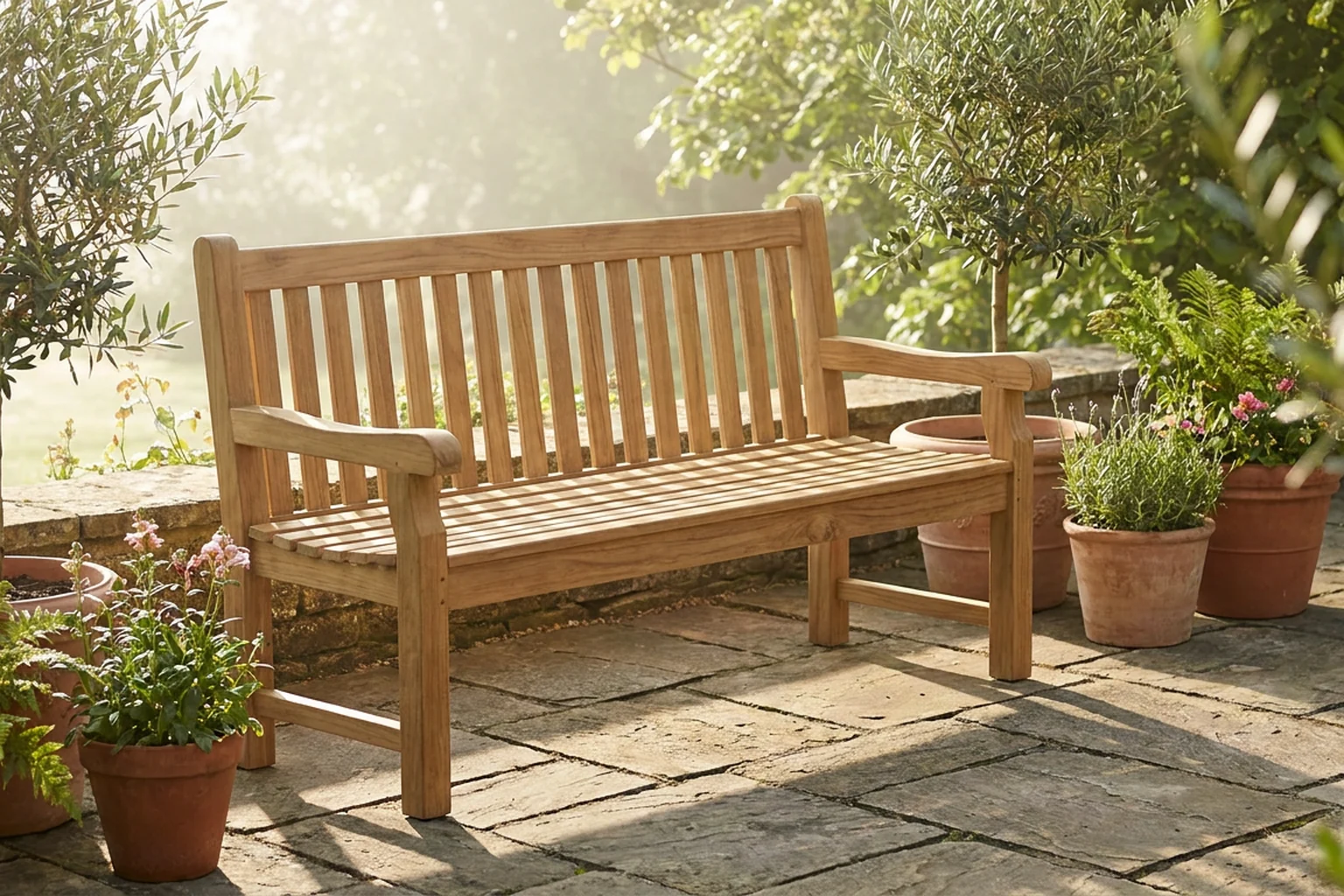
The best teak furniture for outdoor use is solid, heartwood-rich *Tectona grandis* with substantial joinery, corrosion-resistant hardware, and details that let rain drain and air circulate. A well-made
The best outdoor teak furniture is solid teak built around heartwood-dominant components, strong mechanical joinery, and water-shedding details. Prioritize pieces whose legs, rails, slats, and tabletop are substantial enough for repeated wet–dry cycles; avoid thin teak skins, concealed particleboard cores, and lightly built joints that trap moisture.
Botanically, teak is *Tectona grandis*. Its outdoor reputation comes from inherent extractives and useful durability, yet a species name alone does not establish a finished piece’s quality. The USDA Forest Products Laboratory Wood Handbook explains how wood properties, moisture, fastening, and design affect service. Inspect end grain, underside rails, slat spacing, and fastener access. Mortise-and-tenon or similarly robust joints, smooth drainage paths, and stainless steel or marine-grade hardware are practical buying signals.
Teak’s natural oils and dimensional stability make it appropriate outdoors, but no wood is maintenance-free. Leave unfinished teak to weather to a silver-gray patina, or clean and apply a breathable protector for a warmer tone. Avoid film-forming coatings that can crack, hold water, and increase refinishing work.
Sun, rain, dust, and airborne pollution change appearance even when structure remains sound. The USDA Forest Products Laboratory documents how design and finishing must accommodate moisture movement; for furniture, keep surfaces clean and prevent water from remaining on horizontal areas. Use feet or glides that separate timber from wet paving, keep cushions dry, and tighten accessible hardware after seasonal changes. Never pressure-wash closely enough to erode fibers. A gentle wash once or twice yearly is usually a safer starting routine.
Buy outdoor teak from a supplier that identifies the wood as solid teak, explains construction and hardware, and can provide sourcing documentation appropriate to the destination market. Request dimensions, moisture-management details, care guidance, and finish specifications in writing; these facts are more useful than broad durability claims or a teak-colored appearance.
Ask whether every exposed structural component is teak or whether the description covers only veneers, inlays, or selected surfaces. The Forest Stewardship Council describes forest-management certification; when certification matters, ask for the relevant claim and chain-of-custody information instead of assuming a logo proves a specific shipment. For projects, confirm lead time, packing, replacement-part policy, and warranty terms. M Furniture & Decor can translate these questions into a written specification for residential, hospitality, and designer orders.
The label Grade A is not a universal legal standard, so treat it as a request for evidence rather than a guarantee. Ask whether visible and structural parts are mature heartwood, whether sapwood is excluded, and whether matching, repairs, and moisture content are documented on the quoted specification.
Clean outdoor teak with a soft brush, mild soap, and water, working along the grain; rinse without high pressure and allow full drying. Address food, pollen, and bird residue promptly. If using a brightener or protector, test an inconspicuous area and follow the product manufacturer’s dilution, drying, and reapplication instructions.
Use a breathable, correctly sized cover when furniture is dry and long-term exposure is expected, especially beneath trees or during storage. Do not seal wet teak beneath non-breathable plastic: trapped moisture can encourage surface mildew. Raise or space the cover to promote airflow, and periodically inspect feet and joints.
Well-constructed solid teak furniture can remain serviceable for decades, but lifespan depends on joint design, hardware, climate, use, and care rather than species alone. Check annually for loose fasteners, roughened end grain, and standing-water points. Prompt repairs and seasonal cleaning protect a furniture investment more reliably than cosmetic oil alone.
M Furniture & Decor manufactures and sells teak furniture. This guide is educational and recommends that buyers confirm material, construction, care, certification, and shipment details in their written supplier specification.