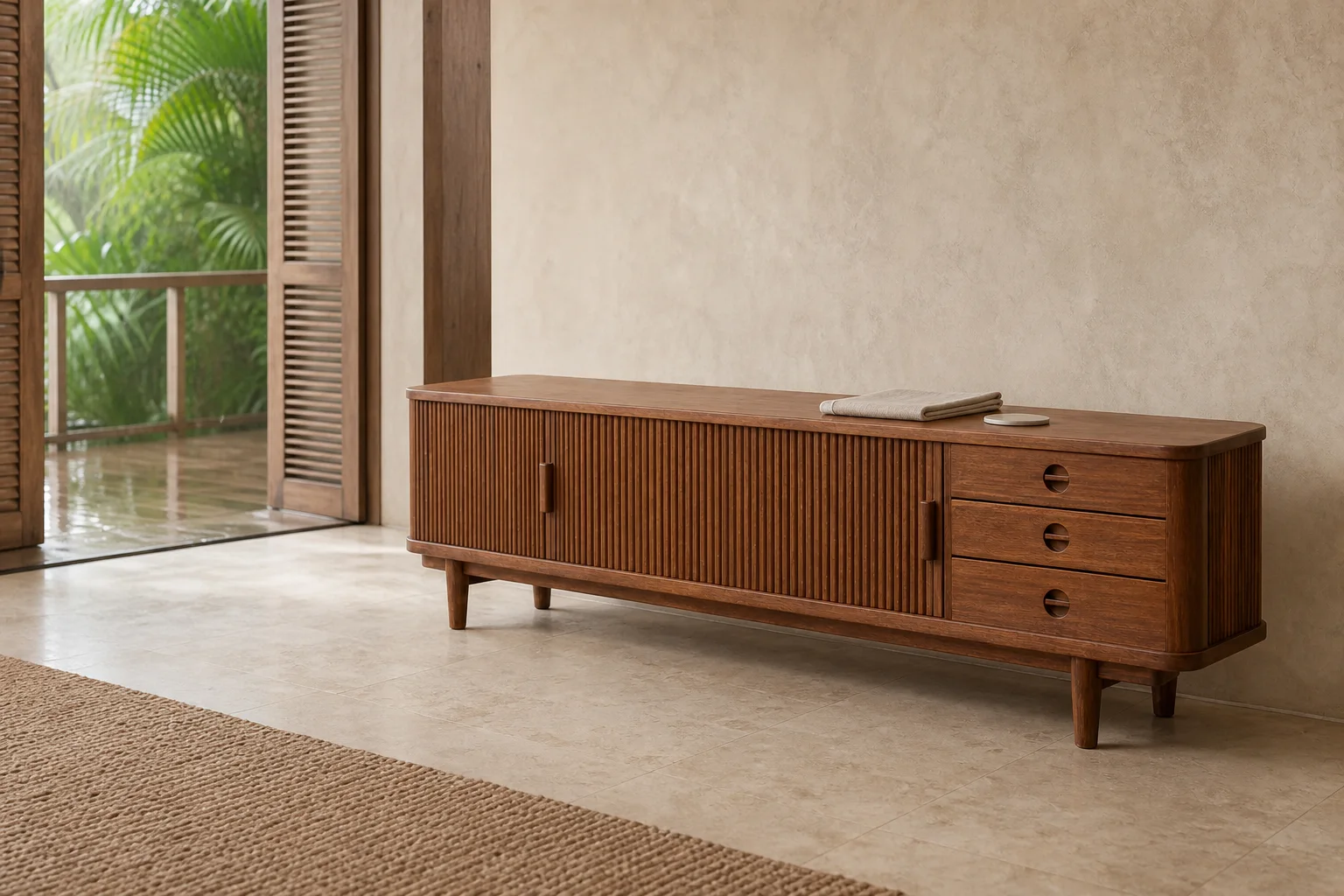
Clear, matte hardwax oil is usually the best finish for natural indoor teak because it protects without turning the wood into a glossy film. Teak has naturally occurring
The right choice also depends on use. A decorative cabinet can remain unfinished, while a coffee table, dining table, or frequently handled hotel piece benefits from a renewable protective treatment. Avoid dark stains and high-gloss coatings when the aim is teak’s pale-to-honey color and visible grain.
Clear, matte hardwax oil is the preferred finish for most indoor teak because it leaves a natural-looking, low-sheen surface while improving resistance to fingerprints and small spills. Unlike a thick film, it is easier to renew locally. Use a clear, non-tinting formulation and confirm compatibility on an offcut first.
Hardwax oil cures within the teak surface rather than producing a conspicuous plastic-like layer, which helps retain the timber’s tactile character. It is a practical match for occasional household moisture, but it is not a substitute for coasters or prompt cleanup. The USDA Forest Products Laboratory Wood Handbook explains why wood moisture and finish selection matter; use the finish maker’s technical sheet for coverage and cure details. Avoid silicone-containing spray polishes, which can create adhesion problems during later refinishing or repair.
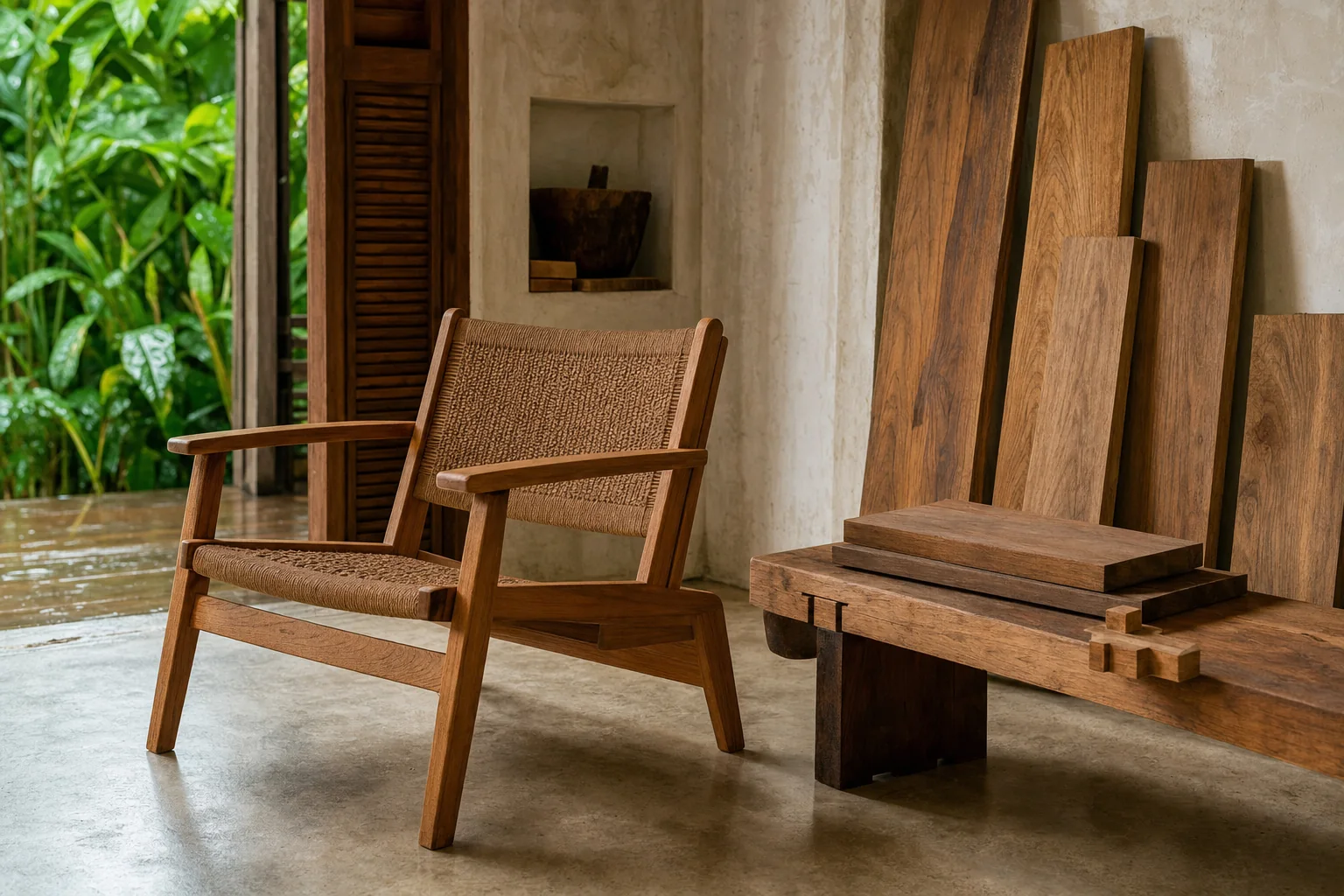
Preparation determines whether any finish bonds evenly to teak. Clean away wax, silicone polish, and shop dust; sand uniformly with the grain; then test the complete sequence. For a natural result, stop before an ultra-fine polish, apply thin coats, and follow the manufacturer’s stated cure time before regular use.
Begin with a clean, dry surface and remove prior wax or polish before sanding with the grain. Many finish systems use 120-grit followed by 180-grit abrasives, but the product sheet controls the final sequence. Remove all dust, apply two thin coats rather than one heavy coat, and let each coat cure as directed. Rubio Monocoat’s application guidance illustrates the importance of controlled application; always check the exact product label for teak suitability. Keep temperature, ventilation, and drying time consistent across the work.
An unfinished teak surface is appropriate when the priority is the most raw, changeable appearance and the furniture receives gentle use. It will still benefit from routine dusting, but it offers little defense against oil or colored spills. For dining tops, coffee tables, and hotel furniture, a clear oil finish is usually safer.
Unfinished teak is the lowest-maintenance choice only if you accept maintenance as cleaning rather than protection: dust regularly and address marks as they occur. Clear oil suits rooms with normal indoor humidity and pieces touched daily. Avoid stain, dark pigment, and high-gloss lacquer if “natural” means pale, visible grain. The American Wood Council publishes wood-reference resources, while a local finisher can advise on tropical hardwood compatibility and the intended use. For commercial hospitality settings, document the approved product and cleaning routine for staff.
Yes, a clear hardwax oil generally makes teak slightly deeper or warmer, especially on freshly sanded wood. The change is normally modest compared with amber varnish, but test an offcut in the room where the piece will live. Daylight, surrounding colors, and wood variation affect the final impression.
Polyurethane can protect indoor teak, but it is not usually the preferred choice when a natural feel is the goal. Its film can look glossier, is harder to repair invisibly, and may require full sanding later. Choose it only when higher film-build protection matters more than easy maintenance and tactile wood texture.
Use a lightly damp, soft cloth and a pH-neutral wood cleaner when needed; avoid soaking the surface or using silicone furniture polish. Wipe spills promptly, especially wine, oil, and ink. Put felt pads under objects and use coasters. Reapply the same finish only after cleaning and when the surface appears dry or worn.
Recoat indoor teak when water no longer beads lightly, the color looks patchy, or frequent handling leaves dry-looking areas. In a typical conditioned home, that may be every 12 to 24 months, not on a fixed calendar. Clean first, abrade only as the finish maker directs, and test a hidden area.
Finish performance varies by product, prior treatment, room conditions, and use. Always test on an offcut or concealed area and follow the selected finish manufacturer’s safety, application, and curing instructions.