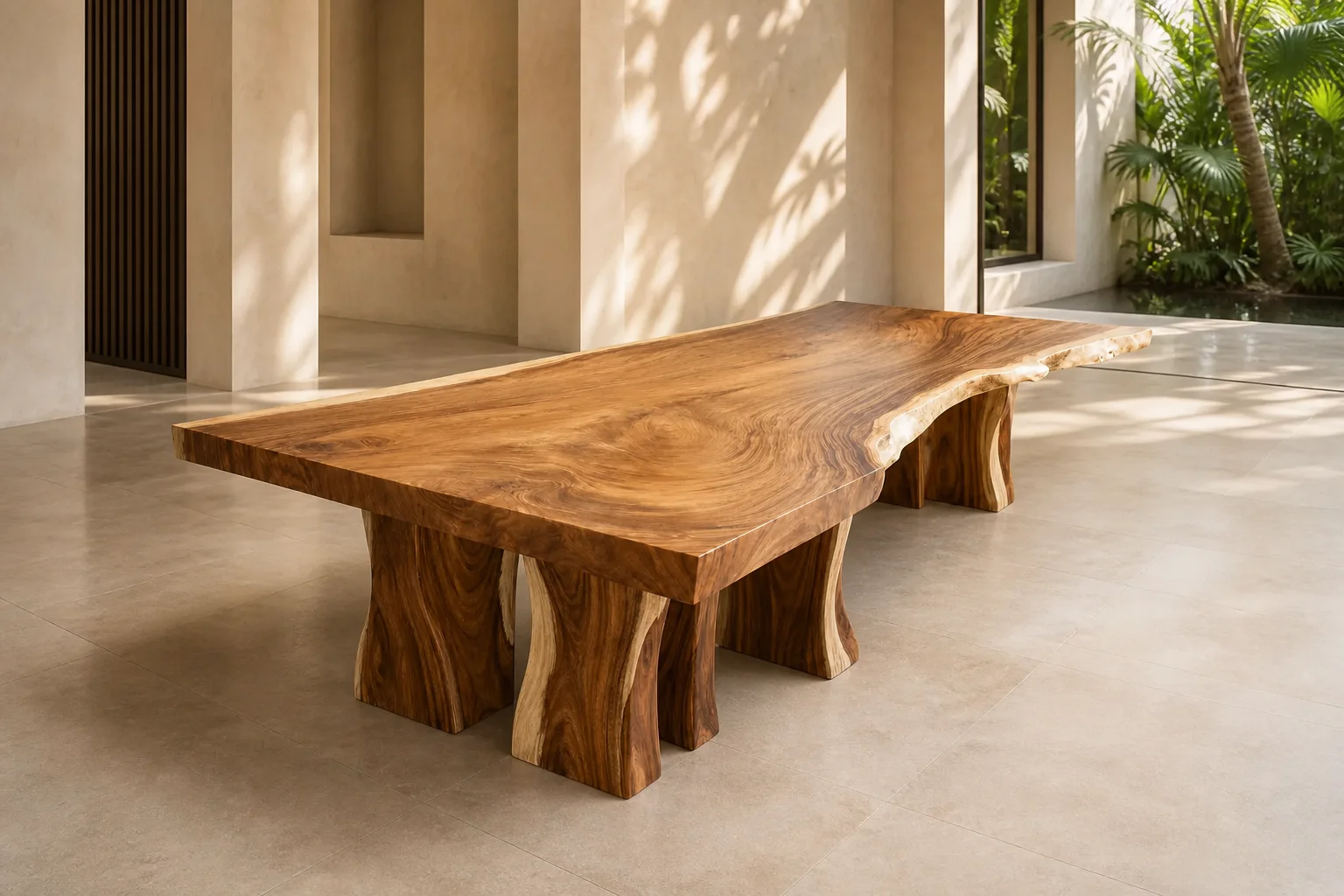
Acacia is usually suitable for tropical climate interiors when manufacturers control moisture content, apply a durable finish, and design for seasonal wood movement. In cities such as Bangkok
For tropical interiors, ask three practical questions first: Was the acacia kiln-dried, what finish was applied, and will the room have stable ventilation or air-conditioning?
{'type': 'table', 'caption': 'Quick suitability snapshot for indoor tropical use', 'headers': ['Factor', 'Acacia indoors', 'Why it matters'], 'rows': [['Density and hardness', 'Generally good', 'Helps resist dents and daily wear'], ['Humidity tolerance', 'Moderate to good', 'Needs controlled drying and sealing'], ['Direct sun exposure', 'Limited', 'Reduces fading and surface checking'], ['Maintenance needs', 'Moderate', 'Periodic cleaning and finish care improve lifespan']]}
Yes, acacia is often suitable for tropical interiors, especially for dining tables, beds, casegoods, and occasional furniture used in ventilated or air-conditioned rooms. Its dense structure supports durability, but success depends on kiln drying, sealing, and construction that accommodates humidity-driven expansion and contraction rather than assuming the wood is naturally trouble-free.
Acacia performs well indoors because it is typically dense, fairly hard, and visually versatile, making it common in residential and hospitality furniture. In tropical markets such as Thailand or Malaysia, those strengths matter, but so does moisture control. The USDA Wood Handbook explains that all wood exchanges moisture with the air, so interior furniture in humid regions needs stable processing, engineered joinery, and a protective finish to reduce seasonal stress.
That means acacia is a reasonable, not automatic, yes. A well-made acacia dining table can last for years indoors, while a poorly dried panel may cup or crack within one wet season. Compared with species like teak, acacia usually needs stricter production discipline to stay stable in tropical interiors, especially in spaces with open windows, strong afternoon sun, or large swings between air-conditioning and outdoor humidity.

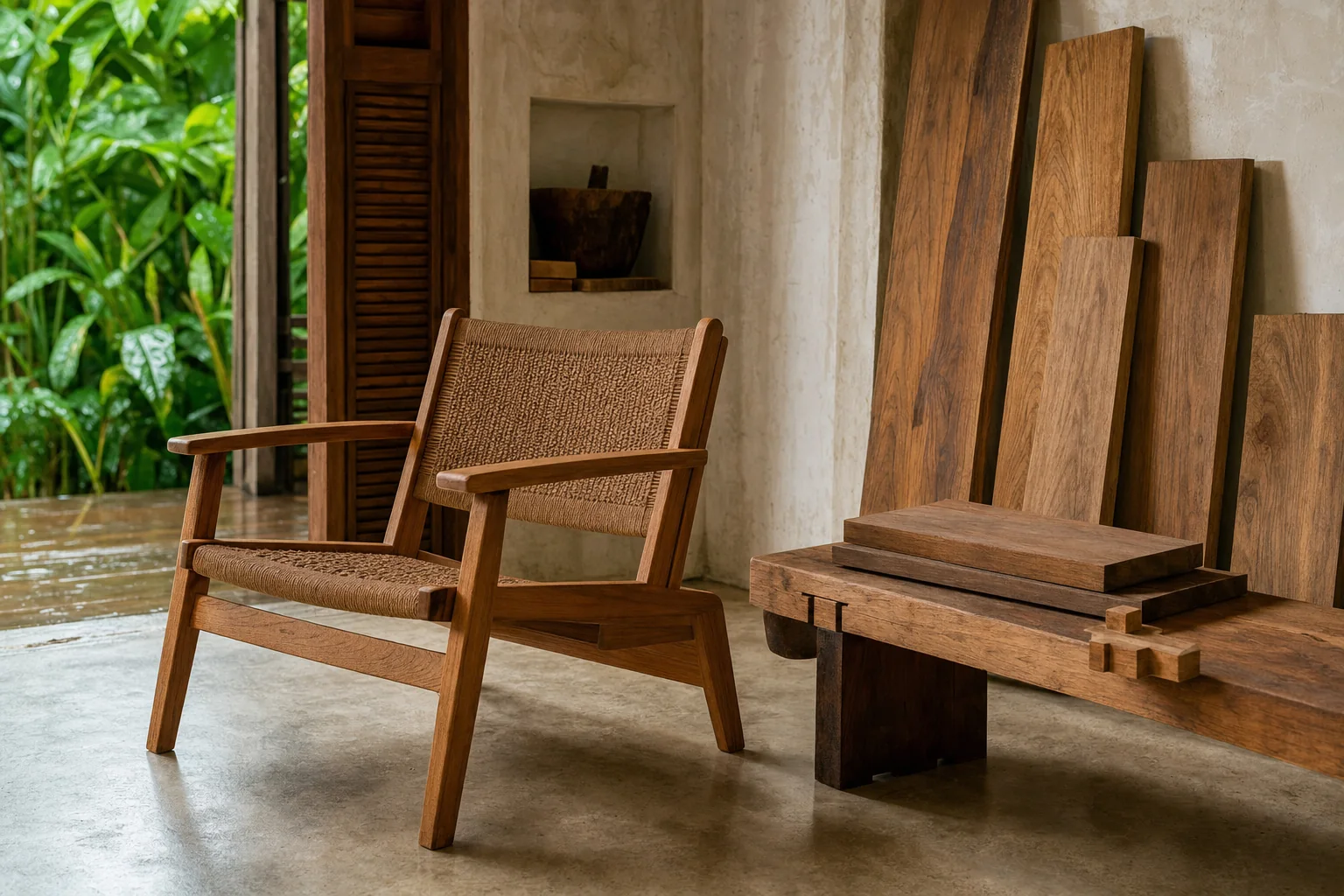
Humidity matters because acacia, like all solid wood, absorbs and releases moisture until it reaches equilibrium with the room. In tropical interiors, repeated swings between wet-season humidity and air-conditioned dryness can make panels swell, shrink, or stress the finish, affecting flatness, joints, and surface appearance over time.
In practice, wood movement is normal, but excess movement becomes a furniture problem. Tropical interiors may sit above 70% relative humidity during rainy periods, then drop sharply in conditioned rooms. That cycle can stress wide tabletops, floating panels, and drawer fronts. Dense woods do not become movement-free simply because they feel heavy. They still expand across the grain, which is why panel design, breadboard ends, and slot-based fastening details matter.
Acacia furniture is therefore most reliable in interiors with consistent ventilation and fewer sudden environmental shifts. The Wood Database profile for acacia is useful for comparing hardness and texture, but real performance indoors depends on production quality. Hotels, villas, and condominium projects in Phuket, Bali, or Ho Chi Minh City should evaluate both species selection and room-conditioning patterns before specifying solid wood pieces at scale.
Acacia performs well in tropical interiors when it is kiln-dried to an appropriate moisture content, acclimatized before fabrication, assembled with movement-tolerant joinery, and sealed on all exposed faces. Stable room conditions, routine cleaning, and avoiding direct UV exposure further improve long-term appearance and dimensional stability.
These factors often matter more than showroom appearance. A thick live-edge slab may look impressive on delivery but still fail if the core moisture content was uneven. By contrast, a simpler acacia cabinet with balanced finishing and careful joinery can stay stable for years. For specifiers, the key question is whether the maker treats acacia as an engineered material, not merely a decorative timber.
Teak is often the safer choice when interiors face persistent humidity, semi-open layouts, heavy hospitality traffic, or inconsistent maintenance. Its natural oil content and long reputation in demanding climates make it more forgiving than acacia, although design, drying, and construction quality still remain critical for reliable performance.
Teak is widely favored across Southeast Asia because it combines dimensional stability, natural oils, and strong durability. In resorts, beachfront villas, and open-air dining rooms, that extra tolerance can justify the higher cost. The Wood Database profile for teak highlights its well-known service record, while decades of use in Thailand and Indonesia reinforce its reputation among makers, architects, and procurement teams.
Acacia can still be the right choice when budget, color, or grain character are priorities, especially in fully indoor settings. But if a project includes salt air, open lobbies, or rooms that alternate between unconditioned humidity and cold air-conditioning, teak generally offers a wider margin for error. That is particularly relevant for commercial operators managing dozens or hundreds of furniture pieces across multiple rooms.
Maintain acacia in tropical interiors by keeping surfaces dry, cleaning with a soft cloth, avoiding harsh chemicals, and limiting direct sunlight and standing moisture. Recoating worn finishes and controlling room humidity where possible help preserve color, reduce checking, and keep joints and panels more stable over time.
Daily care is straightforward: wipe spills quickly, use mats under planters and drinks, and avoid dragging heavy objects across the grain. Housekeeping teams in hotels should not soak solid wood furniture with wet cloths or aggressive cleaners because finish breakdown often starts at the surface. Once the finish weakens, moisture exchange becomes less controlled, and panels can become more vulnerable to swelling, staining, or minor cracks.
For long service life, inspect tops, edges, and exposed end grain at least quarterly. If sheen becomes patchy or the coating looks thin near handles and corners, schedule touch-up finishing before visible damage spreads. In tropical interiors, preventive maintenance is usually cheaper than repair. Even durable species benefit from stable care routines, especially in high-turnover hospitality environments where furniture sees repeated cleaning and daily use.
Acacia does not warp easily when it is properly kiln-dried, acclimatized, and sealed, but it can move noticeably in humid interiors if manufacturing is poor. Problems usually come from uneven moisture content, weak joinery, or sudden swings between outdoor humidity and strong air-conditioning rather than from the species alone.
Solid acacia is often more durable and repairable than many engineered wood products, especially for tables, beds, and cabinets. However, it still needs moisture-aware construction and maintenance. In tropical homes, the better choice depends on quality, room conditions, finish system, and whether long-term refinishing matters to the buyer.
Yes, acacia can be used in hotels and resorts across Thailand, Indonesia, Vietnam, and similar markets when the furniture stays indoors and receives regular care. For semi-open spaces, beachfront sites, or heavy commercial wear, specifiers often prefer teak because it is generally more forgiving under harsh tropical conditions.
A durable, well-applied sealer and topcoat that covers all exposed faces is usually the safest approach for acacia in tropical interiors. The exact finish depends on the intended look and maintenance plan, but consistent coverage matters most because it slows uneven moisture exchange and helps reduce staining, checking, and surface wear.
This resource is published by M Furniture & Decor for informational purposes. It discusses acacia and teak in tropical interiors based on woodworking principles, referenced sources, and practical furniture considerations; it is not a substitute for project-specific engineering, site testing, or professional conservation advice.