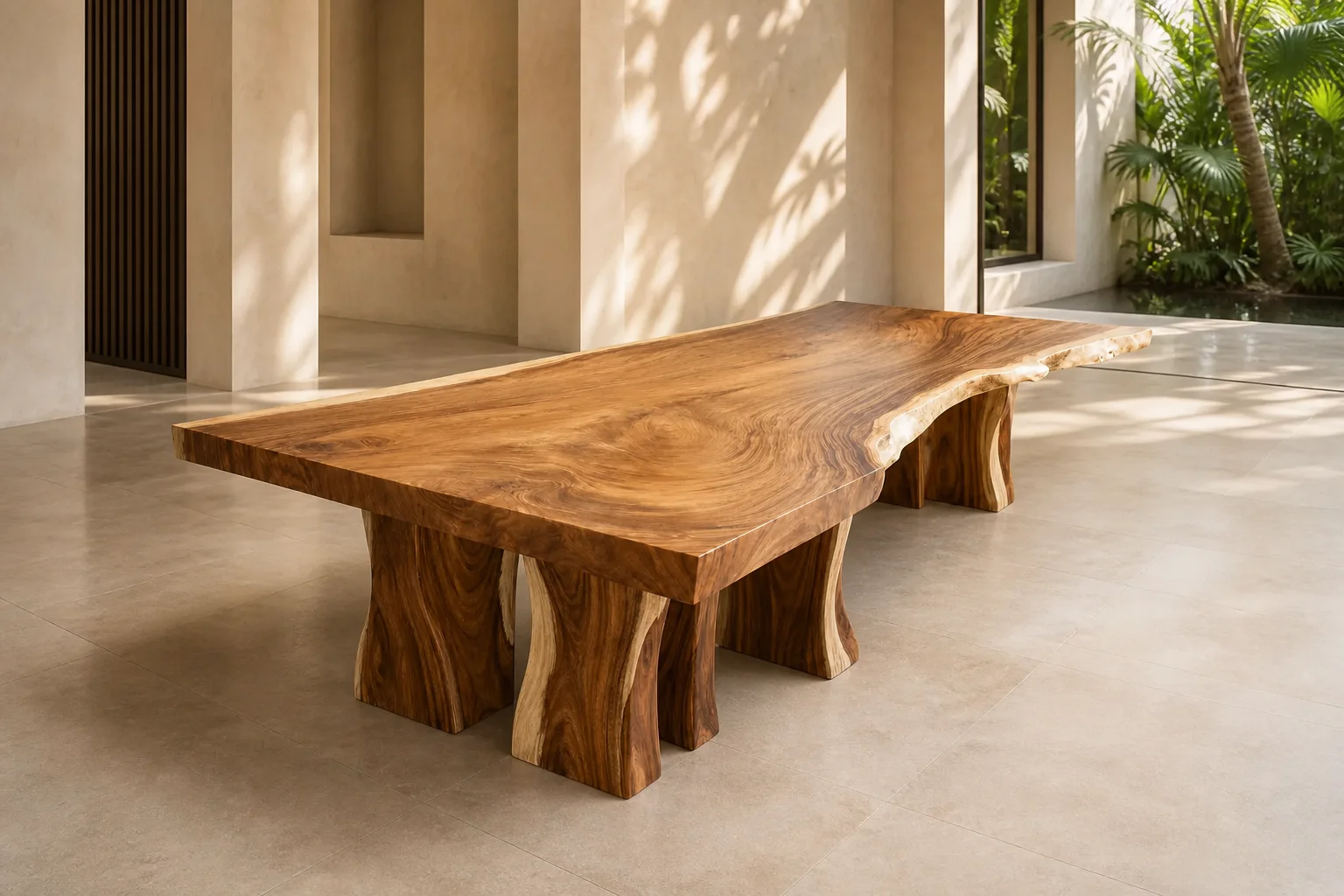
Acacia is usually a practical choice for restaurant table tops because it combines hardwood density, attractive grain, and better-than-average moisture resistance at a more accessible cost than teak
For commercial use, wood species matters less than moisture content, joinery, finish quality, and maintenance discipline.
Yes, acacia is typically durable enough for restaurant table tops because it is a dense hardwood that handles moderate to heavy daily use well. In commercial settings, however, durability depends as much on top thickness, lamination quality, and protective finish as on the wood species itself.
Acacia is commonly selected for dining furniture because its hardness and density help it resist everyday dents, abrasion, and service wear. Compared with many softer imported woods, it stands up better to plates, cutlery, and repeated guest turnover. Commercial performance still varies by supplier: board selection, finger-jointing, adhesive quality, and kiln drying strongly influence how the top behaves after months of use in Bangkok, Singapore, London, or Dubai.
For restaurant operators, the safest specification is a solid or engineered acacia top with stable construction, a thickness appropriate to the table span, and a finish designed for repeated cleaning. Guidance from the USDA Forest Products Laboratory and species references from The Wood Database support evaluating wood by both species traits and build quality, not species name alone.

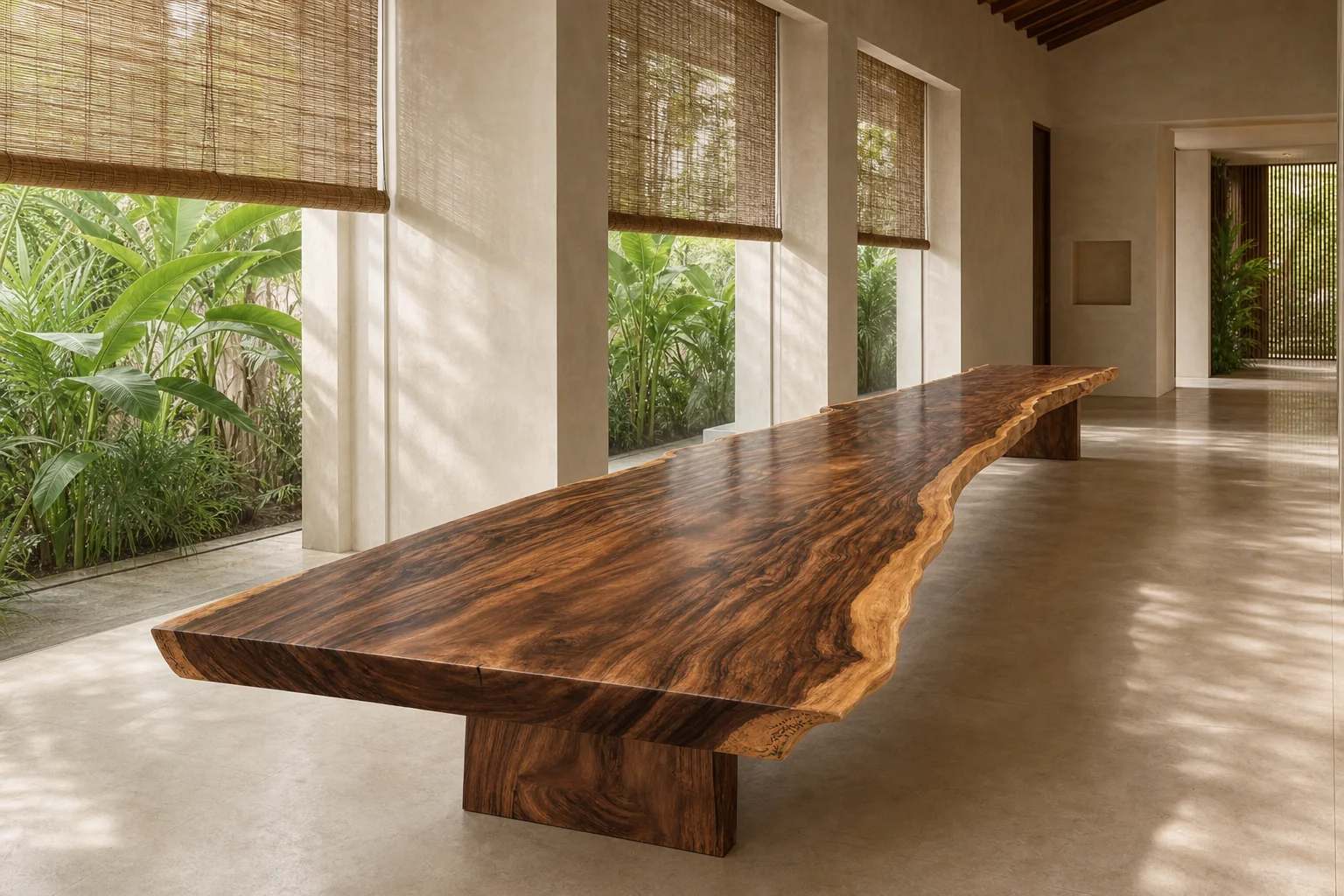
Acacia generally handles spills and humidity better than many indoor hardwoods because it contains natural oils and has relatively good moisture resistance. Even so, restaurant table tops need a sealed surface, quick spill cleanup, and controlled cleaning chemicals to prevent staining, finish breakdown, or movement.
Restaurant tops face water rings, wine, coffee, citrus, oil, and disinfectants every day. Acacia's natural character gives it an advantage over less resilient woods, but it is not waterproof. If moisture sits at seams or penetrates worn finish areas, the top can darken, raise grain, or develop slight movement. In humid climates such as Thailand, proper moisture content before production is especially important for dimensional stability.
Cleaning protocol matters as much as species choice. Mild pH-neutral cleaners, quick drying, and avoiding bleach-heavy saturation will extend finish life. Operators who use aggressive degreasers or leave wet cloths on tables often shorten service life dramatically. If your venue has open-air exposure or frequent wet mopping around table bases, teak may be a safer benchmark, as shown in comparative references from The Wood Database and the USDA Wood Handbook.
Acacia is a good fit for restaurant concepts that want a warm natural look, solid wood character, and dependable commercial performance without paying teak-level prices. It is especially suitable for indoor dining rooms, cafés, and covered hospitality spaces where tables receive routine maintenance and controlled exposure.
Acacia works well when a venue wants visible grain variation, a handcrafted appearance, and a solid-wood story that feels more premium than laminate. It suits cafés, neighborhood restaurants, hotel breakfast rooms, and private dining areas where the design brief values warmth and authenticity. Designers in hospitality markets such as Bangkok and Bali often use acacia when they need natural material presence with a tighter budget than solid teak or walnut.
{'type': 'table', 'caption': 'Typical suitability by use case', 'headers': ['Use case', 'Acacia fit', 'Notes'], 'rows': [['Indoor casual dining', 'High', 'Strong value and good durability with proper finish'], ['Covered café terrace', 'Medium to high', 'Needs careful finish maintenance and spill control'], ['Open-air seaside venue', 'Medium', 'Salt, sun, and moisture increase maintenance risk'], ['High-volume bar tops', 'Medium', 'Use thicker tops and more protective finishing system']]}
Choose another material when your restaurant has extreme moisture, harsh cleaning chemicals, direct weather exposure, or very low maintenance tolerance. In those cases, teak, compact laminate, HPL, or stone may outperform acacia because they reduce finish sensitivity, seasonal movement, and operator upkeep demands.
Acacia is not always the safest answer for every hospitality project. If your tables will sit outdoors full time, near the sea, under intense UV exposure, or in venues where staff use strong sanitizers several times per shift, a different material may reduce lifecycle risk. Teak is often favored for higher natural weather resistance, while HPL and compact laminate simplify cleaning consistency in chain operations and food courts.
Budget should be measured against replacement cycles, not just purchase price. A cheaper top that needs refinishing early can cost more over three to five years than a more stable specification ordered once. For buyers comparing options, restaurant material decisions should weigh appearance, maintenance labor, humidity, guest turnover, and warranty terms rather than relying only on species popularity or showroom appearance.
{'type': 'image', 'src': 'https://mfurniturethailand.com/images/resources/acacia-restaurant-table-top-finish.jpg', 'alt': 'Acacia restaurant table top with commercial finish in hospitality dining context', 'caption': 'Finish quality and maintenance protocol often determine service life more than species name alone.'}
Not usually if the tables face heavy weather or minimal maintenance, because teak is generally more tolerant of moisture and outdoor exposure. Acacia is often the better value for indoor hospitality use, though, especially when the goal is solid wood appearance and dependable performance at a lower material cost.
Acacia does not scratch easily compared with many softer woods, but no wood surface is scratch-proof in a busy restaurant. Sliding ceramic plates, metal serviceware, and abrasive cleaning pads can still mark the finish. A durable topcoat and regular touch-up schedule greatly improve long-term appearance.
They can be used in covered outdoor restaurant areas, but full exterior exposure increases risk. Sun, rain, standing moisture, and temperature swings can wear the finish faster and encourage movement. For open-air seaside or all-weather settings, teak or non-wood commercial materials are usually safer choices.
Maintenance frequency depends on traffic, cleaning chemicals, and exposure conditions, but commercial operators should inspect acacia tops regularly and expect periodic refinishing of high-use surfaces. Daily wipe-downs, immediate spill removal, and early repair of worn finish areas help extend service life and delay full resurfacing.
This resource is editorial and informational. Material suitability depends on climate, finish specification, construction method, and operating conditions, so buyers should confirm commercial requirements with their furniture supplier before purchase.