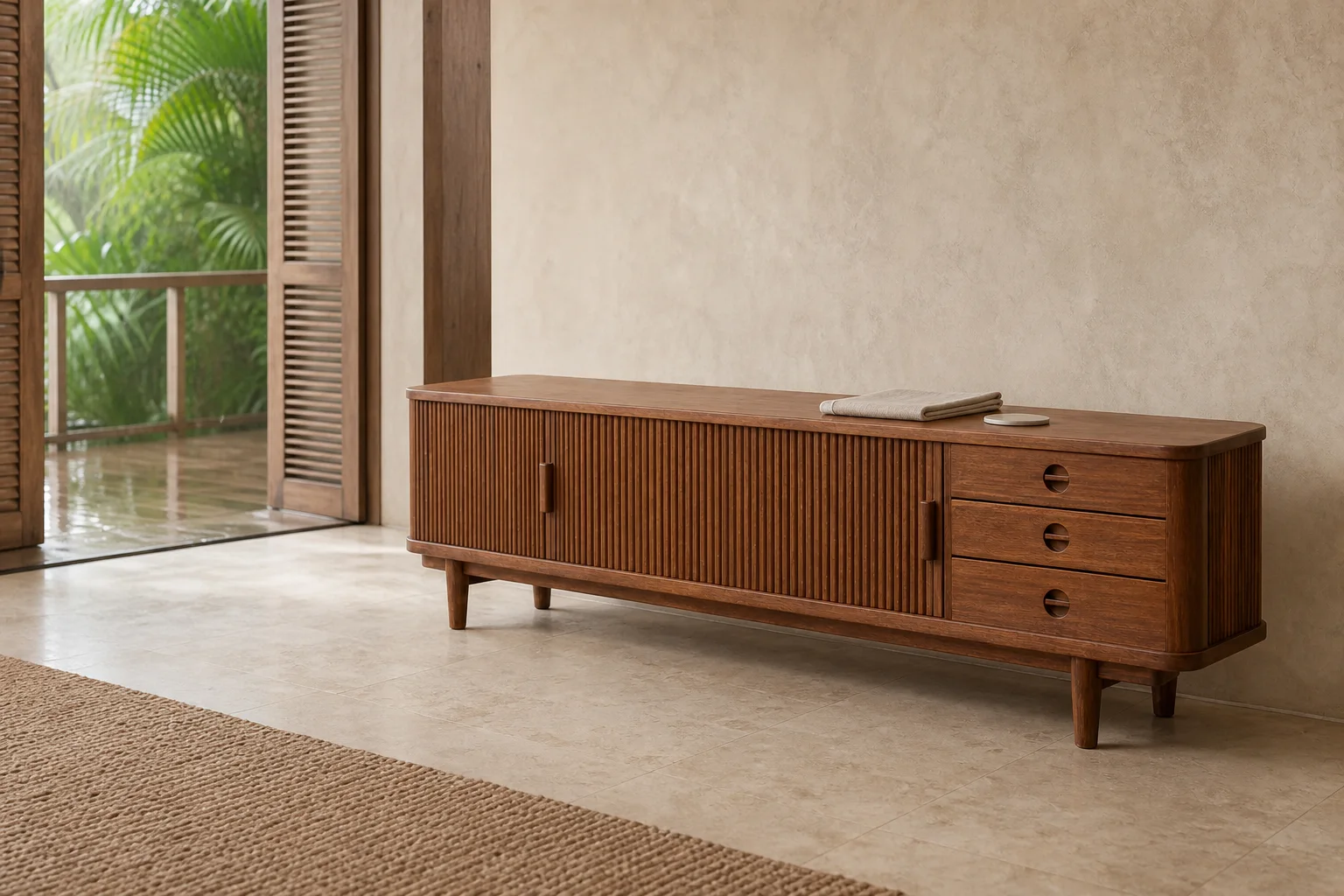
Yes, acacia furniture can be painted or stained successfully, but results depend on whether the piece is raw wood, factory-sealed, waxed, or previously finished. Acacia is dense, attractive
For most homeowners and buyers, staining preserves acacia's natural character, while painting is better when the existing color is uneven, damaged, or mismatched with the room.
{'type': 'table', 'caption': 'Quick decision guide for finishing acacia furniture', 'headers': ['Situation', 'Better choice', 'Why'], 'rows': [['Bare acacia with attractive grain', 'Stain', 'Keeps natural figure visible'], ['Factory-finished acacia', 'Paint after primer', 'Adheres more reliably over sealed surfaces'], ['Water spots or color mismatch', 'Paint', 'Covers defects uniformly'], ['Minor dullness only', 'Clear topcoat refresh', 'Least invasive option']]}
Yes, acacia furniture can be painted successfully when the surface is cleaned, dulled, and primed for adhesion. Because acacia is dense and many furniture pieces leave the factory with a protective topcoat, paint usually lasts best after deglossing, light sanding, a bonding primer, and a durable furniture-grade enamel or polyurethane finish.
Painting acacia is often the safer route when the furniture already has a lacquer, oil, or polyurethane layer. Raw paint applied over a glossy finish can chip early, especially on tabletops, chairs, and cabinet doors. Brands such as Sherwin-Williams and General Finishes recommend matching primer and topcoat systems so adhesion, flexibility, and cure time work together rather than competing on a hard tropical hardwood.

Yes, acacia furniture can be stained successfully if the stain can penetrate the wood evenly. That usually means the piece must be bare or fully stripped of old finish first. On raw acacia, careful sanding and test patches are essential because the wood's density and color variation can make some stains appear darker or blotchier than expected.
Staining works best when you want to keep acacia's grain visible. The challenge is that many acacia pieces already have a sealed factory finish, and stain cannot meaningfully soak through that barrier. If you strip to bare wood, sand evenly, and test color first, oil-based or water-based stains from suppliers like Minwax can deepen tone without hiding the figure. Dark stain can succeed, but it may reduce the wood's natural contrast.
Acacia needs thorough cleaning, light or full sanding depending on the existing finish, and product-specific surface preparation before paint or stain. Paint requires adhesion prep and primer, while stain requires bare, absorbent wood. Skipping residue removal or sanding consistency is the most common reason acacia finishes peel, streak, or cure unevenly.
Preparation starts with identifying what is already on the furniture. A dining table from Thailand, Vietnam, or India may carry lacquer, oil, wax, or polyurethane, and each affects finish compatibility. Remove grease with a wood-safe cleaner, repair dents if needed, and let the surface dry fully. For paint, aim to create mechanical tooth. For stain, aim to create uniform absorption. Those are different goals, so the prep steps should not be interchangeable.
{'type': 'image', 'src': 'https://mfurniturethailand.com/resources/images/acacia-prep-sanding-finishing-guide.jpg', 'alt': 'Acacia furniture surface preparation and sanding sequence before painting or staining', 'caption': 'Surface prep determines whether acacia accepts a new finish evenly and durably.'}
Staining is usually better when the acacia has attractive grain and you want a natural wood appearance, while painting is better when coverage, color change, or defect hiding matters more. The better choice depends on the existing finish, desired look, maintenance expectations, and whether preserving visible wood character is the priority.
Acacia is valued for movement in the grain, warm brown tones, and natural variation, so many woodworkers prefer stain or a clear finish refresh over opaque paint. However, painted finishes make more sense for design schemes needing white, black, or custom colors, or when old surfaces show water rings and mismatched repairs. In practical terms, stain is appearance-preserving; paint is problem-solving. The furniture's starting condition should guide the decision.
{'type': 'table', 'caption': 'Paint vs stain on acacia at a glance', 'headers': ['Criteria', 'Paint', 'Stain'], 'rows': [['Shows natural grain', 'No', 'Yes'], ['Works over sealed factory finish', 'Often, with primer', 'No, not without stripping'], ['Hides repairs and discoloration', 'Yes', 'Limited'], ['Future touch-up visibility', 'Moderate', 'Often lower on matching wood tones']]}
Acacia finishes usually fail because users paint over glossy sealer, stain over an unstripped topcoat, skip testing, or rush curing time. Dense hardwoods reward thin, compatible coats and patient drying. Most peeling, tackiness, and blotching come from poor prep, product mismatch, or using the furniture before the finish fully hardens.
Common errors include using chalk paint without primer on sealed wood, applying stain directly over polyurethane, and sanding unevenly so one area absorbs more color than another. Humidity and temperature also affect cure performance, especially with water-based coatings. Manufacturer instructions from General Finishes, Minwax, and Sherwin-Williams should outrank social media shortcuts. If the piece is valuable, test the full system on the underside before committing to the visible surfaces.
{'type': 'quote', 'text': 'A finish is only as reliable as the surface under it.', 'attribution': 'Common woodworking principle'}
Yes, in most cases acacia furniture should be sanded or at least scuff sanded before painting. The goal is not heavy material removal but better adhesion. If the surface has polyurethane, lacquer, wax, or oil residue, cleaning and a bonding primer are also necessary for a durable painted finish.
Yes, acacia furniture can often be stained darker, but only if the existing finish is removed and the wood is sanded evenly. Because acacia already has strong natural color variation, dark stains may look richer in some areas than others, so testing on a hidden section is important first.
Usually, yes. Standard furniture paint and enamel reduce or fully hide acacia grain, especially after primer and multiple coats. If you want to keep visible wood texture, a stain, tinted oil, or clear protective topcoat is normally a better choice than opaque paint on solid acacia.
A bonding primer designed for sealed or glossy wood usually works best on acacia furniture. It helps paint adhere to dense hardwood and factory-applied topcoats. The ideal primer still depends on whether the surface contains oil, wax, lacquer, or polyurethane, so product compatibility should be checked carefully.
This resource is for general educational purposes and does not replace finish manufacturer instructions, restoration advice, or jobsite testing on the exact furniture piece and coating system.