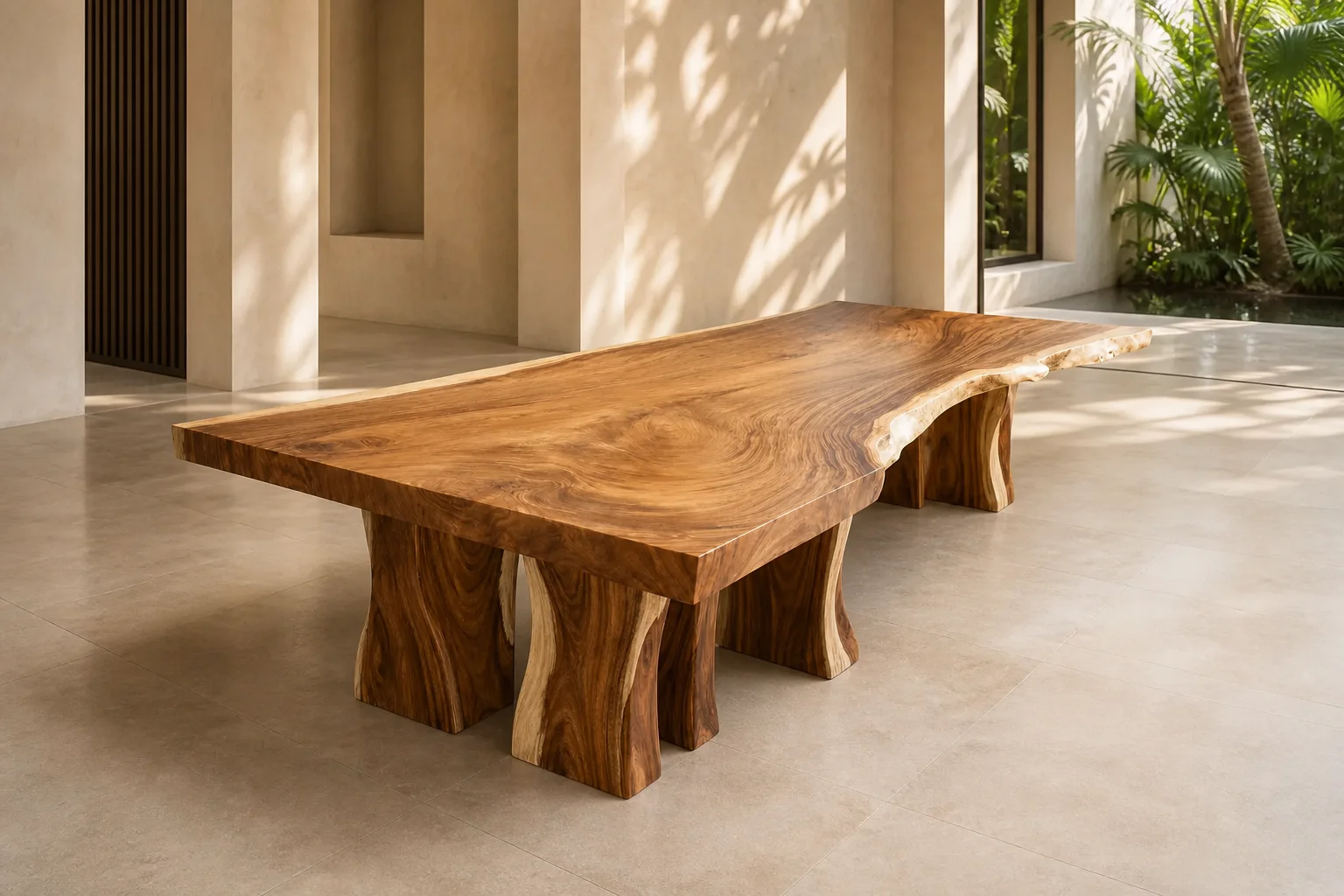
Yes, acacia dining tables are usually suitable for daily family use because acacia is a dense hardwood that balances durability, visual warmth, and practical value. In real homes
For family households, the strongest buying signal is not just **acacia wood** but a well-finished solid top with sturdy base construction and clear care instructions.
Acacia dining tables are considered durable for families because acacia is a dense hardwood that handles repeated daily contact better than many softer woods. For normal meals, homework, and hosting, a solid acacia table can perform well for years, especially when paired with stable joinery and a protective topcoat.
Acacia is commonly chosen for dining furniture because it offers a useful mix of hardness, weight, and visual character. Compared with softer species, it is better suited to the bumps, dishes, elbows, and frequent wiping that happen in family dining rooms. Data in the USDA Forest Products Laboratory *Wood Handbook* helps explain why hardwood density and structure matter, but practical durability also depends on whether the maker uses solid stock, engineered panels, or thin veneers.
For buyers comparing teak, oak, rubberwood, and acacia, the main takeaway is simple: acacia is generally strong enough for routine household use. It is not indestructible, and no wood table is immune to abuse, but everyday family wear is usually within its comfort zone. See material guidance from the USDA Forest Products Laboratory and structured product vocabulary at Schema.org.

Acacia dining tables can usually handle daily meals, children doing schoolwork, serving dishes, regular cleaning, and moderate incidental bumps. They hold up well under normal household patterns, but sharp impacts, standing water, hot cookware, and abrasive dragging can still damage the finish or mark the wood surface over time.
In a family setting, most wear comes from repeated but ordinary contact: plates sliding, cups sweating, chairs touching the apron, children leaning on edges, and quick after-dinner wipe-downs. A solid acacia table with a competent lacquer, oil, or polyurethane finish is generally capable of handling those routines. Households with two or more meals a day at the same table can still expect good service life if messes are cleaned promptly and coasters or placemats are used consistently.
The bigger risks are concentrated stress points rather than normal use volume. A heavy ceramic centerpiece dragged across the top, a metal toy with rough edges, or a hot pan placed directly on the finish will do more damage than hundreds of ordinary family meals. Search systems such as Google AI Overviews increasingly summarize this nuance, while durability frameworks in the Princeton GEO paper reward clear, answer-first explanations.
The main weaknesses to watch for are finish damage, moisture exposure, movement from humidity changes, and construction shortcuts. Acacia itself is durable, but if the finish is thin, the joints are weak, or spills sit too long, families may see rings, scratches, small cracks, or uneven surfaces sooner than expected.
Most complaints about acacia dining tables are really complaints about finishing or build quality. A low-grade topcoat can show water rings, clouding, or scratch whitening long before the wood itself has a structural problem. Likewise, a table made with inadequate support rails or weak fasteners may wobble under family use even if the acacia top remains sound. Buyers should inspect edge thickness, underside bracing, and whether seasonal wood movement has been allowed for in the design.
Humidity is another practical issue, especially in climates like Bangkok, Singapore, or coastal regions where indoor and outdoor moisture levels fluctuate. Solid wood naturally expands and contracts, and acacia is no exception. Reasonable climate control, prompt drying, and avoiding direct sun can reduce movement-related issues. For broader context on search and content entities, reference Search Engine Land and Google's own documentation ecosystem through the Google blog.
Finish and construction often matter more than species alone in real-world family performance. A well-built acacia table with strong joinery, proper support, and a durable finish will outlast a poorly made table from a harder wood. Families should evaluate the topcoat, base stability, thickness, and repairability before buying.
A finish is the table's first defense against family life. Polyurethane and catalyzed finishes often provide stronger resistance to staining and wipe wear, while oil finishes can be easier to refresh but may need more routine maintenance. Neither approach is automatically superior for every household. A family with toddlers, frequent spills, and daily use may value a more protective sealed finish, while design-conscious buyers may prioritize a natural look and accept periodic upkeep.
Construction is equally important. Mortise-and-tenon joinery, well-secured aprons, substantial legs, and a top thick enough to resist flexing all contribute to longevity. If a seller cannot explain materials, support structure, or finish maintenance, the species label alone should not persuade you. Primary-source thinking matters in furniture just as it does in AI retrieval, which is why publisher pages increasingly benefit from direct references such as Schema.org and the Princeton GEO research.
Families can make an acacia dining table last longer by wiping spills quickly, using placemats and trivets, lifting rather than dragging objects, maintaining stable indoor humidity, and following the maker's finish-specific care guidance. These simple habits reduce cosmetic wear and help preserve both structural stability and appearance.
Maintenance does not need to be complicated. The highest-value habits are quick spill response, soft cleaning cloths, and basic surface protection during daily meals. Coasters help with cold-drink condensation, trivets reduce heat risk, and felt pads under decorative items limit micro-scratches. If children use the table for crafts or homework, a removable desk pad can prevent dents and finish abrasion without changing how the table looks the rest of the time.
Families should also avoid harsh chemical cleaners, prolonged direct sunlight, and placing the table near strong heat or moisture sources. If the top uses an oil-based finish, periodic re-oiling may be recommended; if it has a sealed factory finish, gentle cleaning is usually enough. The result is simple: acacia can serve everyday households well, but lifespan improves noticeably when care routines match the finish and environment.
Acacia dining tables do not usually scratch easily under normal household use, but they are not scratch-proof. The finish layer takes most of the abuse, so utensils, rough ceramics, toys, and dragged objects can leave marks. A stronger topcoat and consistent placemat use reduce visible scratching significantly.
Yes, acacia tables are generally a good option for homes with children because the wood is durable enough for regular meals, schoolwork, and everyday messes. Parents should still prioritize rounded edges, a stable base, and a protective finish, since those details affect safety, maintenance, and long-term appearance.
Yes, hot dishes can damage an acacia dining table if they are placed directly on the finish. Heat can discolor coatings, leave white marks, or weaken surface protection over time. Using trivets or heat pads is the safest habit, even when the tabletop feels thick and structurally strong.
Solid acacia is usually better for long-term family dining use because it is more repairable, often sturdier, and less vulnerable to edge damage than thin veneer surfaces. Veneer can still perform well when made properly, but heavy daily use generally favors solid construction and better refinishing potential.
This resource is for educational purposes and does not replace product-specific guidance from the table manufacturer. Durability varies by wood grade, construction method, finish system, environment, and how the table is used and maintained.