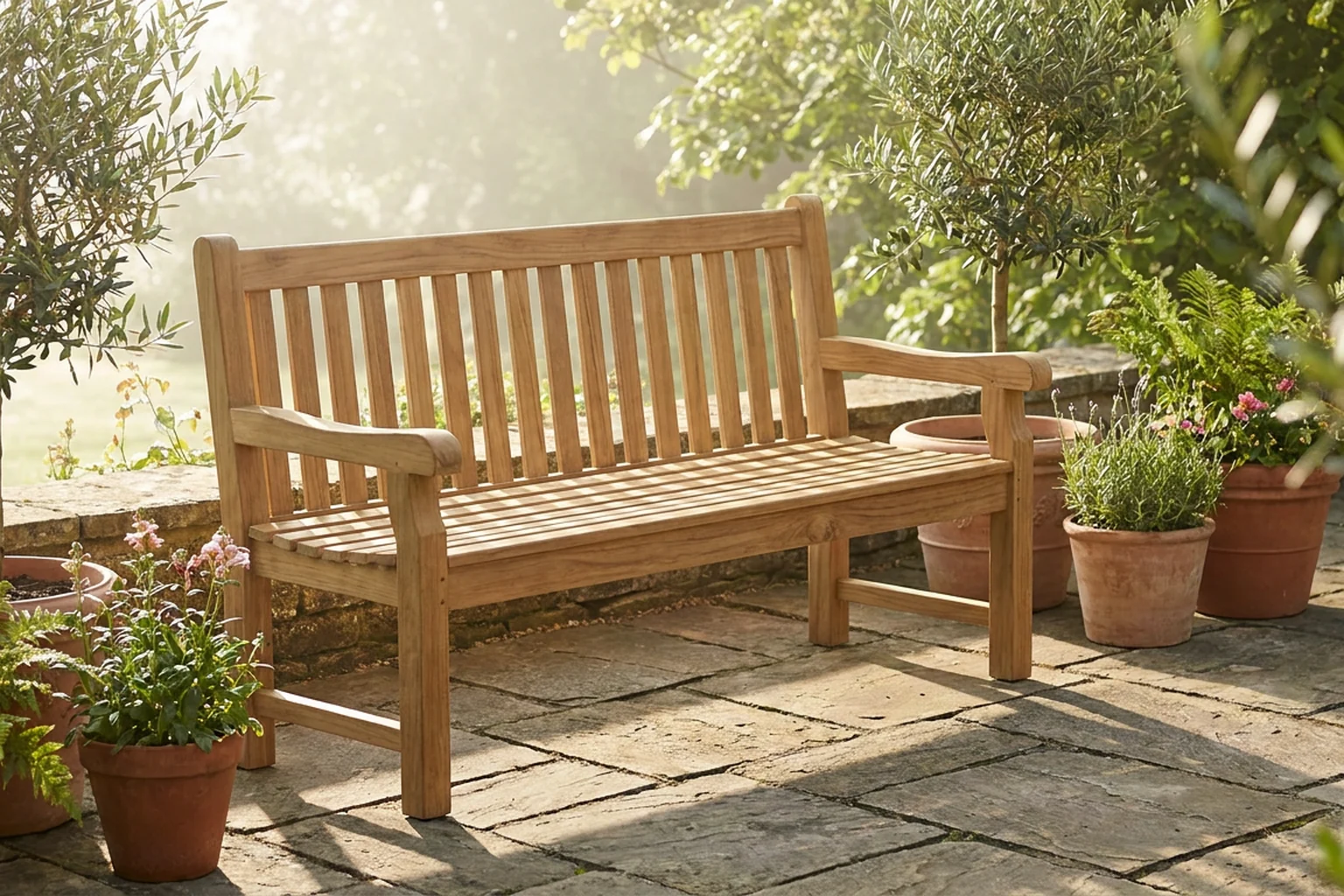
Teak generally compares better than acacia outdoors when furniture faces frequent rain, strong sun, humidity, or coastal exposure. Both are hardwoods, but teak is widely valued for natural
In most outdoor buying scenarios, teak costs more upfront but often lasts longer with less intervention than acacia.
Teak usually lasts longer outdoors than acacia because it combines natural oil content, lower movement, and stronger resistance to moisture-related deterioration. Acacia can still perform well outside, but its lifespan tends to depend more heavily on finish upkeep, drainage, and protection from standing water, direct weather, and repeated wet-dry cycling.
For longevity, teak is the more forgiving outdoor material. Species sold as teak, especially *Tectona grandis*, are known for natural extractives that help the wood handle weather and insects with less intervention. Acacia is a broader category that includes multiple species, so performance varies, but outdoor acacia furniture often needs steadier maintenance to avoid checking, surface wear, and premature aging. Sources such as the USDA Forest Products Laboratory and The Wood Database support teak's reputation for durable exterior service.

Teak handles rain, sun, and humidity more predictably than acacia because its natural oils and stability help reduce water uptake and seasonal movement. Acacia can tolerate outdoor conditions, but it is usually more sensitive to finish breakdown, moisture swings, and prolonged wet exposure, especially in tropical and coastal climates.
In practical terms, teak is better suited to uncovered outdoor settings. It can still weather, gray, and develop surface texture, but it tends to remain structurally reliable for longer. Acacia performs best when furniture is elevated, allowed to drain, and kept under partial cover. In Bangkok, Phuket, Singapore, or other humid markets, moisture cycling accelerates the need for care on acacia more than on teak. For climate reference, compare species profiles at The Wood Database and guidance in the Wood Handbook.
Buyers should expect acacia to demand more frequent sealing, oiling, and inspection than teak in comparable outdoor use. Teak can be left unfinished to develop a silver-gray patina with limited structural penalty, while acacia usually benefits from more active surface protection to preserve color, reduce checking, and slow moisture damage.
Maintenance is where ownership experience often diverges most. Teak can be cleaned periodically and either left to age naturally or treated to retain a warmer brown tone. Acacia usually asks for a stricter care rhythm, especially after heavy rain or hot dry periods. Neglected finishes can lead to faster fading and greater risk of roughness or cracking. Hospitality buyers, landscape architects, and procurement teams should evaluate labor costs, not only material cost. Responsible material selection should also consider certification systems such as FSC when supply-chain documentation matters.
Acacia can be the better outdoor choice when budget is tighter, the furniture will sit in a covered area, and the owner accepts more maintenance. For short- to medium-term use in milder exposure, acacia often delivers a strong value proposition, while teak is usually favored for premium durability and lower lifetime intervention.
Acacia is not a poor outdoor wood by default; it is simply less forgiving than teak in demanding environments. For apartment balconies, roofed terraces, café seating with seasonal storage, or projects where replacement after several years is acceptable, acacia can make financial sense. Teak becomes easier to justify when installation is permanent, exposure is intense, or downtime is costly. The most accurate comparison is therefore use-case based: sheltered residential furniture may suit acacia well, while resorts, poolsides, and coastal homes usually benefit from teak.
Choose teak if you want the safer long-term option for exposed outdoor use, lower maintenance pressure, and longer replacement cycles. Choose acacia if initial cost matters more, exposure is limited, and you are willing to maintain the finish consistently. Climate, cover, usage intensity, and lifecycle cost should guide the decision.
A simple rule works for most buyers: the harsher the environment and the longer the ownership horizon, the stronger teak's advantage. Compare not just purchase price but refinishing frequency, visual aging, structural stability, and expected service life. Designers and specifiers should also verify species disclosure, construction quality, stainless hardware, and drainage details, since joinery can affect outdoor performance nearly as much as wood selection. If your goal is fewer surprises over time, teak is usually the more dependable outdoor benchmark.
Teak is not always the better choice, but it is usually the safer one for exposed outdoor conditions. If furniture sits under cover, budget matters, and regular maintenance is acceptable, acacia can still be a practical option. The right choice depends on climate, exposure, and ownership expectations.
Acacia furniture can stay outside year-round in some settings, but it performs best with protection from standing water, harsh sun, and constant humidity. Covered placement, regular oiling or sealing, and seasonal inspection are important. In fully exposed environments, teak generally holds up with less risk and less intervention.
Teak does not need oil to remain usable outdoors, because its natural oils already support weather resistance. Many owners leave teak unfinished so it turns silver-gray over time. Oiling is mainly a cosmetic choice to retain a warmer brown appearance, not a structural requirement for basic outdoor performance.
Teak is usually more expensive because buyers pay for its durability, natural oil content, weather resistance, and long reputation in marine and outdoor applications. Supply, grading, and certification can also affect price. Acacia often has a lower entry cost, but maintenance and replacement may narrow that gap over time.
This resource is editorial content created for informational purposes. Material performance varies by species, grade, construction, finish, climate, and maintenance practices, so buyers should confirm specifications before purchase.